Tiny homes have an appeal that might be hard to admit—either for living vicariously or for less respectful reasons, people want to watch other people live small.


The first tiny home village in Denver had become a kind tourist attraction or curiosity, according to an article by Tom McGhee, until a new privacy fence was installed around the area.
"60 volunteers wove colored slats through the 400 feet of chain-link fence that surrounds the Beloved Community Village at the corner of 38th and Walnut streets," reports McGhee, ending the "fishbowl" experience of the formerly homeless residents living there.
According to residents of the village, there were occasionally as many as ten people a day stopping to take pictures. "Residents reached out to the RiNo Art District and requested a creative solution to the lack of privacy for villagers, and the district responded with a plan to obscure the view with a riot of color," according to McGhee.
The article includes more details about the construction of the fence, the volunteer support that made the project possible, and more about the village's position in the surrounding community.
Read the full story: Formerly homeless tiny village residents in Denver get a colorful privacy fence

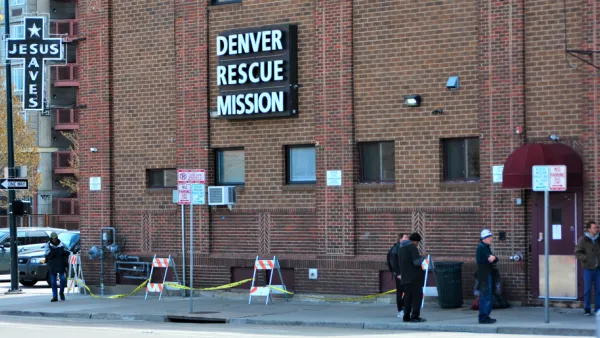
Construction Firm Pays Penance For Bid-Rigging Scheme By Funding Tiny Home Village
A new twist on the contemporary corruption scandal.
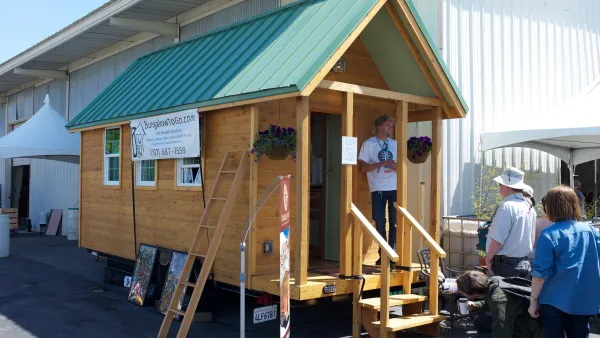
Denver Makes Space for Tiny Homes
A law approved by the Denver City Council this week makes it much easier to build tiny homes in Denver.
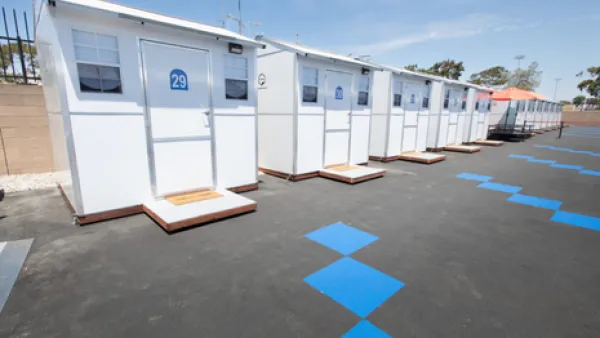
Tiny House Villages for Addressing Homelessness: An Interview with Yetimoni Kpeebi
One researcher's perspective on the potential of tiny homes and owner-built housing as one tool to fight the housing crisis.

Planetizen Federal Action Tracker
A weekly monitor of how Trump’s orders and actions are impacting planners and planning in America.

The state-sanctioned urbicide of Austin
People don’t kill cities. Freeways do.

US to reduce Colorado River water deliveries to Mexico
A new Colorado Treaty amendment reduces Mexico’s Colorado River water allocation by 250,000 acre feet.

Nation's most wind-powered state turns to coal as data centers increase energy demand
For the first time in decades, Iowa has increased its generation of coal power.

NYC cools commuters with city's first rain garden above a bus stop
New York City officials say the plants in the rain garden can absorb 16 gallons of rainwater during heavy storms.

Brightline West’s future may rely on $6 billion federal loan
The company has until Nov. 2 to make a $400 million equity investment into its proposed high-speed rail line.

FREE Course: Walkable City 1: Why Walkability?
After describing his path towards focusing on walkability as the essence of good planning, Jeff Speck marches through his five principal reasons for making more walkable places.
Reinventing Malls: Planning Alchemy—Turning Gray Fields Into Gold
The course focuses on the opportunities and imperatives that shape reinvention of mall sites.

Eagle County Government
Harvard University Graduate School of Design
Nashville Planning Department
The Architects Foundation
University of Cincinnati Online
The Pocatello Development Authority
The Urban Renewal Agency of the City of Pocatello
Journal of the American Planning Association