Transit malls and voter support have buoyed a system that continues to attract commuters and other riders.


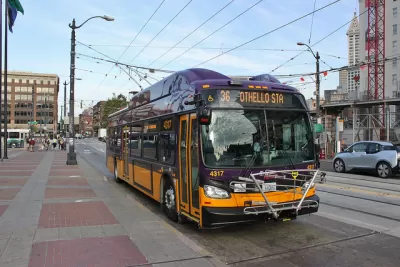
Seattle's buses are gaining riders. This is remarkable, in part, because the rest of the country is generally losing public transit riders and bus riders in particular. This matters for reasons of environmentalism and equality. "Bus service is crucial to reducing emissions in the Seattle region. According to King County Metro, which serves the region. Nearly half of all greenhouse gas emissions in Washington State come from transportation," Andrew Small reports for CityLab. In terms of equity, the larger the population that rides the bus, the more likely the buses are to gain support, so that it's not just those who can't afford to drive or are physically unable to do so, who fight for these resources.
Small doesn't point to any one silver bullet to account for Seattle's growth in transit riders but, rather, three categories of fixes: the existence of transit malls, a handful of small fixes (like bus-only turn lanes in particular stretches), and the support of Seattle voters.
FULL STORY: How Seattle Bucked a National Trend and Got More People to Ride the Bus

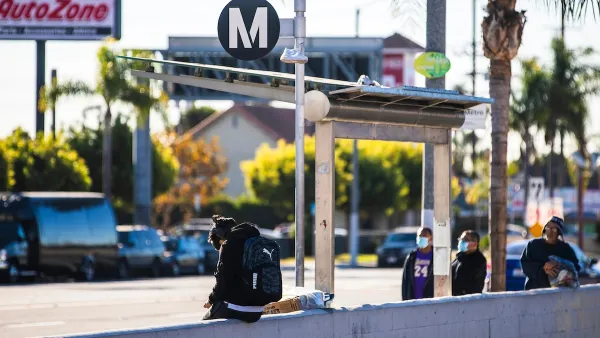
LA Bus Ridership Keeps Dropping as ICE Raids Continue
Bus boardings fell for a second month amid fears of immigration raids.
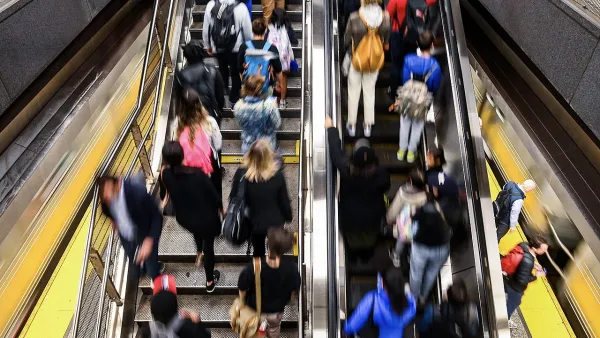
MTA Poised to Break Ridership, On-Time Service Records
New York City’s transit system saw strong increases in ridership and improvements in service quality in the first half of 2025.
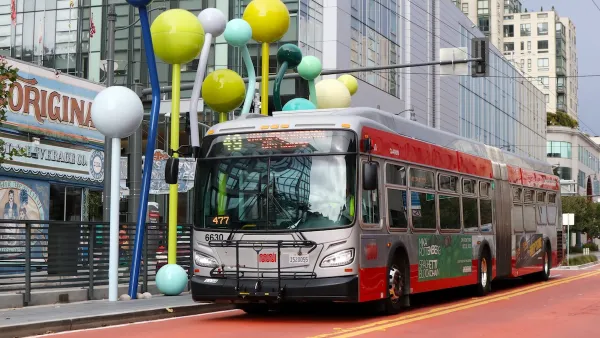
Report: Bus Ridership Back to 86 Percent of Pre-Covid Levels
Transit ridership around the country was up by 85 percent in all modes in 2024.

Planetizen Federal Action Tracker
A weekly monitor of how Trump’s orders and actions are impacting planners and planning in America.

The state-sanctioned urbicide of Austin
People don’t kill cities. Freeways do.

US to reduce Colorado River water deliveries to Mexico
A new Colorado Treaty amendment reduces Mexico’s Colorado River water allocation by 250,000 acre feet.

5 New England states march closer to 800 megawatt wind energy project
Securing federal approval for the project may be complicated under the Trump administration, which has historically been hostile towards domestic wind power.

Baltimore to break ground on $50 million Transit Priority Project
The project will bring faster bus trips, safer streets and better bike connections to Baltimore.

Airbnb launches $250 million 'last-dollar financing' housing accelerator, makes first investment in Austin
The company will put $6.4 million towards affordable housing development in Texas’ capital.

FREE Course: Walkable City 1: Why Walkability?
After describing his path towards focusing on walkability as the essence of good planning, Jeff Speck marches through his five principal reasons for making more walkable places.
Reinventing Malls: Planning Alchemy—Turning Gray Fields Into Gold
The course focuses on the opportunities and imperatives that shape reinvention of mall sites.

Eagle County Government
Harvard University Graduate School of Design
Nashville Planning Department
The Architects Foundation
University of Cincinnati Online
The Pocatello Development Authority
The Urban Renewal Agency of the City of Pocatello
Journal of the American Planning Association