Scientists discover a 15-octopus 'city' off of the eastern coast of Australia, the second such colony of cephalopods.


Scientists have long known that octopuses would create habitats for themselves, or gardens, but a recently discovered colony of 15 octopuses living together shows that they actually build group settlements. This area, near a rocky outcropping off the eastern coast of Australia, has been dubbed Octlantis by the researchers who found it. "The octopuses didn’t just drift toward the same secure-looking outcroppings, though. Once there, they built piles out of shells from scallops, clams, and other animals they ate, then sculpted the piles into dens," Amanda Kolson Hurley writes for CityLab.
Octupus personality and intelligence has long been subject to debate. They've been documented having strong reactions to people and escaping aquariums. "The complex social interactions required to establish a village lend support to the theory that they are much, much smarter than we had ever suspected," Kolson Hurley writes.
Read the full story: Octopuses Are Urbanists, Too
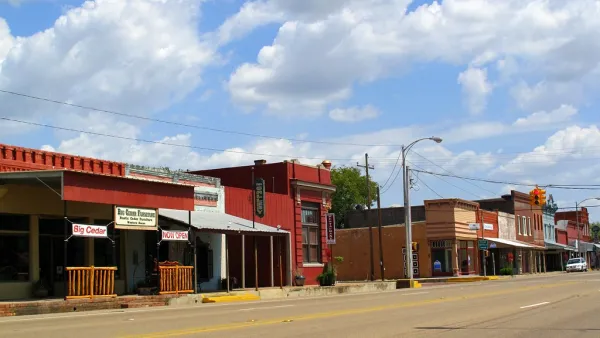
U.S. Economic Growth Shows Urban-Rural Divide
The economy is improving in places like Texas, but a closer look indicates that cities are taking off while rural areas are lagging behind.
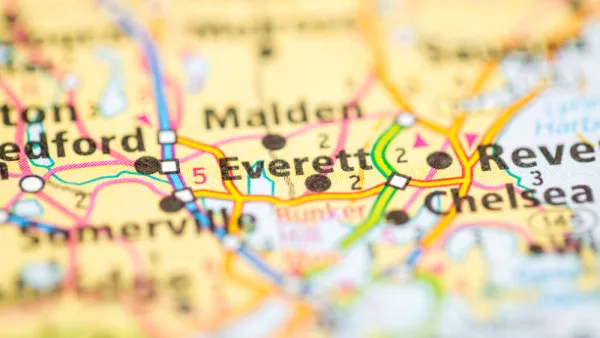
Suburban Bike Share Reaches Across Town Borders
In smaller towns in the greater Boston area, communities are offering bike share that crosses town borders.

Trump Executive Order Clears the Way for More Offshore Drilling
President Donald Trump rescinded environmental protections put in place by former President Barack Obama after the Deepwater Horizon oil spill.

Planetizen Federal Action Tracker
A weekly monitor of how Trump’s orders and actions are impacting planners and planning in America.

California plans to bury El Niño’s downpour
If the state plays its cards right, it may be able to store a billion acre-feet of El Niño’s water in aquifers.

Desperate measures: Advocates weigh draining Lake Powell to fill Colorado River
Draining the reservoir could reduce evaporation losses by a couple hundred thousand acre-feet.

Mamdani’s pied-à-terre tax survives legal challenge
A panel of judges found that the plaintiffs failed to demonstrate injury as a result of New York City's implementation of the tax.

Eastern Nebraska is running out of electricity
Data centers and electrification are straining eastern Nebraska’s grid, throttling economic development.

Seattle passes record-breaking transit services expansion
Proposition 1 will double the city’s transit tax to add 95,000 more bus trips and preserve 180,000 bus trips annually.

FREE Course: Walkable City 1: Why Walkability?
After describing his path towards focusing on walkability as the essence of good planning, Jeff Speck marches through his five principal reasons for making more walkable places.
Reinventing Malls: Planning Alchemy—Turning Gray Fields Into Gold
The course focuses on the opportunities and imperatives that shape reinvention of mall sites.

City of Rosemead
Rutgers University, Edward J. Bloustein School of Planning and Public Policy
One Hundred Miles
University of Michigan School for Environment and Sustainability (SEAS)
Hunter College, City University of New York (CUNY)
The Architects Foundation
City of Cambridge
Montrose County
The Pocatello Development Authority