Essential reading from Alissa Walker.



"Over the past five years, as the cost of living in cities has skyrocketed, the movement of self-aware gentrifiers into neighborhoods historically occupied by lower-income residents, people of color, and immigrants has created a market for gentrification advice," writes Alissa Walker.
"The irony is shattering. A group of very white, very loud men have confirmed that they are, indeed, the problem when it comes to our cities, and now the conversation about how to fix them is mostly being conducted by very white, very loud men—who happen to be very active on social media," adds Walker.
"It turns out that the absence of women from the conversation about how cities have been made, and remade, over the last 50 years has directly fed their wealth disparity and urban displacement."
Walker's feature-length article reveals just some of many (many, many) ways male hegemony has manifested in the urbanism debate and the development history of cities, while also identifying some of the writers, researchers, and advocates who are elevating female voices.
Read the full story: Mansplaining the city

Mansplainer or plansplainer? A quiz
Think you can tell the difference between regular condescension and urban planning condescension? Take this quiz to find out!
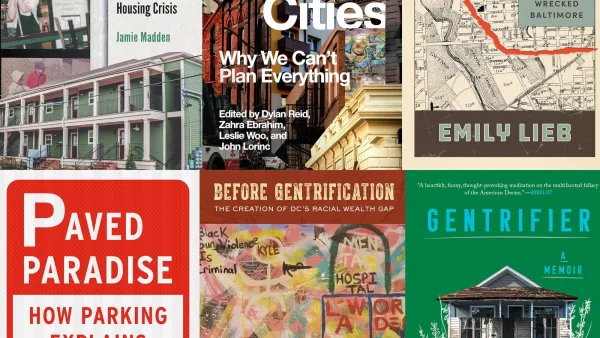
10 great urban planning summer reads
Wherever you're going (or staying) this summer, here are some suggestions for books to bring along.

Ten extraordinary women making cities work better for everyone
A new book profiles women leaders shaping the future of modern cities. These are some of their stories.

Planetizen Federal Action Tracker
A weekly monitor of how Trump’s orders and actions are impacting planners and planning in America.

California plans to bury El Niño’s downpour
If the state plays its cards right, it may be able to store a billion acre-feet of El Niño’s water in aquifers.

Desperate measures: Advocates weigh draining Lake Powell to fill Colorado River
Draining the reservoir could reduce evaporation losses by a couple hundred thousand acre-feet.

In Texas, data centers are swallowing promised parkland
Residents who moved to Taylor, Texas for a rural community now have to contend with three data centers in their backyard.

How a Chicago-sized wind farm beat the odds and powered on
The project spanned five presidential administrations and a standoff with a U.S. military base.

MTA gives itself 30 days to transform pit into basketball court
The site has been under construction since 2022; the city originally estimated it would finish the court in 2024.

FREE Course: Walkable City 1: Why Walkability?
After describing his path towards focusing on walkability as the essence of good planning, Jeff Speck marches through his five principal reasons for making more walkable places.
Reinventing Malls: Planning Alchemy—Turning Gray Fields Into Gold
The course focuses on the opportunities and imperatives that shape reinvention of mall sites.

City of Rosemead
Rutgers University, Edward J. Bloustein School of Planning and Public Policy
One Hundred Miles
Hunter College, City University of New York (CUNY)
The Architects Foundation
University of Cincinnati Online
City of Cambridge
Montrose County
The Pocatello Development Authority