Many argue that bikes save cities millions by lessening pollution, improving public health, and opening up space that would otherwise be taken by cars and parking, but some counter it's too hard to ticket bikers when they don't have licenses.


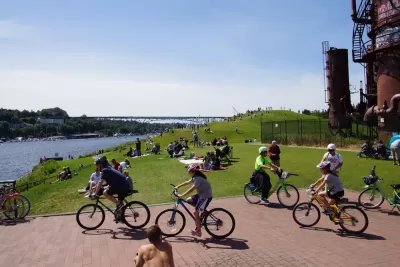
Many cities struggle to encourage residents to ride bikes, but some in Seattle argue that since bike lanes cost money, cyclists should pay for them. They argue the city should create licensing and fees for bicycles: "With licensing, police would have an easier time ticketing lawbreaking bicyclists, or finding the rightful owners of recovered stolen bikes, supporters say," Jessica Lee writes in the Seattle Times.
Others argue it's harder to make money licensing bikes than supporters hope. "The Seattle Department of Transportation (SDOT) says there would be 'a high financial cost' to enforcing mandatory bicycle licenses, considering how programs have played out elsewhere," Lee writes.
Read the full story: Seattle, Bike Fees, Tickets, Discouraging Cycling, Bike Licensing

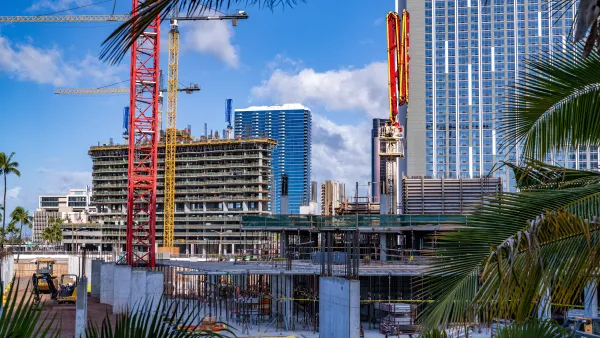
Is AI really the Panacea to our permitting woes?
Let’s have a look at what’s happening on the ground.
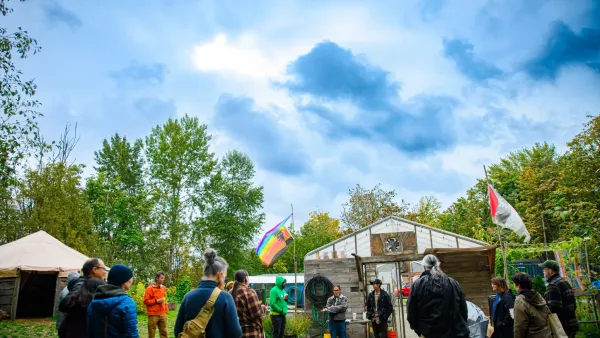
Seattle land ‘rematriated’ to Duwamish Tribe
Volunteer efforts transformed the space from a hazardous waste zone to a community gathering spot.
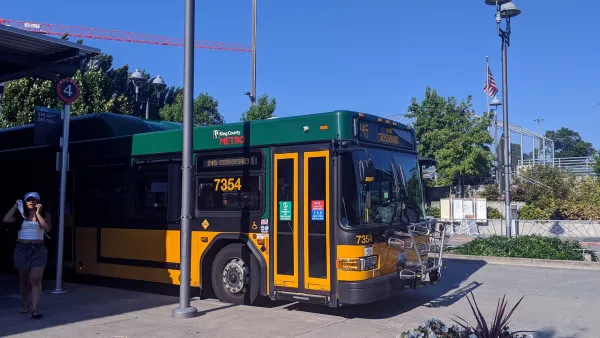
King County Metro adds 3,000 weekly bus trips, more connections to rail
King County Metro and Sound Transit are both making major adjustments to their bus networks to improve light rail connectivity across the region.

Planetizen Federal Action Tracker
A weekly monitor of how Trump’s orders and actions are impacting planners and planning in America.

Amtrak, CN end decades-long dispute with eight-year agreement
The new operating agreement establishes an updated framework for the companies to work together, including processes to resolve disputes.

Northwest rail fans eager for Sept. 30 debut of Amtrak’s Airo fleet
Get ready for that new train smell and more seats. But they won’t go faster or run more frequently on the Cascades route in Washington and Oregon.

Brightline Florida files for bankruptcy
The transit company is over $5 billion in debt.

St. Louis Metro to test if single-car trains can reduce operating costs, maintain rider satisfaction
The pilot program will run from October to spring 2027, and begin with one single-car train operating on Metrolink’s Red and Blue lines.

Pennsylvania is building data centers in abandoned mines
Housing data centers in mines provides an alternative to destroying local forests and may spare residents from data centers’ noise and air pollution.

FREE Course: Walkable City 1: Why Walkability?
After describing his path towards focusing on walkability as the essence of good planning, Jeff Speck marches through his five principal reasons for making more walkable places.
Reinventing Malls: Planning Alchemy—Turning Gray Fields Into Gold
The course focuses on the opportunities and imperatives that shape reinvention of mall sites.

City of Thousand Oaks
City of Wisconsin Rapids
Harvard University Graduate School of Design
The Architects Foundation
University of Cincinnati Online
The Pocatello Development Authority
The Urban Renewal Agency of the City of Pocatello