For decades the size of the average American house has trended upward. 2017 saw that trend slow and reverse.


The average American house is almost twice as big in 2017 as it was in 1980, but last year that trend saw a small reversal. "The median home size decreased slightly, to 2,422 square feet, in 2016, according to the U.S. Census Bureau’s annual report on the characteristics of new housing." reports Patrick Clark for Bloomberg. Down from 2,467 square feet in 2015, but still up from considerably from 1,645 square feet in 1980 or even 2,370 in 2010.
The trend is not being driven by the tiny homes or mansions, but rather because there are more homes in the range of 1,400-1,799 square feet.
Read the full story: U.S. Homes Are Finally Shrinking

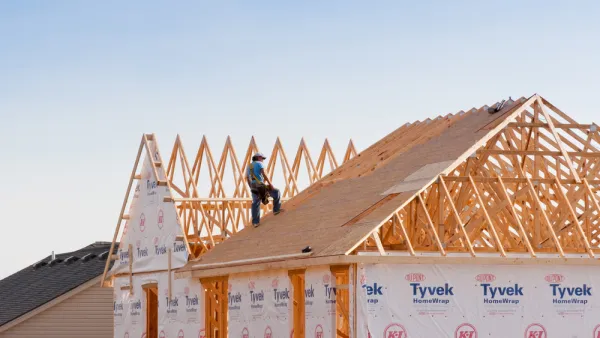
New Single-Family Homes Shrank in 2019
The Census Bureau's "Characteristics of New Housing" report shows declining size among single-family homes built and sold new in 2019.
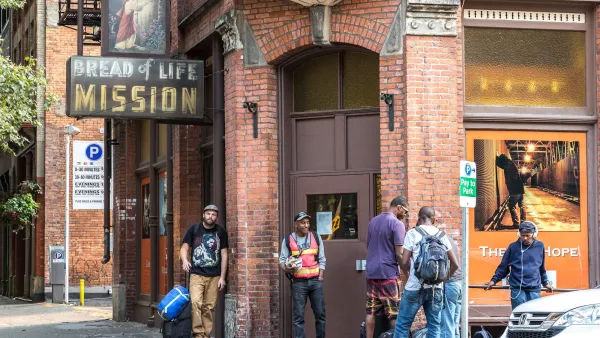
Seattle mayor pledges to build 500 shelter units by June
The Seattle Times editorial board expresses cautious optimism about the mayor's ambitious supportive housing plan.
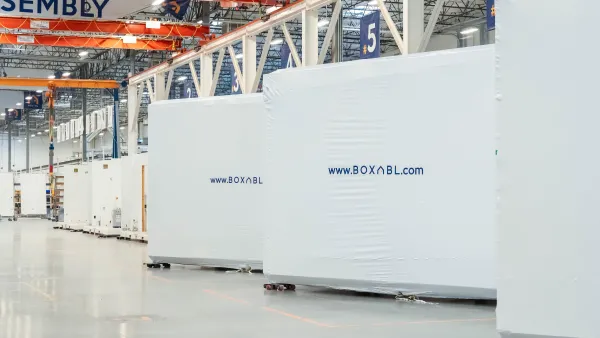
These Las Vegas tiny homes can be assembled in an hour
The city approved a project using modular microhousing units that will rent for roughly $1,000 per month.

Planetizen Federal Action Tracker
A weekly monitor of how Trump’s orders and actions are impacting planners and planning in America.

Amtrak, CN end decades-long dispute with eight-year agreement
The new operating agreement establishes an updated framework for the companies to work together, including processes to resolve disputes.

Northwest rail fans eager for Sept. 30 debut of Amtrak’s Airo fleet
Get ready for that new train smell and more seats. But they won’t go faster or run more frequently on the Cascades route in Washington and Oregon.

St. Louis Metro to test if single-car trains can reduce operating costs, maintain rider satisfaction
The pilot program will run from October to spring 2027, and begin with one single-car train operating on Metrolink’s Red and Blue lines.

Pennsylvania is building data centers in abandoned mines
Housing data centers in mines provides an alternative to destroying local forests and may spare residents from data centers’ noise and air pollution.

If Corpus Christi can’t revive desalination plant project, it may owe Texas $235 million
Earlier this month, city officials declined to pursue developing the plant for the second time in a year.

FREE Course: Walkable City 1: Why Walkability?
After describing his path towards focusing on walkability as the essence of good planning, Jeff Speck marches through his five principal reasons for making more walkable places.
Reinventing Malls: Planning Alchemy—Turning Gray Fields Into Gold
The course focuses on the opportunities and imperatives that shape reinvention of mall sites.

City of Thousand Oaks
City of Wisconsin Rapids
Harvard University Graduate School of Design
The Architects Foundation
University of Cincinnati Online
The Pocatello Development Authority
The Urban Renewal Agency of the City of Pocatello