Brutalism might not be anybody's idea of beautiful, but that doesn't mean examples of the architectural style aren't beloved by many. As Brutalism comes of age as historic, preservation battles are heating up—especially in Washington, D.C.


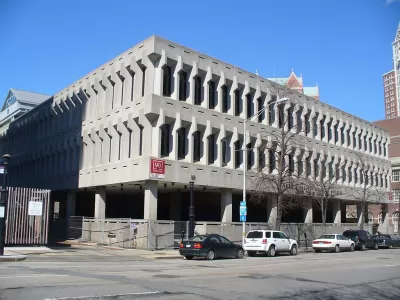
Matt O'Brien reports for the Associated Press about the preservation battles emerging over the architectural style known as brutalism.
All over the country, examples of brutalism are aging to the point where some developers and municipalities are recommending demolition, while reservationists are scrambling to protect and save the buildings. In another example, many of the architecture history-inclined were disturbed by the decision to paint the ceilings at Washington's Union Station a very un-brutal shade of white.
The Union Station episode prompted another article by Amanda Kolson Hurley on the subject of preserving Brutalism. After introducing the topic and the cultural dynamics at work, Kolson Hurley suggests a "middle" way: "Perhaps we can save brutalism by making it more lovable."
Read the full story: Banished Brutalism: Death knells abound for building style

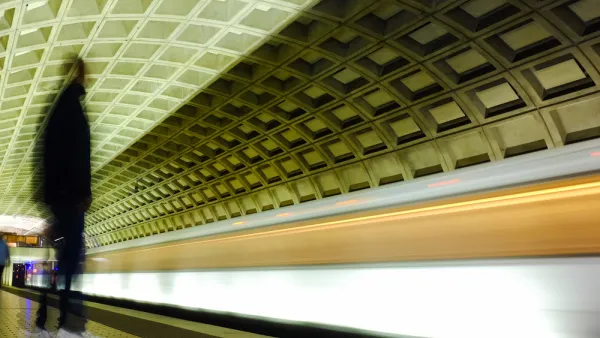
D.C. Metro's Recent Controversial Decision: Painting Over Brutalism
Controversy erupted last week in Washington, D.C., after D.C. Metro decided to paint Union Station's vaulted ceilings—a famous icon of the District, it's regional transit system, and the architectural style of Brutalism.
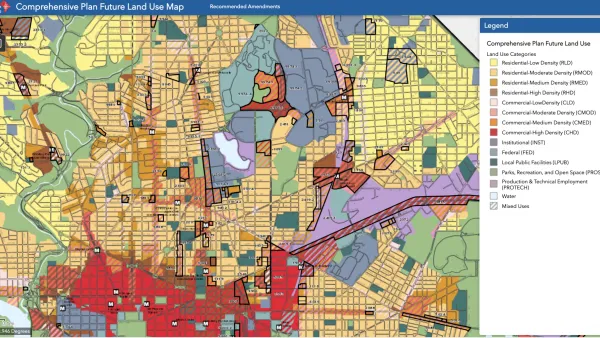
D.C. Comprehensive Plan Update Needs Equity Improvements, Report Says
The new D.C. Office of Equity has produced an evaluation of proposed changes to the D.C. Comprehensive Plan.

Comprehensive Plan Update Stokes Controversy in D.C.
Complex political dynamics are mustering for a showdown over D.C.'s comprehensive plan.

Planetizen Federal Action Tracker
A weekly monitor of how Trump’s orders and actions are impacting planners and planning in America.

Amtrak, CN end decades-long dispute with eight-year agreement
The new operating agreement establishes an updated framework for the companies to work together, including processes to resolve disputes.

Northwest rail fans eager for Sept. 30 debut of Amtrak’s Airo fleet
Get ready for that new train smell and more seats. But they won’t go faster or run more frequently on the Cascades route in Washington and Oregon.

Brightline Florida files for bankruptcy
The transit company is over $5 billion in debt.

St. Louis Metro to test if single-car trains can reduce operating costs, maintain rider satisfaction
The pilot program will run from October to spring 2027, and begin with one single-car train operating on Metrolink’s Red and Blue lines.

Pennsylvania is building data centers in abandoned mines
Housing data centers in mines provides an alternative to destroying local forests and may spare residents from data centers’ noise and air pollution.

FREE Course: Walkable City 1: Why Walkability?
After describing his path towards focusing on walkability as the essence of good planning, Jeff Speck marches through his five principal reasons for making more walkable places.
Reinventing Malls: Planning Alchemy—Turning Gray Fields Into Gold
The course focuses on the opportunities and imperatives that shape reinvention of mall sites.


City of Thousand Oaks
City of Wisconsin Rapids
Harvard University Graduate School of Design
The Architects Foundation
University of Cincinnati Online
The Pocatello Development Authority
The Urban Renewal Agency of the City of Pocatello