Downtown businesses still need a diverse supply of high-turnover parking spaces, argues former downtown San Diego shopkeep, planning activist, and parking guru, Bill Keller.


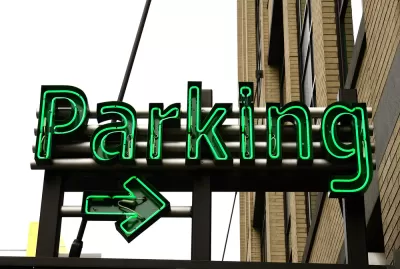
For three decades, Bill Keller owned a downtown retail business, served on various planning and redevelopment boards, built an expertise in parking issues, and gained the respect of everyone with whom he came in contact. While no parking retrograde, he felt compelled (if somewhat sheepishly) to write an op-ed reminding people, urbanists in particular, that parking still fills an important need in America's downtowns. Keller concedes that residential minimum parking requirements, particularly along transportation corridors, need to be lessened. However, until America's downtowns achieve the density and transit infrastructure to support their retail sectors, parking is still important to providing a diverse mixed-use urban environment.
He also notes that type and configuration are as important as supply. For example, high turn-over and proximity to retail are important. Modernized parking meters that ensure turn-over, accept credit cards, are programmable, and in some locations, offer dynamic pricing—all are important to supporting businesses. In turn, ensuring parking has a reliable and adequate revenue stream to facilitate state of the art, efficient, and effective parking, will not only help retail businesses, but also help to eliminate surface parking lots. By example, he notes:
In Downtown San Diego, for example, street parking has been increased by switching from parallel to angled or perpendicular spaces. And meter revenue will soon be used to underwrite creation of 200 new spaces below East Village Green [underneath the park].
Keller is even able to invoke Jane Jacobs words to support his reminder.
[Jacobs] did say: “There must be a sufficiently dense concentration of people…” And: “The district must serve more than one primary function; preferably more than two. These must insure the presence of people who go outdoors on different schedules and are in the place for different purposes, but who are able to use many facilities in common.”
This result requires some suburbanites, both customers and employees. For Keller's full op-ed, please see the source article
Read the full story: Why Parking Still Matters in America’s Downtowns

Parking Reform in San Diego Starts in the Neighborhoods
Citizens and businesses owners are actively involved in modernizing parking policies and assets in San Diego in a district by district approach, writes San Diego parking guru Bill Keller.
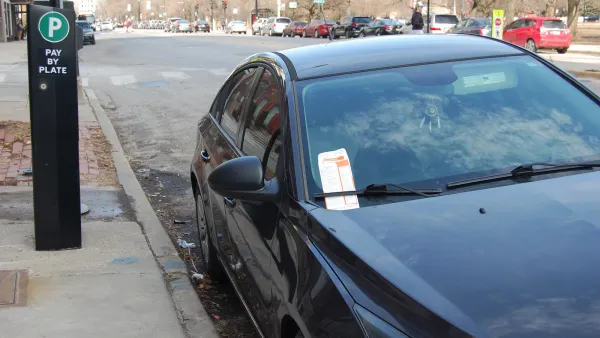
Chicago mayor secretly bid over $3B to buy back city's parking meters
Mayor Brandon Johnson revoked an offer to pay more than $800 million above the next-highest bidder to regain control of the city's parking meters.
Chicago parking meters are for sale once again
Chicago's 75-year lease of its parking meters to an LLC puts revenue decisions in the hands of private investors.

Planetizen Federal Action Tracker
A weekly monitor of how Trump’s orders and actions are impacting planners and planning in America.

California plans to bury El Niño’s downpour
If the state plays its cards right, it may be able to store a billion acre-feet of El Niño’s water in aquifers.

Chicago breaks ground on $3 billion megadevelopment
The new neighborhood, titled Foundry Park, will one day host 3,700 residences.

Satanic Place Names
From streams and lakes to valleys and canyons, I mapped more than 1,000 places named after the Devil.

California High-Speed Rail Authority CEO resigns after $600,000 scandal
Under Ian Choudri, the authority used taxpayer dollars to fund first class flights and trips to nightclubs.

Want to study the Missouri River? Soon, you may need unanimous approval from 10 states
Legislation would require 10 governors’ permission to study or build projects moving water outside the basin.

FREE Course: Walkable City 1: Why Walkability?
After describing his path towards focusing on walkability as the essence of good planning, Jeff Speck marches through his five principal reasons for making more walkable places.
Reinventing Malls: Planning Alchemy—Turning Gray Fields Into Gold
The course focuses on the opportunities and imperatives that shape reinvention of mall sites.

City of Rosemead
Rutgers University, Edward J. Bloustein School of Planning and Public Policy
One Hundred Miles
Hunter College, City University of New York (CUNY)
The Architects Foundation
University of Cincinnati Online
City of Cambridge
Montrose County
The Pocatello Development Authority