The U.S. government will sue Fiat Chrysler Automobiles over software that allowed cars to pass emissions tests while letting out more pollutants than would be allowed.


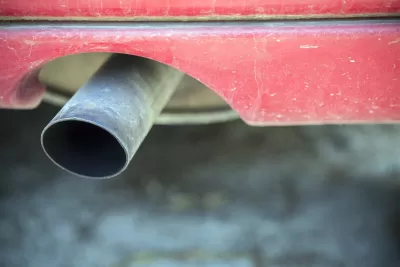
In a suit that echoes an earlier lawsuit against Volvo, the United States is suing Fiat Chrysler Automobiles. "The E.P.A. made its accusation after Volkswagen’s admission that it had used 'defeat device' software to enable its cars to pass emissions tests while spewing far more pollutants than allowed in normal driving," Neal E. Boudette writes for the New York Times.
The dispute has stopped Fiat's sales of diesel trucks. "In 2015 and 2016, the company sold more than 50,000 diesel Ram pickups per year in the United States, making it by far the largest-selling diesel-powered light vehicle in the country," Boudette writes. For its part, Fiat (the company that owns Chrysler and has its headquarters in London) claims that no "deliberate" effort was made to cheat the emissions tests.
FULL STORY: U.S. Sues Fiat Chrysler, Accusing It of Using Software to Pass Emissions Tests

The EPA's Lackluster Environmental Justice Record
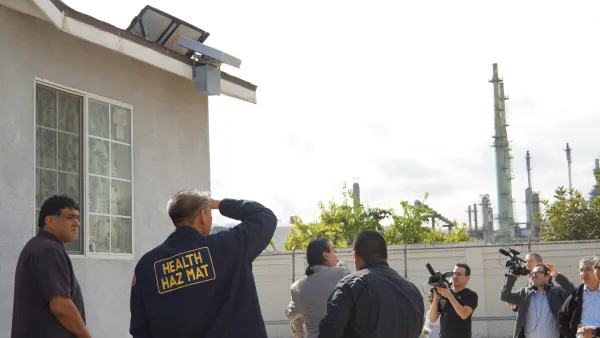
The Center for Public Integrity has released a report criticizing the EPA's environmental justice competence. In only 12 cases has the agency taken official action on behalf of communities affected disproportionately by polluters.
Republicans Back Urgent Climate Action
Four former EPA heads in Republican administrations, from Richard Nixon to George W. Bush, have penned an op-ed in The Times calling on members of all parties to support President Obama's recent climate initiatives and do more to curtail warming.
Chrysler Bails on Electric Cars
Despite taking billions in stimulus funds with the promise of forging ahead on electric vehicles, Chrysler has dissolved the engineering team working on their three proposed electric offerings.

Planetizen Federal Action Tracker
A weekly monitor of how Trump’s orders and actions are impacting planners and planning in America.

The state-sanctioned urbicide of Austin
People don’t kill cities. Freeways do.

US to reduce Colorado River water deliveries to Mexico
A new Colorado Treaty amendment reduces Mexico’s Colorado River water allocation by 250,000 acre feet.

5 New England states march closer to 800 megawatt wind energy project
Securing federal approval for the project may be complicated under the Trump administration, which has historically been hostile towards domestic wind power.

Baltimore to break ground on $50 million Transit Priority Project
The project will bring faster bus trips, safer streets and better bike connections to Baltimore.

Airbnb launches $250 million 'last-dollar financing' housing accelerator, makes first investment in Austin
The company will put $6.4 million towards affordable housing development in Texas’ capital.

FREE Course: Walkable City 1: Why Walkability?
After describing his path towards focusing on walkability as the essence of good planning, Jeff Speck marches through his five principal reasons for making more walkable places.
Reinventing Malls: Planning Alchemy—Turning Gray Fields Into Gold
The course focuses on the opportunities and imperatives that shape reinvention of mall sites.

Eagle County Government
Harvard University Graduate School of Design
Nashville Planning Department
The Architects Foundation
University of Cincinnati Online
The Pocatello Development Authority
The Urban Renewal Agency of the City of Pocatello
Journal of the American Planning Association