Two class action lawsuits take New York’s inaccessible metro system to task.


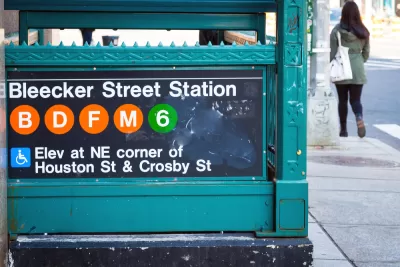
According to state and federal lawsuits filed April 20, New York's Metropolitan Transportation Authority's lack of elevators and poor maintenance practices constitute discrimination against people with disabilities.
"More than 75 percent of the city’s 472 subway stations have no elevators, lifts or other alternatives to stairs," giving the MTA the lowest accessibility rate of the 10 largest transit systems in the country, according to the New York Times.
The plaintiffs, represented by Disability Rights Advocates, want the court to require the MTA to change the way it deals with elevator maintenance and to develop a long-term plan to improve the system's accessibility.
In March, the Times ran a feature on how the state of the subway system impacts disabled residents, sometimes shutting them out of public life. One plaintiff who uses a wheelchair said, "Because of the lack of elevators, my disability really comes to the forefront in terms of what activities I can engage in, in the city."
He takes a different subway line uptown after work in order to catch another line back to Brooklyn to reach a station with an elevator for southbound commuters. He said he regularly cancels social engagements if he finds there is no viable way to travel to a station with a working elevator. And he has counted more than 200 elevator failures in the last two and a half years — about one for every eight trips he takes, he said.
An MTA spokesperson said the agency is spending $1 billion to bring 25 more stations into compliance with the ADA, and estimated it would take $10 billion to complete the rest.
Read the full story: New York City’s Subway System Violates Local and Federal Laws, Disability Groups Say
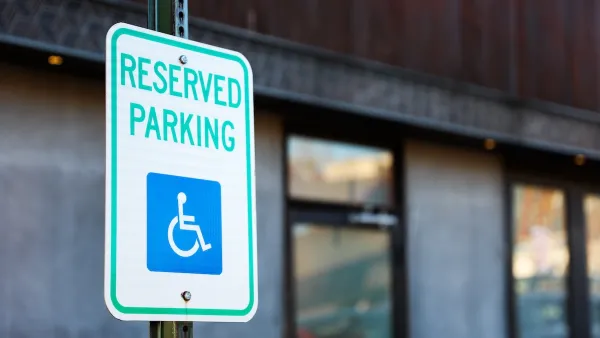
Raleigh Pilots App-Based Feedback Program for Accessible Parking
The city is using the program to collect real-time information about accessibility issues and correct them quickly.
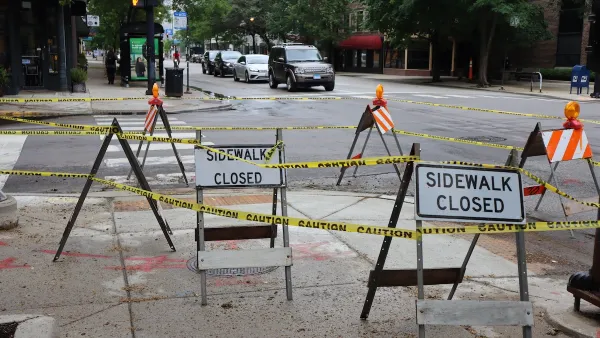
Chicago Residents Sue City Over Inaccessible Sidewalks
The suit alleges the city has failed to create a “coordinated, proactive system” for complying with ADA and ensuring accessibility on the city’s sidewalks and crosswalks.

For Advice on Accessibility, Look to Iceland
Cities around the country installed over 1,700 wheelchair ramps in the last five years, thanks in part to one man’s initiative.

Planetizen Federal Action Tracker
A weekly monitor of how Trump’s orders and actions are impacting planners and planning in America.

California plans to bury El Niño’s downpour
If the state plays its cards right, it may be able to store a billion acre-feet of El Niño’s water in aquifers.

Desperate measures: Advocates weigh draining Lake Powell to fill Colorado River
Draining the reservoir could reduce evaporation losses by a couple hundred thousand acre-feet.

Mamdani’s pied-à-terre tax survives legal challenge
A panel of judges found that the plaintiffs failed to demonstrate injury as a result of New York City's implementation of the tax.

Eastern Nebraska is running out of electricity
Data centers and electrification are straining eastern Nebraska’s grid, throttling economic development.

Seattle passes record-breaking transit services expansion
Proposition 1 will double the city’s transit tax to add 95,000 more bus trips and preserve 180,000 bus trips annually.

FREE Course: Walkable City 1: Why Walkability?
After describing his path towards focusing on walkability as the essence of good planning, Jeff Speck marches through his five principal reasons for making more walkable places.
Reinventing Malls: Planning Alchemy—Turning Gray Fields Into Gold
The course focuses on the opportunities and imperatives that shape reinvention of mall sites.

City of Rosemead
Rutgers University, Edward J. Bloustein School of Planning and Public Policy
One Hundred Miles
University of Michigan School for Environment and Sustainability (SEAS)
Hunter College, City University of New York (CUNY)
The Architects Foundation
City of Cambridge
Montrose County
The Pocatello Development Authority