Blessed with an abundance of sun, California is trying to figure out how to deal with a glut of solar energy.


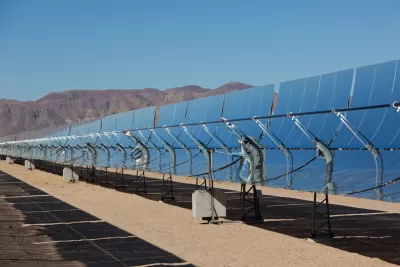
In 2016, enough solar generated electricity to power 45,000 homes was lost in California because there wasn't concurrent demand for it. David Danelski reports in the Daily Breeze (via the Press-Enterprise) that solar power generated during the middle of the day often will go unused because the power demand from consumers doesn't pick up until the evening. The loss in 2016 was double what was lost the year previous, and the losses could be worse in the future as the use of solar panel systems continues to increase. State officials are looking at several solutions to reduce the waste, including the use of batteries to store the energy, trading power to abutting states, and incentivizing consumers to put timers on their dishwashers, pool pumps and other home systems, to run during the hours when power is at its cheapest.
Read the full story: Here’s how California ended up with too much solar power

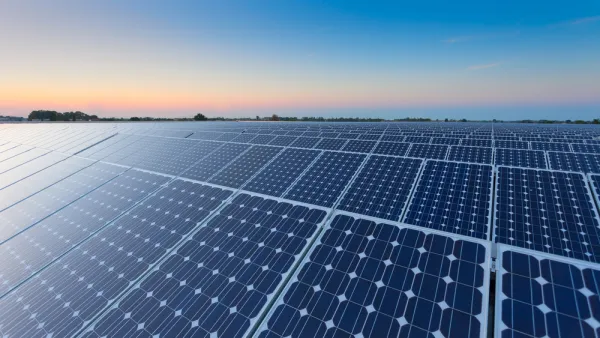
Union Opposition Puts Brakes on 'Record-Cheap' Solar Installation
Under a proposed 25-year solar contact, the Los Angeles Department of Water and Power would pay record-cheap prices for 400 megawatts of power. But the utility declined to approve the deal after a utility workers' union raised concerns.
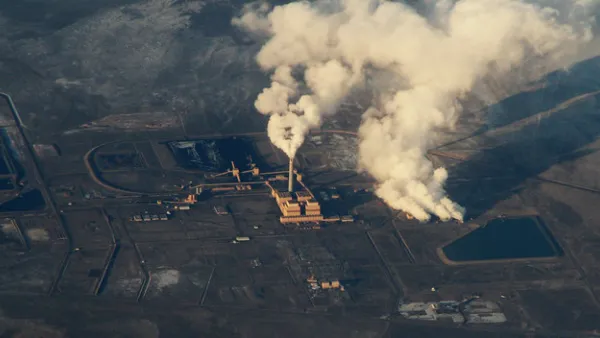
Shuttering a Large Coal Plant: A Tale of Two States
Environmentalists in California are upset that Los Angeles will build a new 840-megawatt natural gas plant to replace a 1,800-megawatt coal plant. The coal plant has been crucial to the economic development of Millard County, Utah.
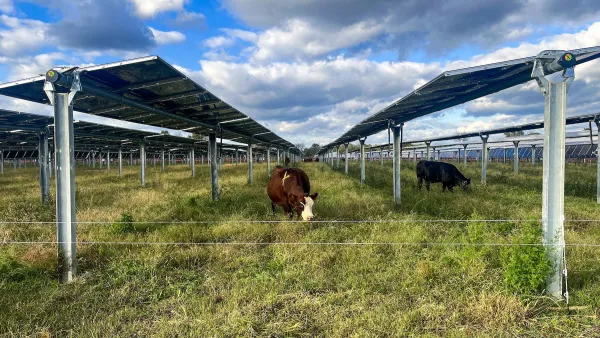
Cows at Tennessee's 'Silicon Ranch' graze under solar panels
The project aims to prove that agriculture and solar energy production can work in tandem.

Planetizen Federal Action Tracker
A weekly monitor of how Trump’s orders and actions are impacting planners and planning in America.

Amtrak, CN end decades-long dispute with eight-year agreement
The new operating agreement establishes an updated framework for the companies to work together, including processes to resolve disputes.

Judges permit Denver to divert 77,000 acre feet from the Colorado River for reservoir expansion
Overuse and climate change have caused the Colorado River’s water levels to plummet.

NYC DOT wants faster, more permanent street upgrades
The city is examining ways to build more concrete infrastructure without getting entangled in 'decades-long' projects.

'Something we’ve never seen before:' rising utility rates could strain city finances nationwide
Data centers, climate change and other factors have caused utility rates in the United States to increase by 38% since 2020.

Trump to overrule local leaders, lease millions of acres of America’s Pacific Island territories’ seafloors to mining companies
International law says that the Indigenous people of America’s territories have a right to prior and informed consent regarding projects that impact their countries.

FREE Course: Walkable City 1: Why Walkability?
After describing his path towards focusing on walkability as the essence of good planning, Jeff Speck marches through his five principal reasons for making more walkable places.
Reinventing Malls: Planning Alchemy—Turning Gray Fields Into Gold
The course focuses on the opportunities and imperatives that shape reinvention of mall sites.

Harvard University Graduate School of Design
KFH Group Inc.
Greater Baltimore Committee
The Architects Foundation
University of Cincinnati Online
The Pocatello Development Authority
The Urban Renewal Agency of the City of Pocatello