Retail across the US is shrinking precipitously. Where does that leave parking? Scott Doyon has pointers on not applying old logic to new dynamics.


This week, "the Atlantic ran a piece on the Great Retail Meltdown of 2017 which, to summarize, tied the present culling of the retail herd to three phenomena: the rise of online shopping; a half century of overbuilding retail space; and the present shift in spending from goods to experiences."
"In short, with people increasingly getting their everyday stuff online and valuing an interesting meal with friends over a trip to the mall to get a Hollister sweater, our overly abundant providers of commercial goods are taking a beating."
"These are the kinds of trends that ripple out well beyond Retail Industry News. Their impacts can be felt across all levels of community. So my interest as I read it isn’t so much in the specifics of what’s happening as it is in the underlying threads that inform the phenomenon overall and how those threads might impact prospects for local placemaking."
Doyon dives into the parking fallout from retail's retreat, particularly for local implications.

Read the full story: Parking is a Commodity, Not an Experience

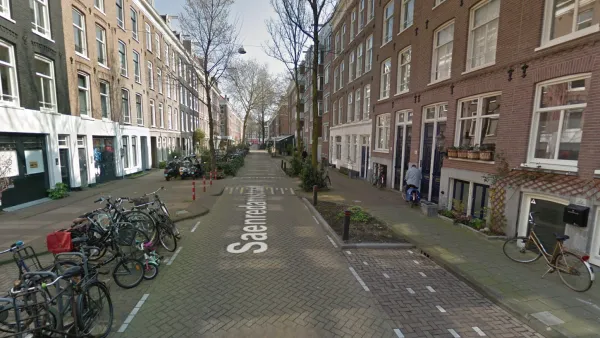
Watch: How to Remove Thousands of Parking Spaces
What the city of Amsterdam will gain by removing cars from on-street parking space.
Aggravated 15 Year Olds as a Measure of Place
Is there nowhere in your town to teach a kid to drive? Congratulations. You may be on to something.
The Next Step in Downtown Pittsburgh's Resurgence: Build More Parking?
With an approaching mayoral transition, Mark Belko looks at what Pittsburgh's next leader will need to focus on to keep downtown's rejuvenation rolling. Should building more parking be at the top of the list?

Planetizen Federal Action Tracker
A weekly monitor of how Trump’s orders and actions are impacting planners and planning in America.

Amtrak, CN end decades-long dispute with eight-year agreement
The new operating agreement establishes an updated framework for the companies to work together, including processes to resolve disputes.

Northwest rail fans eager for Sept. 30 debut of Amtrak’s Airo fleet
Get ready for that new train smell and more seats. But they won’t go faster or run more frequently on the Cascades route in Washington and Oregon.

Brightline Florida files for bankruptcy
The transit company is over $5 billion in debt.

St. Louis Metro to test if single-car trains can reduce operating costs, maintain rider satisfaction
The pilot program will run from October to spring 2027, and begin with one single-car train operating on Metrolink’s Red and Blue lines.

Pennsylvania is building data centers in abandoned mines
Housing data centers in mines provides an alternative to destroying local forests and may spare residents from data centers’ noise and air pollution.

FREE Course: Walkable City 1: Why Walkability?
After describing his path towards focusing on walkability as the essence of good planning, Jeff Speck marches through his five principal reasons for making more walkable places.
Reinventing Malls: Planning Alchemy—Turning Gray Fields Into Gold
The course focuses on the opportunities and imperatives that shape reinvention of mall sites.

City of Thousand Oaks
City of Wisconsin Rapids
Harvard University Graduate School of Design
The Architects Foundation
University of Cincinnati Online
The Pocatello Development Authority
The Urban Renewal Agency of the City of Pocatello