A funding formula that frequently determines the scope and quality of transit in the state of Maryland could be reformed by state legislators this year.


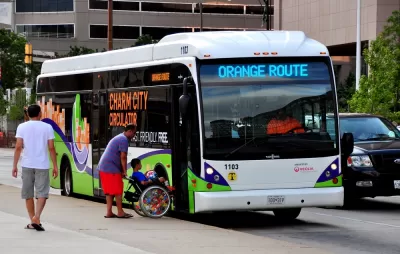
Brian O'Malley reports on legislation in Maryland that would change the funding formula for transit everywhere in the state.
Currently, Maryland transit systems are handcuffed by a requirement that all transit systems pay for at least 35 percent of its operating budget with rider fares—the farebox recovery mandate, to use the technical term. The state's farebox recovery affects "Maryland Transit Administration (MTA) products, like MTA local (aka Baltimore’s bus service) and commuter buses (which primarily serve the District), the three MARC commuter lines, and Baltimore’s Light Rail and Metro subway lines," according to O'Malley.
"The result of complying with this mandate is that MTA regularly has no choice but to refrain from investing in services and maintenance even if those things would grow ridership and revenues over time," according to O'Malley. "In public meetings, MTA officials often cite the farebox recovery mandate as a limiting factor when responding to requests to provide service to growing employment sites or other destinations, like a new Amazon warehouse distribution facility in Baltimore."
In response, two bills are moving through the Maryland State Legislature. House of Delegates Bill 271 and Senate Bill 484 have both passed through committee, with "broad support among central Maryland transit advocates, business leaders and riders," according to O'Malley.
FULL STORY: How Maryland handcuffs its transit system, and how that could change

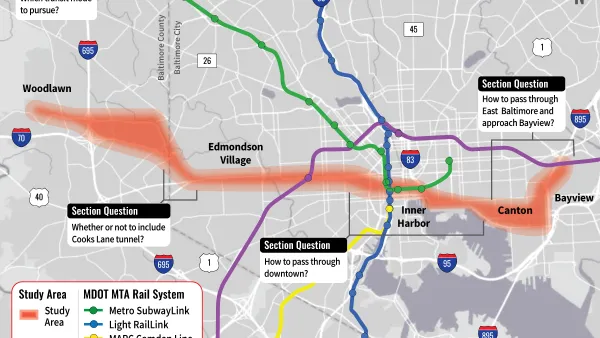
Maryland to Restart Planning for East-West Transit Line Through Baltimore
A plan for the Red Line, an east-west light rail line notoriously canceled by former-Governor Larry Hogan in 2015, is back on the table in Baltimore.
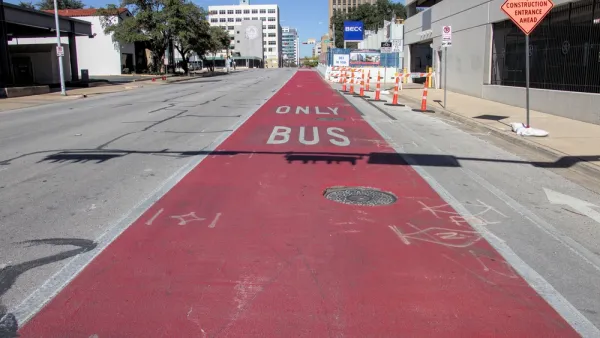
Texas Legislation Would Add More Roadblocks for Transit Funding in Austin
A former Austin city councilmember, now at the Texas State Legislature, is trying to make it harder for Austin Transit Partnership to borrow money to fund Project Connect, the Austin region’s big, ambitious transit investment plan.

Report Highlights the Need for Local Governance in Baltimore Transit
The unique structure of the Maryland Transit Administration leaves local stakeholders out of decision-making.

Planetizen Federal Action Tracker
A weekly monitor of how Trump’s orders and actions are impacting planners and planning in America.

The state-sanctioned urbicide of Austin
People don’t kill cities. Freeways do.

US to reduce Colorado River water deliveries to Mexico
A new Colorado Treaty amendment reduces Mexico’s Colorado River water allocation by 250,000 acre feet.

Mamdani overhauls NYC's Vision Zero plan with 100 new policy goals
The overhaul aims to reduce traffic deaths and make streets safer for pedestrians, cyclists and drivers through lower speed limits, new safety infrastructure and more.

Amtrak not solely to blame for New Jersey commuter rail's unreliability, report finds
A new study from the Garden State Initiative found that NJ Transit’s budget grew 20% across a 4 year period, but reliability declined significantly over the same period.

EPA erases limits on planet-warming pollution from power plants
Under Monday’s plan, power plants would still have some limits on how much mercury, arsenic and other contaminants they can emit.

FREE Course: Walkable City 1: Why Walkability?
After describing his path towards focusing on walkability as the essence of good planning, Jeff Speck marches through his five principal reasons for making more walkable places.
Reinventing Malls: Planning Alchemy—Turning Gray Fields Into Gold
The course focuses on the opportunities and imperatives that shape reinvention of mall sites.

Eagle County Government
Harvard University Graduate School of Design
Nashville Planning Department
The Architects Foundation
University of Cincinnati Online
The Pocatello Development Authority
The Urban Renewal Agency of the City of Pocatello
Journal of the American Planning Association