Renters who care about neighborhood issues have avenues for creating change, but they need to be savy about getting their message across.


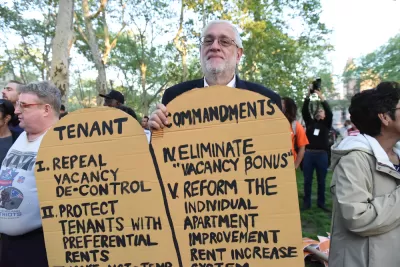
It's easy to feel invisible as a renter, argues Rachel Quednau in a piece for Strong Towns. "I rarely receive notices about neighborhood meetings and when I do, they have almost always already occurred by the time I get the letter. In short, I feel disregarded and ignored as a tenant," Quednau writes.
Because of these issues, renters generally are less represented in local government. "in every Seattle district council (a form of local government), no more than 40% of the councilors representing any district were renters, and for many of the councils, the amount of councilors who rent was less than 10%. This is in spite of the fact that the Seattle population is over 50% renters. Failing to represent renter can also mean cutting out the demographics that typically rent (young people, people of color, etc.)," Quednau reports.
All of this is not to say it's impossible to make your voice heard, and Quednau offers some suggestions from her own experience and advice shared by community activists. Her main tips are these, with more detail in the article:
- Get to know your neighbors.
- Find out when neighborhood meetings are and show up.
- Work through your landlord.
Read the full story: HOW RENTERS CAN BE NEIGHBORHOOD ADVOCATES
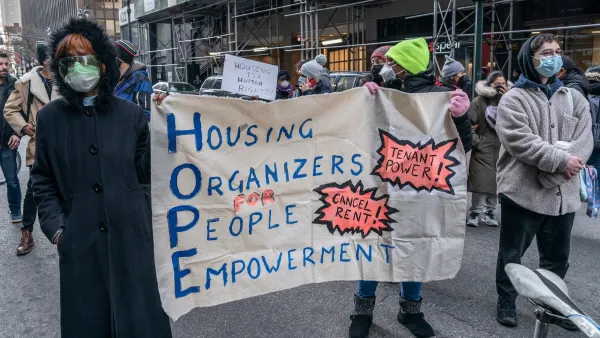
NYC 'Rental Ripoff' report calls for crackdown on negligent landlords
The report outlines strategies for empowering renters and transferring properties from 'low-road' landlords to those who focus on improved tenant outcomes.

LA’s Laws Against Rent Gouging are Going Unused — Not Because it’s not Happening
The county has not fined anyone under new laws passed after last year’s wildfires.
DC Housing Advocates Warn of ‘Critical Data Gap’ as District is Poised to Roll Back Tenant Protections
The District lacks a system for tracking evictions trends.

Planetizen Federal Action Tracker
A weekly monitor of how Trump’s orders and actions are impacting planners and planning in America.

California plans to bury El Niño’s downpour
If the state plays its cards right, it may be able to store a billion acre-feet of El Niño’s water in aquifers.

Desperate measures: Advocates weigh draining Lake Powell to fill Colorado River
Draining the reservoir could reduce evaporation losses by a couple hundred thousand acre-feet.

Mamdani’s pied-à-terre tax survives legal challenge
A panel of judges found that the plaintiffs failed to demonstrate injury as a result of New York City's implementation of the tax.

Eastern Nebraska is running out of electricity
Data centers and electrification are straining eastern Nebraska’s grid, throttling economic development.

Seattle passes record-breaking transit services expansion
Proposition 1 will double the city’s transit tax to add 95,000 more bus trips and preserve 180,000 bus trips annually.

FREE Course: Walkable City 1: Why Walkability?
After describing his path towards focusing on walkability as the essence of good planning, Jeff Speck marches through his five principal reasons for making more walkable places.
Reinventing Malls: Planning Alchemy—Turning Gray Fields Into Gold
The course focuses on the opportunities and imperatives that shape reinvention of mall sites.

City of Rosemead
Rutgers University, Edward J. Bloustein School of Planning and Public Policy
One Hundred Miles
University of Michigan School for Environment and Sustainability (SEAS)
Hunter College, City University of New York (CUNY)
The Architects Foundation
City of Cambridge
Montrose County
The Pocatello Development Authority