The Central Ohio Transit Authority will culminate a $9.4 million plan to redesign the bus system serving the Columbus region later this year.


Kimball Perry reports on the May 1 launch of redesigned bus service in Columbus, Ohio.
According to Perry, the newly redesigned bus service for the Central Ohio Transit Authority (COTA) reflects a "new philosophy of how COTA views its riders and service," focusing on delivering "more riders to destinations faster and more directly."
Perry devotes a lot of ink to the opinion of one resident who opposes the changes, but Josh Sikich, director of COTA's Transit System Redesign, also makes the case for locating frequent lines near population densities.
More riders will be near routes that run more often, Sikich said. Now, 116,000 riders are within a quarter-mile of a bus route that runs every 15 minutes. After May 1, that number will rise to 219,000 riders, an 89 percent increase.
According to the article, COTA is expecting ridership to decline initially, before increasing by 10 percent by 2020. The city is offering an interactive map to compare existing and future routes. The city can also point to the example of Houston, where the bus system has experienced large increases in ridership since undertaking a similar redesign in August 2015.
Read the full story: COTA to implement new bus routes on May 1

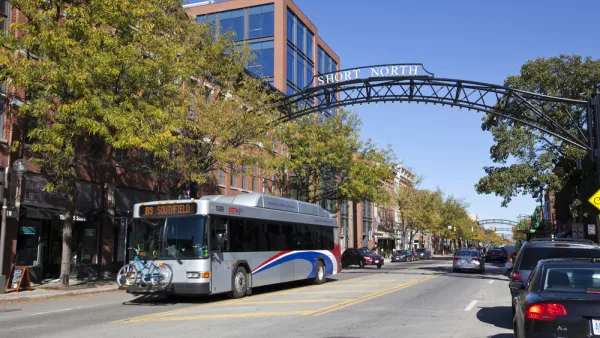
Bus System Redesign Wins Improved Ridership in Columbus
After a bus system redesign a year ago, Columbus is one of a few cities in the country where bus ridership is increasing.
Updated Transit Network for Columbus Available for Public Comment
Jarrett Walker shares news of a proposed transit network update for Columbus, Ohio, which he helped develop as part of a consulting team led by IBI Associates. The update has been released for public comment.
Boston to Pilot Free Transit Passes for Workers in Commercial Districts
The city of Boston will undertake an experiment about how to center public transit as an economic recovery tool.

Planetizen Federal Action Tracker
A weekly monitor of how Trump’s orders and actions are impacting planners and planning in America.

California plans to bury El Niño’s downpour
If the state plays its cards right, it may be able to store a billion acre-feet of El Niño’s water in aquifers.

Desperate measures: Advocates weigh draining Lake Powell to fill Colorado River
Draining the reservoir could reduce evaporation losses by a couple hundred thousand acre-feet.

Metra may invest $9.1 billion in regional rail
The agency released a draft of a study examining potential ways to offer more frequent train service.

California city breaks ground on transit connector
The project includes three mobility hubs and a pedestrian bridge.

After public outcry, Massachusetts city releases housing development tracker
Cambridge’s tracker currently shows 250 housing projects in various stages of development.

FREE Course: Walkable City 1: Why Walkability?
After describing his path towards focusing on walkability as the essence of good planning, Jeff Speck marches through his five principal reasons for making more walkable places.
Reinventing Malls: Planning Alchemy—Turning Gray Fields Into Gold
The course focuses on the opportunities and imperatives that shape reinvention of mall sites.

City of Rosemead
Rutgers University, Edward J. Bloustein School of Planning and Public Policy
One Hundred Miles
Hunter College, City University of New York (CUNY)
The Architects Foundation
University of Cincinnati Online
City of Cambridge
Montrose County
The Pocatello Development Authority