With the federal funding situation uncertain, water utilities are left in widely varying financial positions. Comparing local utilities across six metrics paints a grim picture.


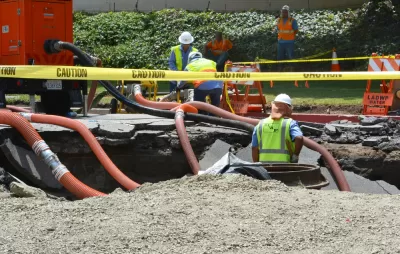
The incoming Trump Administration has made vague promises around federal infrastructure spending. "However, much of the hard work continues to rest on the shoulders of individual cities and states, where more than 95 percent of public spending on operations and capital improvements takes place annually."
For Brookings, Joseph Kane writes that despite widespread support for upgrades, "only about 17 percent of utilities are confident that they can just cover the cost of existing service through rates and fees—let alone pursue needed upgrades."
In the report, Kane compares local water utilities across "three different measures of utility finances—operating ratios, debt-to-asset ratios, and rates—and three broad economic variables—changes in population, changes in median household income, and the share of lower-income households in the primary city served—to create a new barometer for city-level water infrastructure investment."
The results aren't exactly promising. "Only a handful of drinking water utilities in the largest cities nationally rank highly across six major categories of water finance and related economic indicators."
FULL STORY: Investing in water: Comparing utility finances and economic concerns across U.S. cities

Climate change could double household water costs in some cities, study finds
New research suggests that climate change-related stressors are straining municipal water systems.
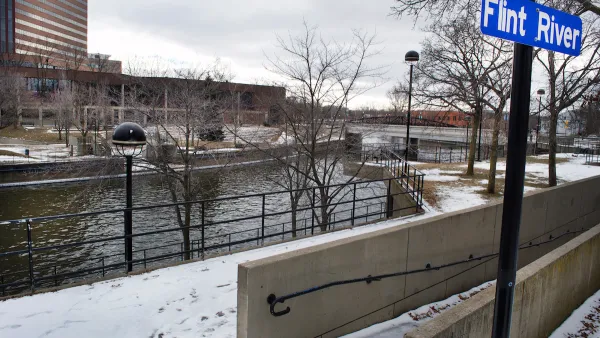
Lead Pipes Make Up Nearly One Tenth of US Water Service Lines
A decade after the Flint crisis captured national attention, tens of thousands of US water transmission lines can still leach dangerous chemicals.
This Is What Really, Really Cheap Water Is Actually Costing Utah
The state's widespread practice of supplying unlimited untreated water to homes may be part of the reason it has to spend billions on a new pipeline and dam.

Planetizen Federal Action Tracker
A weekly monitor of how Trump’s orders and actions are impacting planners and planning in America.

The state-sanctioned urbicide of Austin
People don’t kill cities. Freeways do.

US to reduce Colorado River water deliveries to Mexico
A new Colorado Treaty amendment reduces Mexico’s Colorado River water allocation by 250,000 acre feet.

Mamdani overhauls NYC's Vision Zero plan with 100 new policy goals
The overhaul aims to reduce traffic deaths and make streets safer for pedestrians, cyclists and drivers through lower speed limits, new safety infrastructure and more.

Amtrak not solely to blame for New Jersey commuter rail's unreliability, report finds
A new study from the Garden State Initiative found that NJ Transit’s budget grew 20% across a 4 year period, but reliability declined significantly over the same period.

EPA erases limits on planet-warming pollution from power plants
Under Monday’s plan, power plants would still have some limits on how much mercury, arsenic and other contaminants they can emit.

FREE Course: Walkable City 1: Why Walkability?
After describing his path towards focusing on walkability as the essence of good planning, Jeff Speck marches through his five principal reasons for making more walkable places.
Reinventing Malls: Planning Alchemy—Turning Gray Fields Into Gold
The course focuses on the opportunities and imperatives that shape reinvention of mall sites.

Eagle County Government
Harvard University Graduate School of Design
Nashville Planning Department
The Architects Foundation
University of Cincinnati Online
The Pocatello Development Authority
The Urban Renewal Agency of the City of Pocatello
Journal of the American Planning Association