The Federal Transit Authority is calling the Detroit Department of Transportation in from the cold.


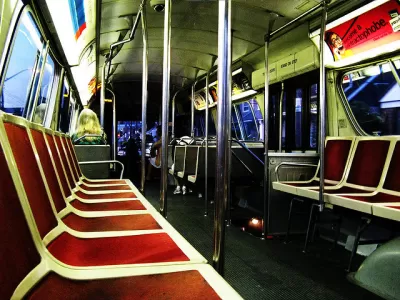
Matt Helms reports: "Detroit’s bus system is making significant improvements, enough that the U.S. government is lifting financial restrictions on how the agency can access federal funding."
The Federal Transit Administration imposed restrictions on federal funding for the beleaguered Detroit Department of Transportation in 2013, reaffirming the decision again in 2015. Since then, however, "Detroit has made huge strides, and the restrictions were lifted last month," reports Helms.
Improvements in the Detroit DOT's bus system performance include better on-time bus departures (98 percent in November, up from 62 percent in January 2014). The improvement efforts were greatly assisted by the purchase of 80 new buses in 2015. "The new buses and improved operations have allowed Detroit to expand routes and increase frequency of buses, in addition to adding 24-hour service along some of its busiest routes: Woodward, Gratiot and Grand River," adds Helms.
FULL STORY: Feds lift financial restrictions on Detroit bus system

Driver Shortages and Service Reductions: The Crisis in Public Transit Continues
While transit systems around the country had reason to celebrate the new funding made available in the federal infrastructure bill, long-term concerns about operational capacity have not been resolved.

Detroit to Expand Bus Service
Good news for transit riders in Detroit—new buses and 24-hour routes are coming soon.

Detroit Transit Agency Requests $20M Budget Increase
The Detroit Department of Transportation wants to boost ridership by hiring more drivers, buying new buses, and enhancing station infrastructure.

Planetizen Federal Action Tracker
A weekly monitor of how Trump’s orders and actions are impacting planners and planning in America.

The state-sanctioned urbicide of Austin
People don’t kill cities. Freeways do.

US to reduce Colorado River water deliveries to Mexico
A new Colorado Treaty amendment reduces Mexico’s Colorado River water allocation by 250,000 acre feet.

Mamdani overhauls NYC's Vision Zero plan with 100 new policy goals
The overhaul aims to reduce traffic deaths and make streets safer for pedestrians, cyclists and drivers through lower speed limits, new safety infrastructure and more.

Amtrak not solely to blame for New Jersey commuter rail's unreliability, report finds
A new study from the Garden State Initiative found that NJ Transit’s budget grew 20% across a 4 year period, but reliability declined significantly over the same period.

EPA erases limits on planet-warming pollution from power plants
Under Monday’s plan, power plants would still have some limits on how much mercury, arsenic and other contaminants they can emit.

FREE Course: Walkable City 1: Why Walkability?
After describing his path towards focusing on walkability as the essence of good planning, Jeff Speck marches through his five principal reasons for making more walkable places.
Reinventing Malls: Planning Alchemy—Turning Gray Fields Into Gold
The course focuses on the opportunities and imperatives that shape reinvention of mall sites.

Eagle County Government
Harvard University Graduate School of Design
Nashville Planning Department
The Architects Foundation
University of Cincinnati Online
The Pocatello Development Authority
The Urban Renewal Agency of the City of Pocatello
Journal of the American Planning Association