A dive into the reach of the Cincinnati Bell Connector's influence on a revitalizing urban neighborhood.


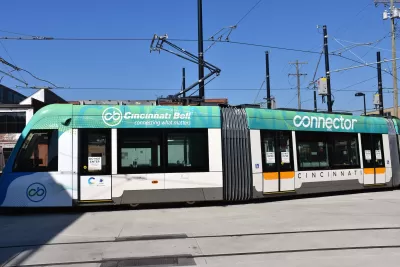
The Cincinnati Business Courier, led by Chris Wetterich and Tom Demeropolis, has published an analysis of the Cincinnati Streetcar, which is actually called the Cincinnati Bell Connector.
The streetcar opened in September following years of controversy, and made the news for the wrong reasons (poor service and sluggish ridership) earlier in December. At the end of the year of the Bell Connector's opning, Wetterich and Demeropolis analyze the real estate impact of the streetcar, recognizing opposing sides to a debate about the drivers of the ongoing revival of the city's Over-the-Rhine neighborhood. Streetcar opponents credit "the city’s generous tax incentive program (which is available in every city neighborhood)" or "the Cincinnati Center City Development Corp. [bringing] urban redevelopment to a large scale." Streetcar supporters "want to attribute nearly everything good that has happened in downtown and Over-the-Rhine to the $148 million project."
Wetterich and Demeropolis inquired with building owners along the streetcar route who had pulled construction permits since 2012 (totaling $160 million in investment) to ask the question: "How much of a factor was the streetcar in your decision to build?" They didn't expect to find receive many straight answers, given the politicized nature of the project, but they were wrong. "Dozens of building owners, developers and lessees were willing to talk with us and be candid about whether the streetcar influenced their decision-making," writes Wetterich.
Unfortunately, the Business Courier's database of findings regarding the Bell Connector's investment impact remains locked by a subscriber paywall, but the free article previewing the work provides testimonials of six of the contacts the two spoke with in gathering the data for the analysis.
FULL STORY: A deeper look at the Courier’s big streetcar project

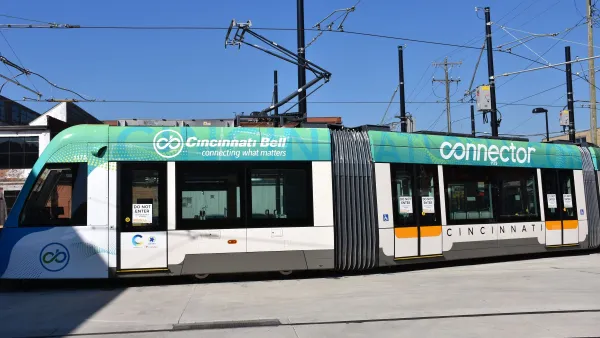
Cincinnati Streetcar Opens Today
The $148 million Cincinnati Bell Connector opens to the public today, offering free rides all weekend long. The 3.6-mile route connects downtown into the popular Over-the-Rhine neighborhood.
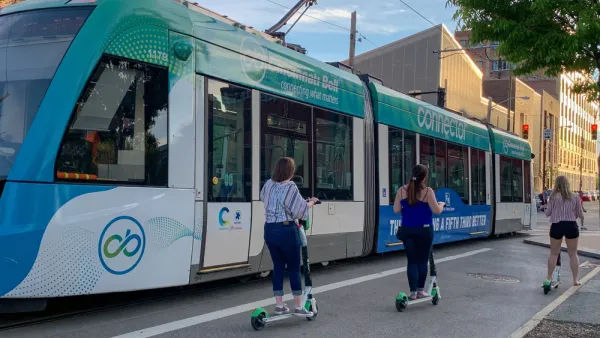
Cincinnati Streetcar Sets Monthly Ridership Record
The Cincinnati Streetcar, now known as the Cincinnati Connector, has come so far.
Cincinnati Streetcar Free Forever
The Cincinnati Bell Connector has been offering free rides since reopening in October, but the Cincinnati City Council recently decided to make the free rides a permanent feature.

Planetizen Federal Action Tracker
A weekly monitor of how Trump’s orders and actions are impacting planners and planning in America.

The state-sanctioned urbicide of Austin
People don’t kill cities. Freeways do.

US to reduce Colorado River water deliveries to Mexico
A new Colorado Treaty amendment reduces Mexico’s Colorado River water allocation by 250,000 acre feet.

5 New England states march closer to 800 megawatt wind energy project
Securing federal approval for the project may be complicated under the Trump administration, which has historically been hostile towards domestic wind power.

Baltimore to break ground on $50 million Transit Priority Project
The project will bring faster bus trips, safer streets and better bike connections to Baltimore.

Airbnb launches $250 million 'last-dollar financing' housing accelerator, makes first investment in Austin
The company will put $6.4 million towards affordable housing development in Texas’ capital.

FREE Course: Walkable City 1: Why Walkability?
After describing his path towards focusing on walkability as the essence of good planning, Jeff Speck marches through his five principal reasons for making more walkable places.
Reinventing Malls: Planning Alchemy—Turning Gray Fields Into Gold
The course focuses on the opportunities and imperatives that shape reinvention of mall sites.

Eagle County Government
Harvard University Graduate School of Design
Nashville Planning Department
The Architects Foundation
University of Cincinnati Online
The Pocatello Development Authority
The Urban Renewal Agency of the City of Pocatello
Journal of the American Planning Association