High-speed rail works well in Europe and Japan, so why can't the United States get it right?


What is it about high-speed rail that the U.S. doesn't get? An online publication of the Institute of Electrical and Electronics Engineers, Spectrum, explores why in the Northeastern corridor, "the very place that could and should be one of its greatest success stories of all, high-speed rail remains a disappointment." The article details the problems with Amtrak's high-speed Acela train and the shortcomings of the Northeast corridor. "High-speed rail should be designed and built as a system, with a dedicated right-of-way that has the alignment and trackage with the limited curvature and superelevation (raised outer curves enhance both safety and passenger comfort) demanded by high-speed operation," the article points out. "And it needs compatible rolling stock," none of which are present in the Northeast. Nevertheless, the author concludes that high-speed rail's time is coming in North America.
Thanks to Dateline APA
Read the full story: Running off the Rails


Planetizen Federal Action Tracker
A weekly monitor of how Trump’s orders and actions are impacting planners and planning in America.

Colorado’s Largest Data Center Could Rise Next to Homes — Without a Public Hearing
The proposed campus would consume 11 times the power of Denver International Airport; as it has across the country, opposition mounts.

US to reduce Colorado River water deliveries to Mexico
A new Colorado Treaty amendment reduces Mexico’s Colorado River water allocation by 250,000 acre feet.
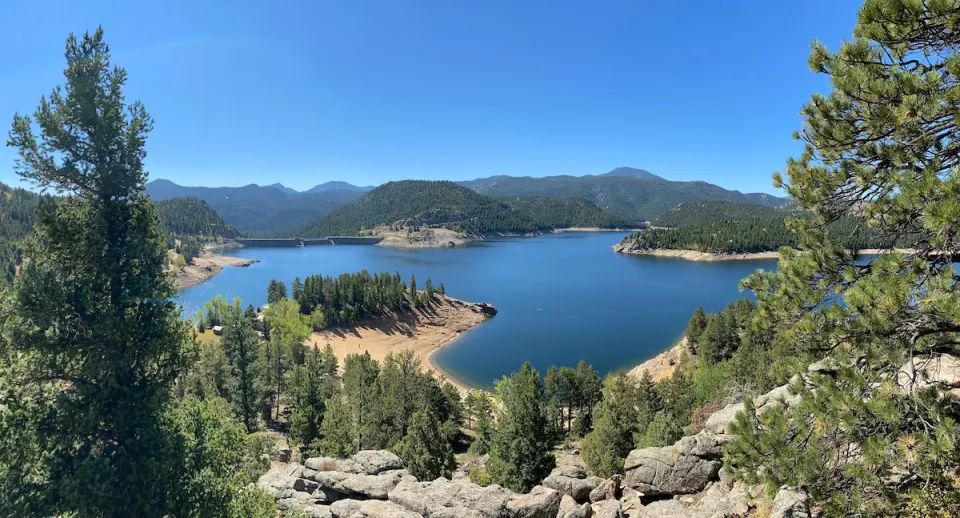
Judges permit Denver to divert 77,000 acre feet from the Colorado River for reservoir expansion
Overuse and climate change have caused the Colorado River’s water levels to plummet.
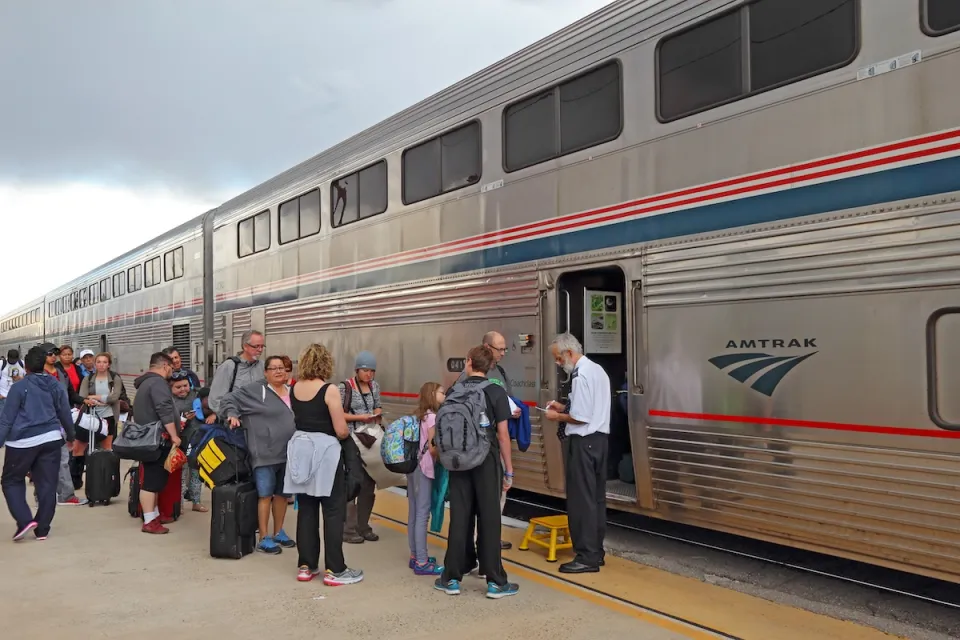
Amtrak, CN end decades-long dispute with eight-year agreement
The new operating agreement establishes an updated framework for the companies to work together, including processes to resolve disputes.

Raised interest rates may kill financially vulnerable construction projects
The chief economist at ConstructConnect warns that if construction project owners are negatively impacted by the raised rates, it could result in delayed payments to contractors.

FREE Course: Walkable City 1: Why Walkability?
After describing his path towards focusing on walkability as the essence of good planning, Jeff Speck marches through his five principal reasons for making more walkable places.
Reinventing Malls: Planning Alchemy—Turning Gray Fields Into Gold
The course focuses on the opportunities and imperatives that shape reinvention of mall sites.

KFH Group Inc.
Greater Baltimore Committee
Eagle County Government
The Architects Foundation
University of Cincinnati Online
The Pocatello Development Authority
The Urban Renewal Agency of the City of Pocatello