The winners of the 2016 Architecture at Zero competition took a case study located in the fog-locked city of San Francisco and delivered a net-zero site plan for a mixed-use academic facility.


Antonio Pacheco reports on the winners of the 2016 Architecture at Zero competition, which comes with the potential for a $25,000 prize.
"This year’s competition focused on the development of zero-net energy (ZNE) student housing for the San Francisco State University campus in California," explains Pacheco. "Entrants were asked to create an overall site plan to accommodate the erection of 784 housing units and attendant programs like a student services center, food hall, and child care facility."
Winners included both students and professionals. Students from Taiwan, Texas, and France were awarded. The professional awards were all follows:
- Citation Award: Piezien Circuit by Modus Studio, Fayetteville, Arkansas.
- Merit Award: Nexus by Dialog in Vancouver, Canada.
- Merit Award: Fog Catcher by LITTLE in Los Angeles.
The article includes renderings of examples from both categories.
Read the full story: Architecture at Zero’s net-zero energy competition winners announced
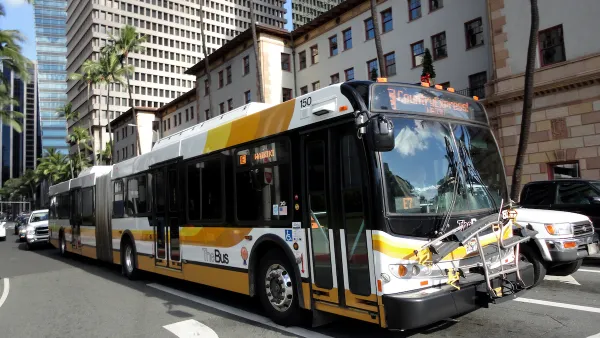
Youth Activists Secure Landmark Climate Agreement for Zero Emissions in Hawaii
The unprecedented climate settlement compels the state's transportation department to achieve zero emissions by 2045, marking a significant victory for climate justice and constitutional rights.
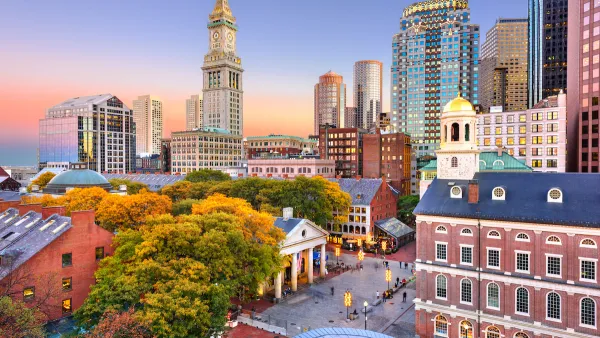
Boston Grant Program Supports Greener Affordable Housing
The city wants to achieve net-zero emissions by 2050.

How Buildings Can Lead the Way to a Decarbonized Future
A public utilities building in Santa Rosa shows how innovations in architecture and grid management can reduce energy use and prepare buildings for a more sustainable energy future.

Planetizen Federal Action Tracker
A weekly monitor of how Trump’s orders and actions are impacting planners and planning in America.

California plans to bury El Niño’s downpour
If the state plays its cards right, it may be able to store a billion acre-feet of El Niño’s water in aquifers.

Desperate measures: Advocates weigh draining Lake Powell to fill Colorado River
Draining the reservoir could reduce evaporation losses by a couple hundred thousand acre-feet.

Seattle passes record-breaking transit services expansion
Proposition 1 will double the city’s transit tax to add 95,000 more bus trips and preserve 180,000 bus trips annually.

Post election, Texas is no longer Musk’s 'AI oasis'
Elon Musk dolled out $446 million on the 2026 midterms, the most ever spent by a non-canidate.

Chicago voters approve permanent festival grounds, penalty for vacant property owners
Currently, major summer and fall festivals take over public parks for weeks at a time, drawing criticism from nearby residents

FREE Course: Walkable City 1: Why Walkability?
After describing his path towards focusing on walkability as the essence of good planning, Jeff Speck marches through his five principal reasons for making more walkable places.
Reinventing Malls: Planning Alchemy—Turning Gray Fields Into Gold
The course focuses on the opportunities and imperatives that shape reinvention of mall sites.

City of Rosemead
Rutgers University, Edward J. Bloustein School of Planning and Public Policy
One Hundred Miles
Hunter College, City University of New York (CUNY)
The Architects Foundation
University of Cincinnati Online
City of Cambridge
Montrose County
The Pocatello Development Authority