New codes intend to make skyways more accessible for all Minneapolans, but some say that no improvements can go far enough to make Minneapolis as walkable and lively as it would be without them.


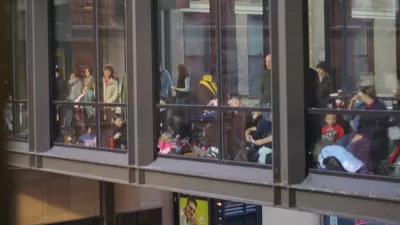
In some ways, the cold is a defining feature of the city of Minneapolis. It shapes the city and has inspired the tunnel and the skyways. These shelters from the elements are inextricably tied to the popular conception of downtown Minneapolis, Next City's Jen Kinney writes, "One thing is certain: In the ’60s, the burgeoning network of skyways likely saved downtown."
But, Kinney reports, the Skyways have their detractors, "Some argue they create a divided city: the haves, floating, warm above, and the have-nots cold below," Kinney reports. They can be difficult to navigate, and while new guidelines for building skyways aim to simplify wayfinding. Still some, particularly shop owners, complain, " …consequences of continuing to use the skyways: disappearing retail on the dead street below," Kinney writes. Time will tell if the updated guidelines can assuage the concerns of the Skyway's detractors.
Read the full story: Minneapolis Debates Future of Skyways
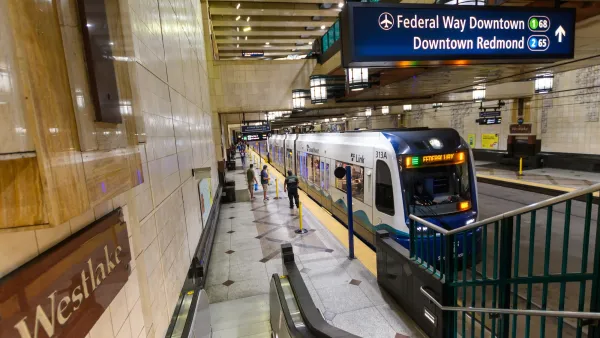
Commentary: Seattle's new transit wayfinding system is 'more confusing than clarifying'
Changes to Sound Transit signage could make it difficult to navigate the region's train system.

The Century-Old Call for Open Streets
Historical reports from the Regional Plan Association show that car-free streets is an idea almost as old as automobiles themselves.
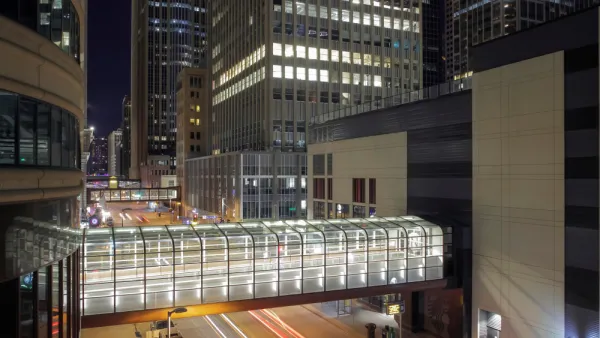
The Pandemic Has Not Been Kind to Pedestrian Skyways in the Twin Cities
Already a source of eternal controversy for their effects on street life and local business, pedestrian skyways have proven even more problematic during the pandemic.

Planetizen Federal Action Tracker
A weekly monitor of how Trump’s orders and actions are impacting planners and planning in America.

California plans to bury El Niño’s downpour
If the state plays its cards right, it may be able to store a billion acre-feet of El Niño’s water in aquifers.

Desperate measures: Advocates weigh draining Lake Powell to fill Colorado River
Draining the reservoir could reduce evaporation losses by a couple hundred thousand acre-feet.

Los Angeles just elected an urban planner as its mayor
Transportation analysts are optimistic that Raman will be more aggressive in addressing transit issues than Bass.

Mamdani’s pied-à-terre tax survives legal challenge
A panel of judges found that the plaintiffs failed to demonstrate injury as a result of New York City's implementation of the tax.

Eastern Nebraska is running out of electricity
Data centers and electrification are straining eastern Nebraska’s grid, throttling economic development.

FREE Course: Walkable City 1: Why Walkability?
After describing his path towards focusing on walkability as the essence of good planning, Jeff Speck marches through his five principal reasons for making more walkable places.
Reinventing Malls: Planning Alchemy—Turning Gray Fields Into Gold
The course focuses on the opportunities and imperatives that shape reinvention of mall sites.

City of Rosemead
Rutgers University, Edward J. Bloustein School of Planning and Public Policy
One Hundred Miles
University of Michigan School for Environment and Sustainability (SEAS)
Hunter College, City University of New York (CUNY)
The Architects Foundation
City of Cambridge
Montrose County
The Pocatello Development Authority