Votes are still being counted, but an expansion of the MAX light rail system to the suburban community of Tigard appears to be squeaking out a victory.


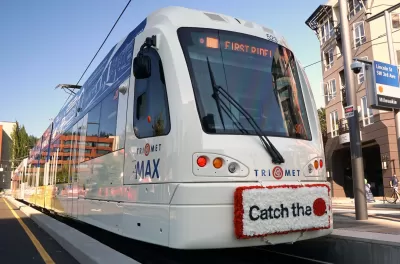
Another ballot measure to expand transportation infrastructure appears to have won, this time in Portland, Oregon. An extension of the metro area's MAX light rail system is narrowly winning the support of voters in the community of Tigard, to the southwest of Downtown Portland. Reporting for Oregon Public Broadcasting, Ryan Haas writes that a vote to expand the rail system to Tigard was required because of a requirement in the city's charter which opposes light rail unless a ballot measure to approve it passes.
The proposed Southwest Corridor light rail line could reach 12 miles, making it the longest light rail line built in the region in 20 years. The northeast end would be close to where Interstate 405 goes under Portland State University. It would extend west and south to Bridgeport Village — the mall on the edge of Tualatin.
The Portland Tribune reports that the vote count as of Wednesday (Nov 9) morning showed the measure passing by a margin of 0.53 percentage points, with a 119 vote difference.
FULL STORY: Tigard Voters Saying Yes To Light Rail Plan

TriMet to Redirect Funding for Transit Police
A new approach to public safety is in the works in Portland.
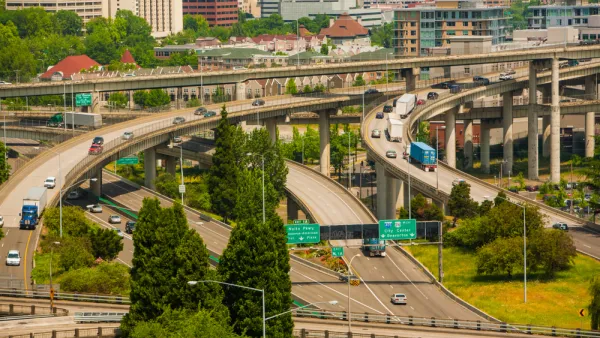
Advisory Committee Recommends Complete Tolling of Portland Interstates
A Portland regional value pricing committee recommended that the state transportation department operate two pilot programs to toll all the lanes on two interstate highways in the Portland-Vancouver metropolitan area.
Regional Light-Rail Connection to Portland Hinges on Suburban Vote
The city of Tigard could make or break the proposed Southwest Corridor light rail project with a vote this November.

The state-sanctioned urbicide of Austin
People don’t kill cities. Freeways do.

US to reduce Colorado River water deliveries to Mexico
A new Colorado Treaty amendment reduces Mexico’s Colorado River water allocation by 250,000 acre feet.

New Jersey’s second-largest city bans standalone data centers
Jersey City will continue to allow co-location facilities, such as those meant for research institutions that store their own data.

Amtrak not solely to blame for New Jersey commuter rail's unreliability, report finds
A new study from the Garden State Initiative found that NJ Transit’s budget grew 20% across a 4 year period, but reliability declined significantly over the same period.

EPA erases limits on planet-warming pollution from power plants
Under Monday’s plan, power plants would still have some limits on how much mercury, arsenic and other contaminants they can emit.

Phoenix announces new on-demand transit service, more frequent RAPID buses
Both new services will launch in October, and are part of Phoenix's Project Effective Access Solutions for Easing Congestion.

FREE Course: Walkable City 1: Why Walkability?
After describing his path towards focusing on walkability as the essence of good planning, Jeff Speck marches through his five principal reasons for making more walkable places.
Reinventing Malls: Planning Alchemy—Turning Gray Fields Into Gold
The course focuses on the opportunities and imperatives that shape reinvention of mall sites.

Eagle County Government
Harvard University Graduate School of Design
Nashville Planning Department
The Architects Foundation
University of Cincinnati Online
The Pocatello Development Authority
The Urban Renewal Agency of the City of Pocatello
Journal of the American Planning Association