A new United Nations Secretary-General's High-level Advisory Group on Sustainable Transport identifies policies that can result in inclusive and equitable growth, social development, protection of the global environment and ecosystems.


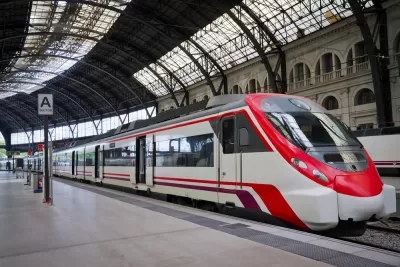
The High-level Advisory Group on Sustainable Transport works with governments, transport providers (aviation, marine, ferry, rail, road, and urban public transport), businesses, financial institutions, civil society and other stakeholders to promote sustainable transport systems and their integration into development policies. Their report, "Mobilizing Sustainable Transport for Development: Analysis and Policy Recommendations from the United Nations Secretary-General's High-Level Advisory Group on Sustainable Transport" includes numerous examples and case studies from around the world, and identifies specific strategies to create more inclusive and equitable growth, social development, protection of the global environment and ecosystems, and addressing climate change.
It states, "Sustainable transport is a driver of sustainable development and a means by which people can access what they need to live full and fulfilled lives. All actors— governments, business, civil society, and individuals— must make a genuine commitment to transforming the transport system in terms of individual travel and freight into one that is safe, affordable, accessible, efficient, and resilient, while minimizing carbon and other emissions and environmental impacts."
The group submitted the following ten recommendations:
- Make transport planning, policy and investment decisions based on the three sustainable development dimensions—social development, environmental (including climate) impacts and economic growth—and a full life cycle analysis.
- Integrate all sustainable transport planning efforts with an appropriately-balanced development of transport modes: integration vertically among levels of government and horizontally across modes, territories and sectors.
- Create supportive institutional, legal and regulatory government frameworks to promote effective sustainable transport.
- Build technical capacity of transport planners and implementers, especially in developing countries, through partnerships with international organizations, multilateral development banks, and governments at all levels, to ensure equitable access to markets, jobs, education and other necessities.
- Reinforce efforts toward preventing road traffic deaths and injuries.
- Foster an informed, engaged public as a crucial partner in advancing sustainable transport solutions.
- Establish monitoring and evaluation frameworks for sustainable transport, and build capacity for gathering and analyzing sound and reliable data and statistics.
- Promote diversified funding sources and coherent fiscal frameworks to advance sustainable transport systems, initiatives and projects.
- Increase international development funding and climate funding for sustainable transport.
- Promote sustainable transport technologies through outcome-oriented government investment and policies that encourage private sector investment and action through various incentive structures.
Read the full story: Mobilizing Sustainable Transport for Development


US casts sole dissenting vote against UN road safety declaration
The UN declaration calls for cutting road deaths in half by 2030.

Celebrating World Environment Day
Commemorate the 51st World Environment Day with this curated list of Planetizen articles highlighting research and projects that promote a healthier, more sustainable world.
Pandemic-Era Economic Growth in Metropolitan Areas
The world has gone through three turbulent years of Covid-19. The Brookings Institution continues its analysis of inclusive economic growth in 192 metropolitan areas in the U.S. during this period with the publication of Metro Monitor 2023.

Planetizen Federal Action Tracker
A weekly monitor of how Trump’s orders and actions are impacting planners and planning in America.

‘Going backwards:’ Baltimore mayor, students rally against state's transit funding plan
Maryland's proposed six-year plan provides no funding for Baltimore’s BMORE bus program and reduces its road maintenance funding.
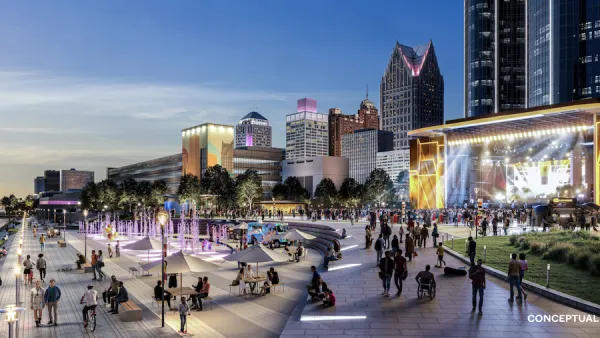
Detroit to transform waterfront with $2.2 billion investment
Developers will convert about 18 acres of unused parking lot space into civic spaces.

HUD, USDA agree on framework to simplify housing environmental review standards
Their agreement is a requirement of the 21st Century ROAD to Housing Act.

Cost of water rising at a faster pace than inflation, median household income
California and Maryland residents have seen their water bills grow especially high.

NYC building owners overwhelmingly comply with new emissions limits
The New York City Department of Buildings is fining owners who did not file emissions reports.

FREE Course: Walkable City 1: Why Walkability?
After describing his path towards focusing on walkability as the essence of good planning, Jeff Speck marches through his five principal reasons for making more walkable places.
Reinventing Malls: Planning Alchemy—Turning Gray Fields Into Gold
The course focuses on the opportunities and imperatives that shape reinvention of mall sites.

City of Thousand Oaks
City of Wisconsin Rapids
Harvard University Graduate School of Design
The Architects Foundation
University of Cincinnati Online
Northern Illinois Transit Authority (NITA)
The Pocatello Development Authority
The Urban Renewal Agency of the City of Pocatello