New Orleans is among the first cities to respond to the Department of Housing and Urban Development's Affirmatively Furthering Affordable Housing rule.



Jessica Williams reports: "Long divided by race and class, New Orleans has become even more segregated in recent years, and residents in majority-black neighborhoods often have the least access to jobs, affordable housing and other opportunities, according to a recently released plan that city officials say could help solve those issues."
"The plan, mandated under a new U.S. Department of Housing and Urban Development rule, seeks to ameliorate the woes of minority communities by investing in neighborhoods that have long been less well off than others," adds Williams. "Separately, it seeks to make it easier for residents of those areas to move to whiter, more affluent areas that have prospered."
The federal rule Williams refers to: the Affirmatively Furthering Fair Housing rule, released in its final form in July 2015. New Orleans is one of about 12 cities experimenting with the federal mandate, so the current plan could end up as a model for other cities around the country.
"In New Orleans, advocates hope the new federal requirements will focus attention on the city’s affordable housing shortage, which officials and housing advocates say is partly due to post-Hurricane Katrina gentrification as well as to zoning policies that keep multiple-family developments out of certain neighborhoods," explains Williams.
The article includes a lot more fine-grained analysis, digging into the recommendations of the report for specific neighborhoods in New Orleans.
Read the full story: How it happened, how to fix it: Plan set to combat New Orleans segregation, gentrification

20 Years After Katrina, New Orleans is More Unaffordable Than Ever
The city’s post-hurricane redevelopment has failed to include its most vulnerable residents.
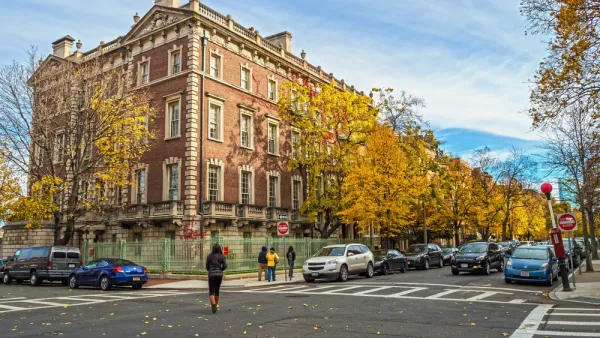
Boston to Require Fair Housing Review for New Developments
The Boston Zoning Code is one of the first in the nation to Affirmatively Furthering Fair Housing.

As New Orleans Property Values Climb, Property Taxes Relief Considered
New Orleans Mayor LaToya Cantrell is searching for ways to mitigate the impacts of "skyrocketing property values" while also holding on to some of the new revenue created by the corresponding rising property taxes.

Planetizen Federal Action Tracker
A weekly monitor of how Trump’s orders and actions are impacting planners and planning in America.

California plans to bury El Niño’s downpour
If the state plays its cards right, it may be able to store a billion acre-feet of El Niño’s water in aquifers.

Desperate measures: Advocates weigh draining Lake Powell to fill Colorado River
Draining the reservoir could reduce evaporation losses by a couple hundred thousand acre-feet.

Mamdani’s pied-à-terre tax survives legal challenge
A panel of judges found that the plaintiffs failed to demonstrate injury as a result of New York City's implementation of the tax.

Eastern Nebraska is running out of electricity
Data centers and electrification are straining eastern Nebraska’s grid, throttling economic development.

Seattle passes record-breaking transit services expansion
Proposition 1 will double the city’s transit tax to add 95,000 more bus trips and preserve 180,000 bus trips annually.

FREE Course: Walkable City 1: Why Walkability?
After describing his path towards focusing on walkability as the essence of good planning, Jeff Speck marches through his five principal reasons for making more walkable places.
Reinventing Malls: Planning Alchemy—Turning Gray Fields Into Gold
The course focuses on the opportunities and imperatives that shape reinvention of mall sites.

City of Rosemead
Rutgers University, Edward J. Bloustein School of Planning and Public Policy
One Hundred Miles
University of Michigan School for Environment and Sustainability (SEAS)
Hunter College, City University of New York (CUNY)
The Architects Foundation
City of Cambridge
Montrose County
The Pocatello Development Authority