The account of how the terror and tragedy of 9/11 led an urban planner from working for a private consulting firm to working in the public sector.


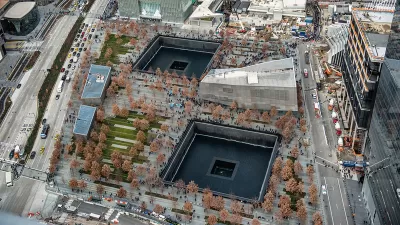
Working as an urban planner in a private consulting firm on September 11, 2001, Clement Lau—like many people—felt compelled to serve the country and the public in the wake of the tragic attacks of that day. Now, as planner for Los Angeles County Department of Parks and Recreation for the past 13 years, he reflects on how that tragic day directed his career:
Unfortunately, I lacked the aptitude, skills, and physical fitness/abilities to join the military, police, or fire services. However, I knew that I could still serve in other ways and contribute to the betterment of our communities. I had originally wanted to secure a civilian community planner position with branches/units of the military like the Naval Facilities Engineering Command (NAVFAC), but was unsuccessful. Fortunately, the door later opened in 2003 for me to enter the civil service as a planner with the County of Los Angeles. I am pleased and proud to say that I have now been a County planner for over 13 years, and have had many more opportunities to interact with and serve the public than I had as a consultant.
Seeing the devastation and destruction of the Twin Towers and the surrounding structures also impacted my psyche as a planner. I grew up loving big cities, and enjoyed the vibrancy and excitement of being in urban environments. Even though I had not been to Lower Manhattan at that time, I still felt as though my way of life and my love for cities suffered a big blow on that fateful day.
In the source article, he goes on to discuss his visit to New York City and the WTC memorial on the tenth anniversary of attack.
Read the full story: 9/11: Reflections of An Urban Planner

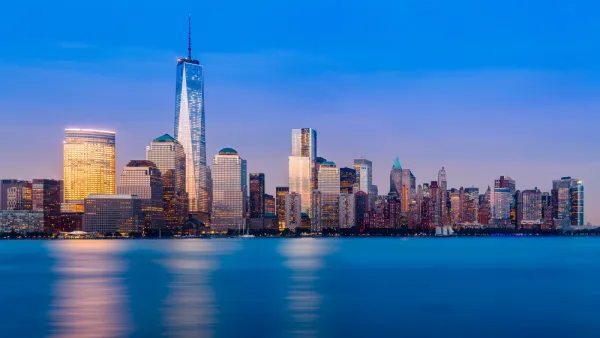
20 Years After 9/11: The 'Age of Skyscrapers' Is Nowhere Near Over
Despite predictions that the events of September 11, 2001 would be the end of skyscrapers, U.S. cities are building more tall buildings than ever.
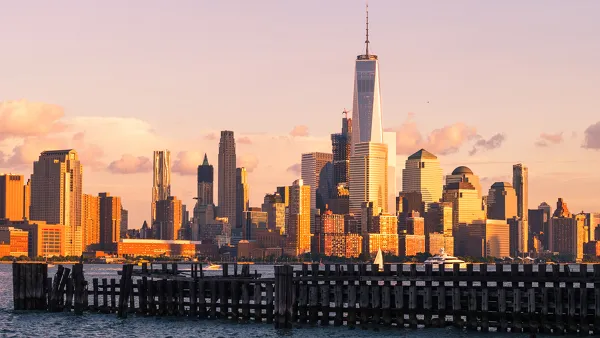
Taking Stock of New York's Changing Skyline Post-9/11
Fear that skyscrapers might be a persistent target of terrorist attacks did not last long beyond the days and months following 9/11. Neither terrorists nor the Great Recession have stopped the city's skyline from continuing to reaching skyward.

Francis Ford Copolla’s Urban Planning Swan Song
Legendary director Francis Ford Coppola’s likely final major film, Megalopolis, celebrates design and urban planning. It is a dazzling mishmash of architectural, cinematic, and literary history.

Planetizen Federal Action Tracker
A weekly monitor of how Trump’s orders and actions are impacting planners and planning in America.

Amtrak, CN end decades-long dispute with eight-year agreement
The new operating agreement establishes an updated framework for the companies to work together, including processes to resolve disputes.

Judges permit Denver to divert 77,000 acre feet from the Colorado River for reservoir expansion
Overuse and climate change have caused the Colorado River’s water levels to plummet.

NYC DOT wants faster, more permanent street upgrades
The city is examining ways to build more concrete infrastructure without getting entangled in 'decades-long' projects.

'Something we’ve never seen before:' rising utility rates could strain city finances nationwide
Data centers, climate change and other factors have caused utility rates in the United States to increase by 38% since 2020.

Trump to overrule local leaders, lease millions of acres of America’s Pacific Island territories’ seafloors to mining companies
International law says that the Indigenous people of America’s territories have a right to prior and informed consent regarding projects that impact their countries.

FREE Course: Walkable City 1: Why Walkability?
After describing his path towards focusing on walkability as the essence of good planning, Jeff Speck marches through his five principal reasons for making more walkable places.
Reinventing Malls: Planning Alchemy—Turning Gray Fields Into Gold
The course focuses on the opportunities and imperatives that shape reinvention of mall sites.

Harvard University Graduate School of Design
KFH Group Inc.
Greater Baltimore Committee
The Architects Foundation
University of Cincinnati Online
The Pocatello Development Authority
The Urban Renewal Agency of the City of Pocatello