Hazel Borys sharing ideas from thought leaders on inclusion and indigeneity.


"The placemakers way is to enable the triple bottom line of resilience: environment, economy, and society, trying to balance the needs of people, planet and profit. And yet it’s always easier to measure the impacts of our collective choices on profit — or even on the planet — than it is on people. We’ve blogged extensively about happiness, with equity as an essential component. Social equity has been defined as equal opportunity in a safe and healthy environment. Social equity requires fair, just and equitable public policy. Social equity is a generator of social capital."
Borys goes on to share highlights from two forums at art museums on inclusion and indigeneity. She encourages city planners to put these cultural institutions higher up on key stakeholders list for planning initiatives.
"How do we make communities more generative and sustainable? Tap into creativity. Follow artists, who find the seams where the conflict is happening."
"Relentless incrementalism is needed for systematic change. Diverse communities begin to engage when they see 'my voice counts.' Aspirations are not enough for systemic change. Inclusion can’t happen without diversity and equity."
Read the full story: Inclusive Cities: Inclusion equals diversity plus equity
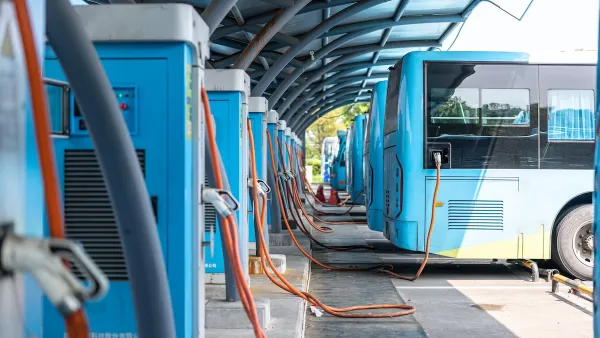
USDOT Launches Climate Adaptation Plan
The plan outlines the department’s key priorities in building resilient infrastructure and ensuring environmental justice in historically disinvested communities.
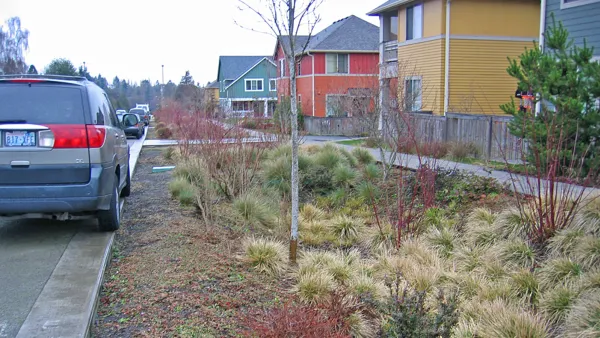
Green Infrastructure Toolkit Launches on World Water Day
The Green Infrastructure Toolkit lists 25 actions local governments can take to transform crusty, impermeable urban landscapes into vibrant, spongy ecosystems that preserve water as a resource and protect against its potential destruction in floods.
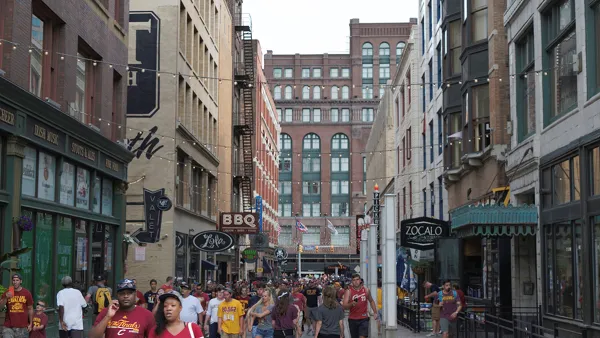
Cleveland: The Nation’s Most Equitably Walkable City
A new study assesses which cities have the broadest access to walkable neighborhoods.

Planetizen Federal Action Tracker
A weekly monitor of how Trump’s orders and actions are impacting planners and planning in America.

California plans to bury El Niño’s downpour
If the state plays its cards right, it may be able to store a billion acre-feet of El Niño’s water in aquifers.

Desperate measures: Advocates weigh draining Lake Powell to fill Colorado River
Draining the reservoir could reduce evaporation losses by a couple hundred thousand acre-feet.

Mamdani’s pied-à-terre tax survives legal challenge
A panel of judges found that the plaintiffs failed to demonstrate injury as a result of New York City's implementation of the tax.

Eastern Nebraska is running out of electricity
Data centers and electrification are straining eastern Nebraska’s grid, throttling economic development.

Seattle passes record-breaking transit services expansion
Proposition 1 will double the city’s transit tax to add 95,000 more bus trips and preserve 180,000 bus trips annually.

FREE Course: Walkable City 1: Why Walkability?
After describing his path towards focusing on walkability as the essence of good planning, Jeff Speck marches through his five principal reasons for making more walkable places.
Reinventing Malls: Planning Alchemy—Turning Gray Fields Into Gold
The course focuses on the opportunities and imperatives that shape reinvention of mall sites.

City of Rosemead
Rutgers University, Edward J. Bloustein School of Planning and Public Policy
One Hundred Miles
University of Michigan School for Environment and Sustainability (SEAS)
Hunter College, City University of New York (CUNY)
The Architects Foundation
City of Cambridge
Montrose County
The Pocatello Development Authority