Cities have appeared to figure very little into the presidential election up to now. To get a sense of whether this impression is accurate, I spent some time looking at the two party platforms, and the two candidate's websites.


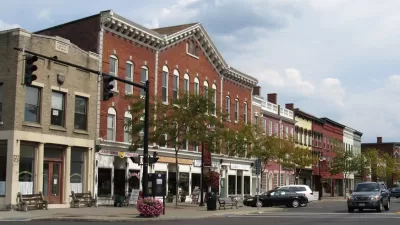
A detailed look at Democratic and Republican party platforms and candidate websites shows that it’s quite true that cities are being ignore. However, the different ways in which cities don’t seem to matter much to either party sheds an interesting light on the candidates and the parties they do or do not lead. Yes, we all know that platforms are rhetoric, but rhetoric matters--the specifics may be disregarded by whomever wins the election, but the rhetoric sets the tone.
Predictably enough, the Republican platform is a 54-page angry, frustrated rant directed at President Obama, democrats, bureaucrats, big government, anything anyone on the right doesn’t like. It talks far more about rolling back than moving forward. The only reference to cities that I found in the entire document was a thinly veiled call to roll back D.C. home rule, calling on Congress to “assert, by whatever means necessary, its constitutional prerogatives regarding the District” (page 30), although one might add the platform’s denunciation of Obama’s “exclusively urban vision of dense housing and government transit […] meant to “coerce people out of their cars.” Had I but known.
Hillary’s website (interestingly, on her website she is “Hillary,” while on Trump’s website he is “Trump” or “Mr. Trump,” and never “Donald”) is far heavier on substance. She has detailed positions on 37--yes 37--separate issues from ending Alzheimer’s disease to addressing climate change. That’s a lot of issues, yet the only one that has anything to do with the places where Americans live is about “rural communities.” Nothing about cities, metros, regions, land use, housing. Nothing. And what about the Democratic platform? It’s a . . .
Read the full story: Does Place Matter Anymore? Cities and the 2016 Election

A Side-by-Side Comparison of Infrastructure Policy Platforms
The Republican and Democratic parties both claim to understand the importance of infrastructure, but they show support in vastly different ways.
Do Republicans Hate Cities?
Author Kevin Baker offers a historical perspective of the Republican Party's shift to the "anti-urban party".
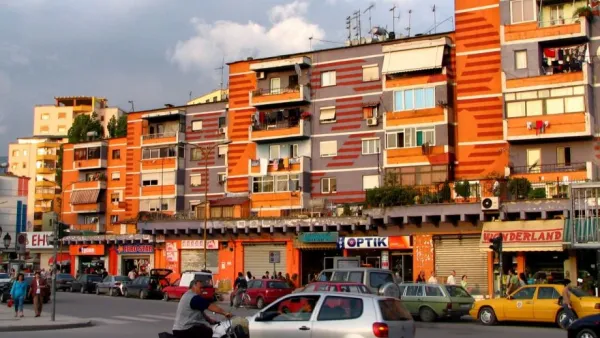
American Cities Should Be More Colorful
Designer Rachael Smith argues that a Puritan attitude toward color explains why so many American cities are clad in grays and browns, and links the gray-ification of cities to their gentrification.

Planetizen Federal Action Tracker
A weekly monitor of how Trump’s orders and actions are impacting planners and planning in America.
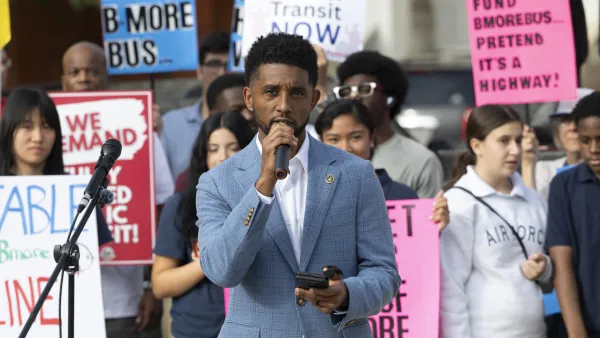
‘Going backwards:’ Baltimore mayor, students rally against state's transit funding plan
Maryland's proposed six-year plan provides no funding for Baltimore’s BMORE bus program and reduces its road maintenance funding.
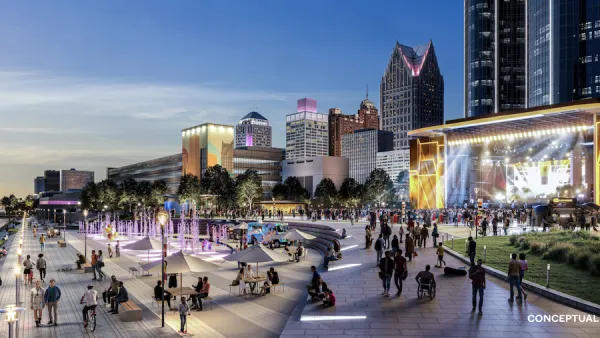
Detroit to transform waterfront with $2.2 billion investment
Developers will convert about 18 acres of unused parking lot space into civic spaces.

MIT to create AI-powered hub for public transportation companies
Google awarded the project, titled the Public Transit Intelligence Hub, $2.1 million in funding.

A 3D concrete printer may solve Virginia’s housing crisis
The printer is able to build concrete walls much faster than humans, and can do so directly at job sites.

Newsom vetoes high-speed rail supervision bill after agency receives condemnatory audit
The audit found the CHSRA approved almost $600,000 in unallowable travel expenses.

FREE Course: Walkable City 1: Why Walkability?
After describing his path towards focusing on walkability as the essence of good planning, Jeff Speck marches through his five principal reasons for making more walkable places.
Reinventing Malls: Planning Alchemy—Turning Gray Fields Into Gold
The course focuses on the opportunities and imperatives that shape reinvention of mall sites.

City of Thousand Oaks
City of Wisconsin Rapids
Harvard University Graduate School of Design
The Architects Foundation
University of Cincinnati Online
Northern Illinois Transit Authority (NITA)
The Pocatello Development Authority
The Urban Renewal Agency of the City of Pocatello