CityLab reviews the "Skyscraper" mobile app game, from Tinybop, Inc.



"Perhaps city dwellers could use some fresh perspective on their concrete canyons," writes Laura Bliss. By concrete crayons, Bliss refers to skyscrapers—symbols of many contradicting meanings according to the popular imagination.
Enter "Skyscrapers," reports Bliss, "an educational app designed for children, is a cutesy, digital tonic for high-rise malaise."
Bliss describes the gameplay of the app:
In a few light swipes and taps, users “create” a made-up skyscraper by adding floors and choosing the color of the facade. On the app’s sidebar, select a tiny I-beam button to play a game where adding boulders, elephants, and sailboats sinks your building deep and lopsided into its foundation. An elevator icon takes you to an interactive view of interior life—families in their kitchens, watching television, tiptoe-ing through bedrooms.
The app is designed specifically for kids, and Bliss gives it a positive review, declaring it worth 15 minutes of adult attention as well.
Read the full story: A New App Explores the Powerful Workings of Skyscrapers
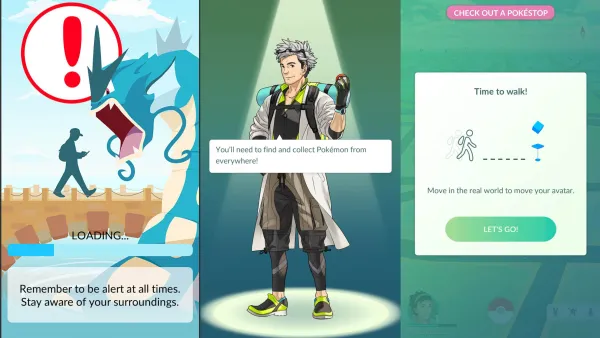
Time to Try Pokémon Go: Augmented Reality Connecting People to Places
Planners across the globe have been exploring opportunities to use augmented reality to enhance the way the public engages with the city. Over the last few days Pokémon Go took off, and now people are wandering across cities to catch Pokémon.

USDOT is hiring thousands of gamers for air traffic control jobs
Sec. Duffy says the FAA has reached 94% of its staffing goal for air traffic controllers.

Children in 55 countries are redesigning their cities in Minecraft
A U.N.-backed program lets students and community members reimagine sites in their neighborhoods in the game — and translate them into real-life buildings.

Planetizen Federal Action Tracker
A weekly monitor of how Trump’s orders and actions are impacting planners and planning in America.

Eastern Nebraska is running out of electricity
Data centers and electrification are straining eastern Nebraska’s grid, throttling economic development.

Study reveals best places in the U.S. for cycling, walking
New research from Streetlight Data examines bicycle and pedestrian miles per capita in the 100 largest U.S. cities by population.

DSA members accuse Mamdani of 'abandoning values' over housing redevelopment
New York City's mayor plans to replace about 2,000 units of public housing with private, mixed-income housing.

All sides of BRT debate unhappy with CDOT’s most recent move
The Colorado Department of Transportation is no longer considering center-running bus lanes for Colorado Boulevard.

Massachusetts bogs generate both power, and cranberries
Putting solar panels above farmland is one way Massachusetts is advancing toward its goal of net-zero carbon emissions by 2050.

FREE Course: Walkable City 1: Why Walkability?
After describing his path towards focusing on walkability as the essence of good planning, Jeff Speck marches through his five principal reasons for making more walkable places.
Reinventing Malls: Planning Alchemy—Turning Gray Fields Into Gold
The course focuses on the opportunities and imperatives that shape reinvention of mall sites.

City of Rosemead
Rutgers University, Edward J. Bloustein School of Planning and Public Policy
One Hundred Miles
University of Michigan School for Environment and Sustainability (SEAS)
Hunter College, City University of New York (CUNY)
The Architects Foundation
City of Cambridge
The Pocatello Development Authority
The Urban Renewal Agency of the City of Pocatello