The University of Texas Arlington's Institute of Urban Studies is doing to legwork for an update of the Downtown Dallas 360 master plan.


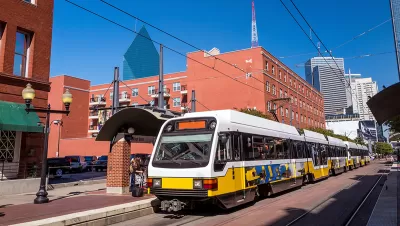
A team of researchers and doctoral students from the University of Texas at Arlington's Institute of Urban Studies "are embarking on a first-of-its-kind study on the walkability of downtown Dallas," according to an article by Brandon Formby.
Formby sets the stage for the research, which takes place in a "downtown whose activity once withered at the end of the workday is now peppered with burgeoning hot spots of residential, recreational and retail vitality."
Hoping to account for the elements already contributing to the success of Downtown Dallas, "[collecting] data to identify and map which city blocks have the highest concentration of pedestrians, the safest crosswalks and the most well-maintained sidewalks."
"In all, the team will collect data on about 30 different urban design features for each street segment," adds Formby. The article provides context for the study in the form of the growing body of literature on the importance of walkability to a number of desirable outcomes. Formby also drills down into specifics of urban design, such as shade trees.
Read the full story: Counting trees? Downtown Dallas taking steps to be more pedestrian friendly

Planning for Love, Part 3: Enhancing human connection through walkability
In the third and final installment of this series, author Hannah Kosoff examines what her research findings say about modern dating and urban form.

Planning for Love, Part 2: What happens to dating in a car-centric world?
A survey of over 150 adults about their dating lives reveals stark differences based on their neighborhood's walkability.
Why Walk Scores Don’t Tell the Whole Story
A popular measure of walkability only measures proximity, not safety or comfort.

Planetizen Federal Action Tracker
A weekly monitor of how Trump’s orders and actions are impacting planners and planning in America.

Amtrak, CN end decades-long dispute with eight-year agreement
The new operating agreement establishes an updated framework for the companies to work together, including processes to resolve disputes.

Judges permit Denver to divert 77,000 acre feet from the Colorado River for reservoir expansion
Overuse and climate change have caused the Colorado River’s water levels to plummet.

Idaho may see an 18% drop in federal surface transit funding — the largest estimated cut in the US
Transit systems in rural communities are much more reliant on federal funding to provide their services.

How ‘post-disaster gentrification’ alters neighborhoods after natural calamities
After hurricanes, fires or other calamities, the original residents of a community are often replaced by younger, wealthier residents.

Maryland local governments examine if they should have more power to raise property taxes
Maryland’s housing market is out of reach for the majority of moderate-income residents.

FREE Course: Walkable City 1: Why Walkability?
After describing his path towards focusing on walkability as the essence of good planning, Jeff Speck marches through his five principal reasons for making more walkable places.
Reinventing Malls: Planning Alchemy—Turning Gray Fields Into Gold
The course focuses on the opportunities and imperatives that shape reinvention of mall sites.

Harvard University Graduate School of Design
KFH Group Inc.
Greater Baltimore Committee
The Architects Foundation
University of Cincinnati Online
The Pocatello Development Authority
The Urban Renewal Agency of the City of Pocatello