A city famous for tall palm trees wants to find some shade.



William Yardley reports on an ongoing planning effort in Phoenix to cultivate a tree canopy that would cover 25 percent of the city by 2030. Currently the city's canopy covers less than half that amount.
"Yet with a new emphasis on downtown development and walkable neighborhoods, as well as increasing concerns about heat on human health (forecasts show that climate change will make things even hotter here), Phoenix is actively seeking more shade," writes Yardley.
The article focuses on the work and ideas of Richard Adkins , who is leading the planning effort with the support of the city. Adkins's methodology "uses a formula developed by the United States Forest Service and arborist groups that factors in how much carbon a tree stores, how much electricity it saves, how much it reduces stormwater and the aesthetic value it offers."
Read the full story: In Phoenix, an ambitious plan aims to cover 25% of the metropolis with tree shade

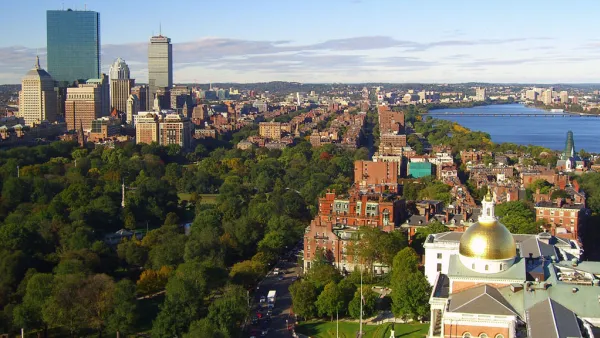
Boston Launches a 20-Year Urban Forestry Plan
The forthcoming Boston Urban Forestry Plan is expected to support communities that have been disproportionately exposed to environmental stressors.
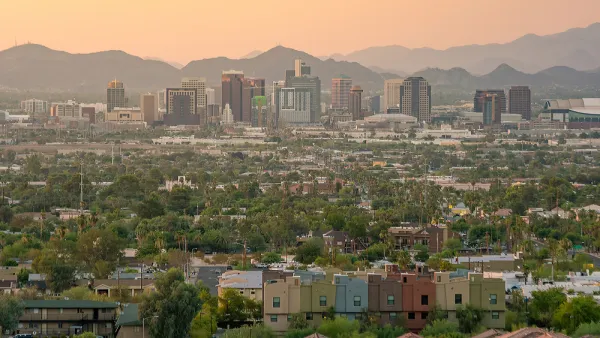
When Affordable for the County Isn't Affordable for the Neighborhood
A critical question arises in response to an affordable housing project proposed in Phoenix: When measuring a project's affordability, does the larger county's median income matter when some neighborhoods are struggling well beyond that measure?
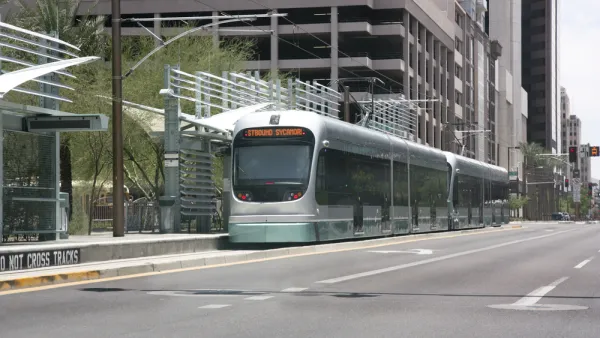
Court: Phoenix Transit Spending Initiative Stays on the Ballot
The whole idea of public transit will be up for reconsideration in Phoenix on August 27.

Planetizen Federal Action Tracker
A weekly monitor of how Trump’s orders and actions are impacting planners and planning in America.

Amtrak, CN end decades-long dispute with eight-year agreement
The new operating agreement establishes an updated framework for the companies to work together, including processes to resolve disputes.

Judges permit Denver to divert 77,000 acre feet from the Colorado River for reservoir expansion
Overuse and climate change have caused the Colorado River’s water levels to plummet.

Philadelphia to invest $2 billion into upgrading city airports as PHL places last in customer satisfaction
Modernizations to Philadelphia's airports will include baggage system upgrades and a new automated parking garage guidance system.

The LA housing policies making developers turn away from the city
Despite LA’s housing shortage, developers say the city’s "mansion-tax" and pandemic-era policies make it an unappealing place to build housing.

New density bill would require 7 California cities to establish regional transit hubs
The bill would also require major cities in California to permit high-rise residential buildings.

FREE Course: Walkable City 1: Why Walkability?
After describing his path towards focusing on walkability as the essence of good planning, Jeff Speck marches through his five principal reasons for making more walkable places.
Reinventing Malls: Planning Alchemy—Turning Gray Fields Into Gold
The course focuses on the opportunities and imperatives that shape reinvention of mall sites.

City of Wisconsin Rapids
Harvard University Graduate School of Design
KFH Group Inc.
The Architects Foundation
University of Cincinnati Online
The Pocatello Development Authority
The Urban Renewal Agency of the City of Pocatello