The eagerly anticipated selection of the future site of the Obama Presidential Library has leaked to the press. A formal announcement is expected soon.


"President Barack Obama and first lady Michelle Obama have selected historic Jackson Park, just east of the University of Chicago, as the site for the Obama Presidential Center," reports Kathy Bergen, Blair Kamin, and Katherine Skiba for the Chicago Tribune.
The news comes via a source, and an official announcement is not expected until possibly next week.
In the meantime, the Tribune reporters imagine the possibilities:
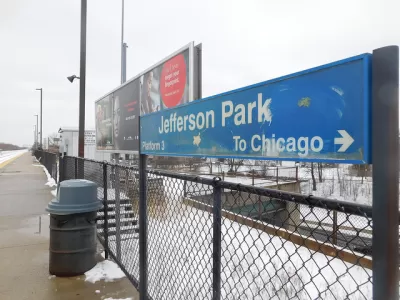
Located near the Museum of Science and Industry, the lakefront and the eastern edge of the University of Chicago campus, the site allows for the creation of a museum campus in the heart of the park, accented by an existing lagoon, lush woods and greenery. The winding 543-acre park is an oasis on the South Side. The center would be a short hop to either Lake Shore Drive or to two Metra train stations, strong pulls for visitors.
The article also discusses the potential for the Obama Library to revitalize the nearby neighborhood of Woodlawn, which "has seen decades of unfulfilled promises for redevelopment" and "has tracts available for nearby projects."
The breaking news has been flying fast with regard to the Obama Library. At the end of June, the Obama Foundation announced the selection of Tod Williams Billie Tsien Architects | Partners (TWBTA) to design the library.
Read the full story: Obama chooses historic Jackson Park as library site

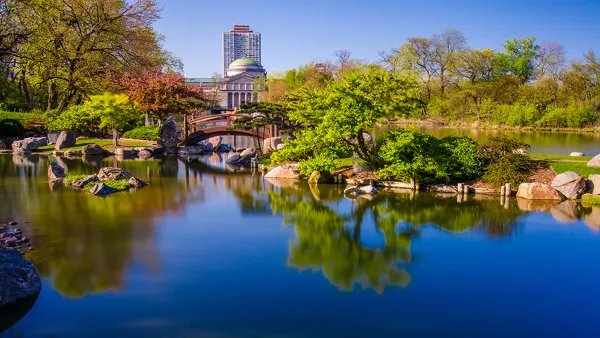
Obama's Presidential Center Raises Displacement Concerns
As the former president seeks to distinguish the Obama Presidential Center from for-profit development, many locals still want to see a binding community benefits agreement.
Land Swap could Bring Obama Presidential Library to Chicago's South Side
Chicago is putting the pieces in place to land the Obama Library. One proposal hinges on the availability of parkland on the South Side near the University of Chicago.
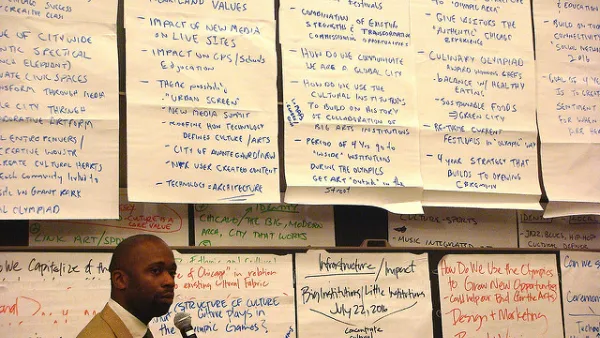
Creative Placemaking a Boon for Underserved Communities, Report Says
The work of Chicago urban planner and developer Theaster Gates provides a proof of concept in a new report from the Urban Land Institute.

Planetizen Federal Action Tracker
A weekly monitor of how Trump’s orders and actions are impacting planners and planning in America.

Amtrak, CN end decades-long dispute with eight-year agreement
The new operating agreement establishes an updated framework for the companies to work together, including processes to resolve disputes.

Judges permit Denver to divert 77,000 acre feet from the Colorado River for reservoir expansion
Overuse and climate change have caused the Colorado River’s water levels to plummet.

Idaho may see an 18% drop in federal surface transit funding — the largest estimated cut in the US
Transit systems in rural communities are much more reliant on federal funding to provide their services.

How ‘post-disaster gentrification’ alters neighborhoods after natural calamities
After hurricanes, fires or other calamities, the original residents of a community are often replaced by younger, wealthier residents.

Maryland local governments examine if they should have more power to raise property taxes
Maryland’s housing market is out of reach for the majority of moderate-income residents.

FREE Course: Walkable City 1: Why Walkability?
After describing his path towards focusing on walkability as the essence of good planning, Jeff Speck marches through his five principal reasons for making more walkable places.
Reinventing Malls: Planning Alchemy—Turning Gray Fields Into Gold
The course focuses on the opportunities and imperatives that shape reinvention of mall sites.

Harvard University Graduate School of Design
KFH Group Inc.
Greater Baltimore Committee
The Architects Foundation
University of Cincinnati Online
The Pocatello Development Authority
The Urban Renewal Agency of the City of Pocatello