A new Google Maps redesign hopes to help make it easier to explore your surroundings. As with everything based on a mobile phone, the potential exists that it might also help ignore your surroundings.


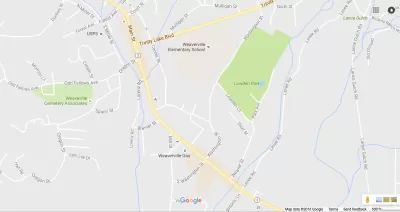
According to a post on the official Google Maps blog, the popular mapping site made "a few visual changes and additions to Google Maps on desktop, Android and iOS to help you better explore the world around you."
The changes are obvious, and won't have gone unnoticed to the well-trained eye of the Planetizen reader, but the post digs into the reasoning behind the changes. The post lists a "cleaner look" and a "more subtle and balanced color scheme" among the goals set for the redesign.
The most significant (and perhaps also the most debatable) feature of the redesign: the new information enabled by the cleaner look. Included now on Google Maps are "areas of interest," which Google determined "with an algorithmic process that allows us to highlight the areas with the highest concentration of restaurants, bars and shops." The areas of interest are shaded in orange, where users can "zoom in to see more details about each venue and tap one for more info." Watch the video below for an example of the new areas of interest function at work.
So, will areas deemed of interest by Google Maps benefit with more business and commercial activity, or suffer with additional congestion? And what about the areas deemed uninteresting, by default, for their lack of orange shading?
FULL STORY: Discover the action around you with the updated Google Maps


New Google Map Layer Shows COVID-19 Infection Rates
A new layer showing the seven-day average of confirmed COVID-19 cases started rolling out to Android and iPhones last week.
Google Maps Update Opens New Access to Mobility and Culture
Google Maps and other navigation and mapping apps have done a lot to inspire and educate people to make the most of their surroundings. New changes to the Google Maps app will add new functionality for those purposes.
Google Maps' 'Interesting' New Feature
Google's new maps redesign calls out areas of interest, but is "interesting" just a euphemism for rich?

Planetizen Federal Action Tracker
A weekly monitor of how Trump’s orders and actions are impacting planners and planning in America.

The state-sanctioned urbicide of Austin
People don’t kill cities. Freeways do.

US to reduce Colorado River water deliveries to Mexico
A new Colorado Treaty amendment reduces Mexico’s Colorado River water allocation by 250,000 acre feet.

5 New England states march closer to 800 megawatt wind energy project
Securing federal approval for the project may be complicated under the Trump administration, which has historically been hostile towards domestic wind power.

Baltimore to break ground on $50 million Transit Priority Project
The project will bring faster bus trips, safer streets and better bike connections to Baltimore.

Airbnb launches $250 million 'last-dollar financing' housing accelerator, makes first investment in Austin
The company will put $6.4 million towards affordable housing development in Texas’ capital.

FREE Course: Walkable City 1: Why Walkability?
After describing his path towards focusing on walkability as the essence of good planning, Jeff Speck marches through his five principal reasons for making more walkable places.
Reinventing Malls: Planning Alchemy—Turning Gray Fields Into Gold
The course focuses on the opportunities and imperatives that shape reinvention of mall sites.

Eagle County Government
Harvard University Graduate School of Design
Nashville Planning Department
The Architects Foundation
University of Cincinnati Online
The Pocatello Development Authority
The Urban Renewal Agency of the City of Pocatello
Journal of the American Planning Association