Five of the nine experienced cyclists who were mowed down by a pickup truck on a rural road in Kalamazoo on June 7 died. While most bike crashes occur on urban roads, there are hidden dangers in biking in uncongested rural areas.


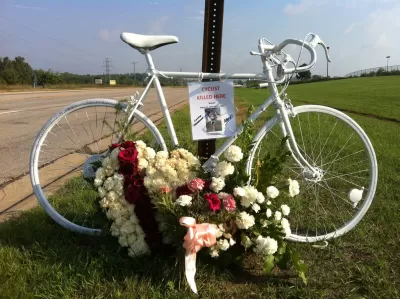
Light traffic and beautiful scenery can hide some of the dangers of riding on rural roads like the rural, two-lane North Westnedge Avenue a few miles north of Kalamazoo in Cooper Township, Michigan, where the horrific crash occurred.
It "shows that many rural roads fail to account for bicycle safety, advocates said," writes The driver struck the cyclists — all experienced riders — from behind."
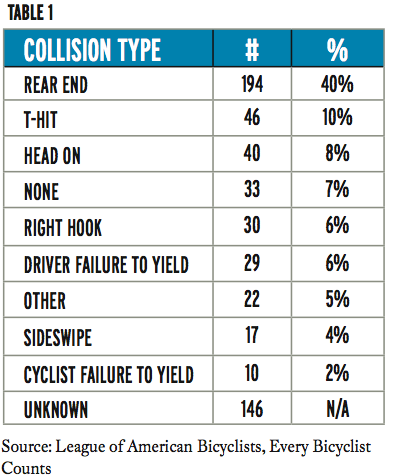
Rear end crashes accounted for 40 percent of collisions in a May 2014, League of American Bicyclists study [PDF].
Unlike urban cycling, "[c]yclists traveling in rural areas were 3.7 times more likely to be struck and killed at a location that was not an intersection," wrote Angie Schmitt for Streetsblog USA in May 2014 on the LAB study.
The 50-year-old pickup driver, who fled the scene, "was charged with five counts of second-degree murder and four counts of reckless driving causing serious body impairment," adds Abbey-Lambertz. "Authorities haven’t disclosed whether he was impaired at the time and haven’t speculated on the cause of the crash."
Roads like Westnedge are particularly dangerous for cyclists [Highway Safety Information System study (PDF)], according to Bill Schultheiss, a principal engineer with the Toole Design Group who works on improving street design for cyclists and pedestrians in projects around the country. While motorists in cities are more accustomed to sharing the street with cyclists and pedestrians, drivers on rural roads don’t always have the same awareness.
Two-lane rural roads have higher fatality rates for cyclists than even a lot of urban streets, because of the higher speeds,” Schultheiss said. “The expectation on those, from most drivers, is that they have the whole road to themselves.”
Schultheiss and Jim Ferner, Kalamazoo biking advocate, "said widening the shoulders on Westnedge to give bikers a separate lane should be the first priority to increase safety," writes Abbey-Lambertz. She adds that while there has been progress in improving bike infrastructure on urban roads, it's difficult to make changes on rural roads.
 Instead of making redesigning roads to make it safer for all road users, many media outlets are quick to jump to victim-blaming, asking if the cyclists were wearing helmets and bright clothing.
"Why on earth would any responsible news outlet look at a tragedy involving criminal negligence and use it as an occasion to lecture potential victims?" writes Michael Jackman in a comprehensive piece looking at media coverage of the June 7 tragedy for the Detroit Metro Times.
Hat tip to Barbara Gilbertson.
Read the full story: Cyclists Shouldn’t Have To Risk Their Lives Just To Use The Road

Research: Bike Rolling-Stop Laws Don’t Lead to Unsafe Behavior
Rolling stops by bicyclists get a bad rap, particularly among motorists who perceive them to be breaking the law. But new research shows laws that allow for rolling stops for cyclists do not lead to unsafe behavior by either group.
NTSB Investigates Horrific Bicycle Crashes Too
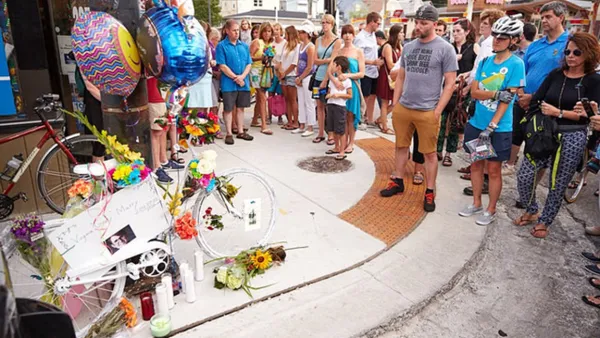
The circumstances surrounding the deaths of five bicyclists and injuring of four in June by a motorist on a rural road outside Kalamazoo, Michigan, were so horrendous that it caught the attention of the National Transportation Safety Board.

Colorado creates wildlife crossings fund
Residents will have the option to add $5 to their car registration to fund infrastructure that prevents wildlife-vehicle collisions.

Planetizen Federal Action Tracker
A weekly monitor of how Trump’s orders and actions are impacting planners and planning in America.

Amtrak, CN end decades-long dispute with eight-year agreement
The new operating agreement establishes an updated framework for the companies to work together, including processes to resolve disputes.

Judges permit Denver to divert 77,000 acre feet from the Colorado River for reservoir expansion
Overuse and climate change have caused the Colorado River’s water levels to plummet.

NYC DOT wants faster, more permanent street upgrades
The city is examining ways to build more concrete infrastructure without getting entangled in 'decades-long' projects.

'Something we’ve never seen before:' rising utility rates could strain city finances nationwide
Data centers, climate change and other factors have caused utility rates in the United States to increase by 38% since 2020.

Trump to overrule local leaders, lease millions of acres of America’s Pacific Island territories’ seafloors to mining companies
International law says that the Indigenous people of America’s territories have a right to prior and informed consent regarding projects that impact their countries.

FREE Course: Walkable City 1: Why Walkability?
After describing his path towards focusing on walkability as the essence of good planning, Jeff Speck marches through his five principal reasons for making more walkable places.
Reinventing Malls: Planning Alchemy—Turning Gray Fields Into Gold
The course focuses on the opportunities and imperatives that shape reinvention of mall sites.

Harvard University Graduate School of Design
KFH Group Inc.
Greater Baltimore Committee
The Architects Foundation
University of Cincinnati Online
The Pocatello Development Authority
The Urban Renewal Agency of the City of Pocatello