Fans of poetry and gardens will appreciate the effort to restore the historic home of Emily Dickinson—along with her cherished garden.


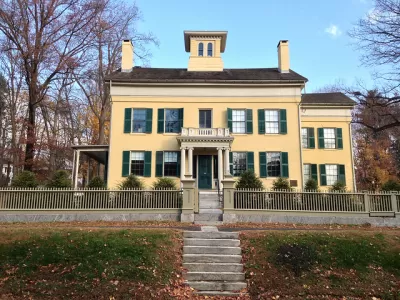
Ferris Jabr writes: "This spring…the Emily Dickinson Museum has brought the poet’s beloved orchard back to life, planting a small grove of heirloom apples and pears grown by the Dickinsons — Baldwins, Westfield Seek-No-Furthers, Winter Nelis — on a sunny corner of the property near Triangle Street in Amherst, Mass."
According to Jabr, the garden is the "latest development in a longstanding effort to return the Dickinson estate to its 19th-century splendor." That development took a lot of work, including contributions by an archaeological team from the University of Massachusetts, Amherst. More plans for restoration of this historic estate are in development, including work to restore the property's historic greenhouse.
Read the full story: The Lost Gardens of Emily Dickinson
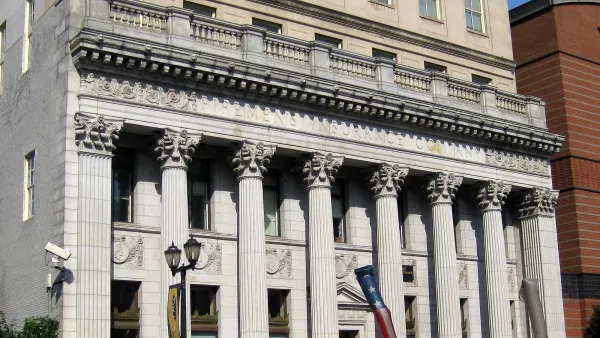
Historic Newark building to become affordable housing
The century-old building will be converted into nearly 200 homes with ground-floor retail.
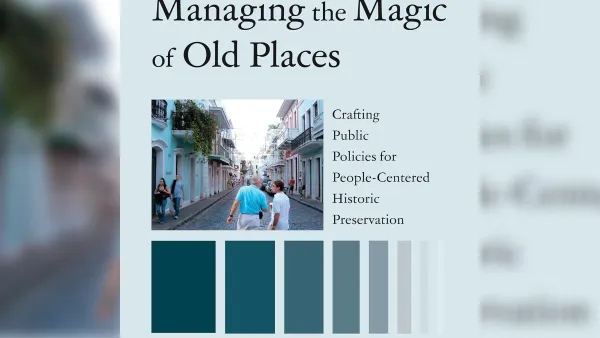
A call for people-centered historic preservation
'Managing the Magic of Old Places' offers a new vision for preservation that maintains its relevance while prioritizing the lived experience of residents of historic places.
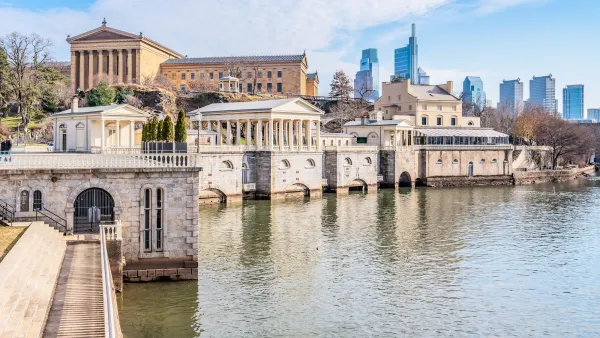
Pennsylvania’s Historic Sites are Under Threat From Rising Waters
The state has one of the nation’s highest concentrations of registered historic sites — and some face destruction from flooding.

Planetizen Federal Action Tracker
A weekly monitor of how Trump’s orders and actions are impacting planners and planning in America.

California plans to bury El Niño’s downpour
If the state plays its cards right, it may be able to store a billion acre-feet of El Niño’s water in aquifers.

Desperate measures: Advocates weigh draining Lake Powell to fill Colorado River
Draining the reservoir could reduce evaporation losses by a couple hundred thousand acre-feet.

Mamdani’s pied-à-terre tax survives legal challenge
A panel of judges found that the plaintiffs failed to demonstrate injury as a result of New York City's implementation of the tax.

Eastern Nebraska is running out of electricity
Data centers and electrification are straining eastern Nebraska’s grid, throttling economic development.

Seattle passes record-breaking transit services expansion
Proposition 1 will double the city’s transit tax to add 95,000 more bus trips and preserve 180,000 bus trips annually.

FREE Course: Walkable City 1: Why Walkability?
After describing his path towards focusing on walkability as the essence of good planning, Jeff Speck marches through his five principal reasons for making more walkable places.
Reinventing Malls: Planning Alchemy—Turning Gray Fields Into Gold
The course focuses on the opportunities and imperatives that shape reinvention of mall sites.

City of Rosemead
Rutgers University, Edward J. Bloustein School of Planning and Public Policy
One Hundred Miles
University of Michigan School for Environment and Sustainability (SEAS)
Hunter College, City University of New York (CUNY)
The Architects Foundation
City of Cambridge
Montrose County
The Pocatello Development Authority