While the cultural authenticity and geographic footprint of Chinatowns around the United States shrink, Chicago's is growing. What can other cities learn from Chicago's model?


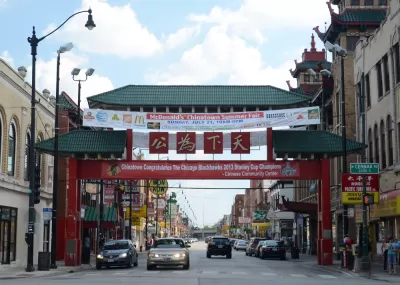
"At a time when traditional urban Chinatowns in Manhattan, San Francisco, Boston and Philadelphia are fading due to gentrification and changing cultural landscapes, Chicago's Chinatown is growing larger," according to article by Marwa Elgaouri.
Chicago's Chinatown has even become a model for how to ensure the success of Chicago elsewhere in the United States. According to Elgaouri, planners in Chicago have recognized and encouraged the strengths in Chicago: "In 2013, the Chicago Metropolitan Agency for Planning announced a plan to preserve Chinatown's cultural identity by improving public education and elderly care, bolstering transportation infrastructure and creating more public parks." The effort includes additional public investments.
Elgaouri also includes information about the declines of Chinatowns in the United States—a storyline Planetizen has tracked since 2001, again in detail in 2007, and finally again during the most recent wave of gentrification and displacement in cities around the United States.
Read the full story: Here's why Chicago's Chinatown is booming, even as others across the U.S. fade

Equitable Development Plan Aims To Protect Philly's Chinatown
As the historic neighborhood experiences increased redevelopment around the new Rail Park, community activists are working to ensure older residents and businesses aren't displaced in the process.

Obama Library Displacement Concerns: City Council Falls Short of Local Demands
The Chicago City Council has approved an ordinance intended to protect residents of the neighborhoods surrounding the planned Barack Obama Presidential Center.
More Cities Pressing Pause on Development as Gentrification, Displacement Concerns Persist
Chicago and Atlanta both approved development moratoriums in areas surrounding new urban amenities this year. Other cities could soon add to the number.

Planetizen Federal Action Tracker
A weekly monitor of how Trump’s orders and actions are impacting planners and planning in America.

California plans to bury El Niño’s downpour
If the state plays its cards right, it may be able to store a billion acre-feet of El Niño’s water in aquifers.

Desperate measures: Advocates weigh draining Lake Powell to fill Colorado River
Draining the reservoir could reduce evaporation losses by a couple hundred thousand acre-feet.

Chicago voters approve permanent festival grounds, penalty for vacant property owners
Currently, major summer and fall festivals take over public parks for weeks at a time, drawing criticism from nearby residents

NYC votes to cut outdoor dining red tape, speed up permitting
New York City also voted to allow the Department of Transportation to begin work on urgent projects before notifying elected officials.

California appears to reject Prop. 45
The proposition would have expanded the projects that qualify for a streamlined environmental review, effectively paring down the California Environmental Quality Act.

FREE Course: Walkable City 1: Why Walkability?
After describing his path towards focusing on walkability as the essence of good planning, Jeff Speck marches through his five principal reasons for making more walkable places.
Reinventing Malls: Planning Alchemy—Turning Gray Fields Into Gold
The course focuses on the opportunities and imperatives that shape reinvention of mall sites.

City of Rosemead
Rutgers University, Edward J. Bloustein School of Planning and Public Policy
One Hundred Miles
Hunter College, City University of New York (CUNY)
The Architects Foundation
University of Cincinnati Online
City of Cambridge
Montrose County
The Pocatello Development Authority