The recent on-field success of the Houston Astros is matched by a wave of building in the neighborhood around their home ballpark. All of that means baseball fans might have a harder time finding a place to park this season.


"Fans heading [to Minute Maid Park] for Monday's home opener may be in for a rude shock: Those favorite parking spots of years past could very well have a shiny new building on them, or at least a big hole in the ground," according to a post by Mike Tolson.
If that all seems a bit strange for those familiar with Houston and its ballpark, that's because it is: "It wasn't so long ago that the retro-styled ball park was a bit lonesome out on the northeast edge of central Houston in 2000, but no more."
According to Tolson, Downtown Houston is quickly transforming from a day-time business community into a "true community," with "residents, retail shops, and restaurants that remain open long after the lunch rush." Tolson's concern is for the parking situation at the eastern ends of Houston, where demand from sold out games will clash with less supply due to all that revitalization. The remainder of the article reads like a guide to accessing the ballpark, whether by driving or by taking public transit—the Purple and Green lines of the METRORail system have a station just blocks from the stadium.
Read the full story: Hot development and a hot team could spell headache for Astros fans

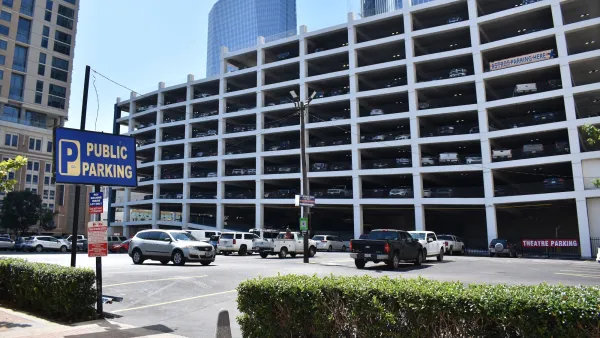
Downtown Houston parking garage will take up an entire block
The garage will connect to the Houston Center retail complex, a 4.6-million square foot office and commercial site.

East Lansing Parking Plan Aims for Walkability
East Lansing wants to ditch some of its surface parking to encourage economic activity and walkability.
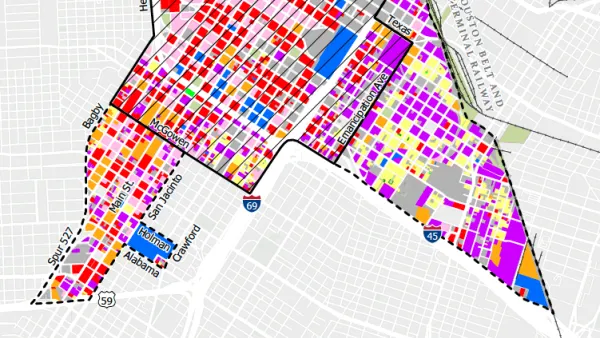
Parking Minimums Not Required in a Larger Section of Houston
The Houston Council voted yesterday to extend its market-base parking program.

Planetizen Federal Action Tracker
A weekly monitor of how Trump’s orders and actions are impacting planners and planning in America.

California plans to bury El Niño’s downpour
If the state plays its cards right, it may be able to store a billion acre-feet of El Niño’s water in aquifers.

Chicago breaks ground on $3 billion megadevelopment
The new neighborhood, titled Foundry Park, will one day host 3,700 residences.

California High-Speed Rail Authority CEO resigns after $600,000 scandal
Under Ian Choudri, the authority used taxpayer dollars to fund first class flights and trips to nightclubs.

Want to study the Missouri River? Soon, you may need unanimous approval from 10 states
Legislation would require 10 governors’ permission to study or build projects moving water outside the basin.

Desperate measures: Advocates weigh draining Lake Powell to fill Colorado River
Draining the reservoir could reduce evaporation losses by a couple hundred thousand acre-feet.

FREE Course: Walkable City 1: Why Walkability?
After describing his path towards focusing on walkability as the essence of good planning, Jeff Speck marches through his five principal reasons for making more walkable places.
Reinventing Malls: Planning Alchemy—Turning Gray Fields Into Gold
The course focuses on the opportunities and imperatives that shape reinvention of mall sites.

City of Rosemead
Rutgers University, Edward J. Bloustein School of Planning and Public Policy
One Hundred Miles
Hunter College, City University of New York (CUNY)
The Architects Foundation
University of Cincinnati Online
City of Cambridge
Montrose County
The Pocatello Development Authority