We can't build our way out of the housing crisis…but we won't get out without building.


Affordable housing advocates are facing a disturbing new opponent in planning battles across the country: other affordable housing advocates.
Take the battle over implementation of Mayor Bill de Blasio’s proposed Mandatory Inclusionary Housing policy in East New York. The policy would require private developers to ensure that 25 percent of all new housing units are for lower income residents. It is the kind of policy that activists concerned about gentrification have long dreamed of. So it was somewhat ironic that Vickie Been, de Blasio’s housing commissioner, felt compelled to speak out in response to concerns that the plan would cause gentrification and displacement.
Because New York’s inclusionary housing plan is tied to zoning changes, which would allow higher density development along Brooklyn’s major corridors, a number of advocates for the area’s lower income residents have concluded that the plan will add fuel to the booming market and drive rents and for-sale home prices higher than they already are. Been’s response was to remind people that rents were already high and rising and point out that that was the predictable result of a shortage of housing. The new zoning plan, she said, “is not the trigger for displacement; instead, it is a preventative measure.”
A surprisingly similar conflict surrounded a proposed moratorium on new development in San Francisco’s Mission District. The district has been ground zero for the Bay Area’s displacement crisis and Mission activists concluded that a new private housing development was likely to exacerbate the problem by bringing in higher income residents and driving up rent costs. The proposal split the housing advocacy community. Mayor Ed Lee, who has been an unparalleled leader in the fight for more affordable housing funding, and many committed advocates succeeded in convincing San Francisco voters that the moratorium would only make things worse by further restricting supply. The housing shortage, they argued, is the ultimate cause of rising rents and we have to build new housing to make any real progress.
Unfortunately, if we want to work together for more equitable cities, we have to agree on some basic economics. The two sides in this fight see different economic mechanisms behind displacement. One group says prices are rising and people are being displaced because we aren’t building enough housing, while the other group sees new housing development as one cause of gentrification and displacement. If we look more closely, they are not really two different mechanisms as much as the same mechanism working at different geographic scales.
FULL STORY: Luxury Housing Is Not the Enemy


Three Years of New York's Mandatory Inclusionary Housing Program
One of the more aggressive inclusionary zoning programs in the country has been in place long enough to evaluate for lessons regarding the effectiveness of the controversial affordable housing development tool.
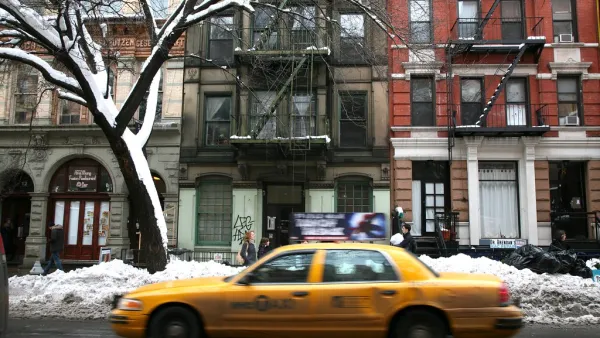
East Village Rezoning Falls Short on Affordable Housing
Enacted in 2008, a partial rezone of Manhattan's East Village and Lower East Side failed to deliver on affordable housing projections, falling short by 45 percent.
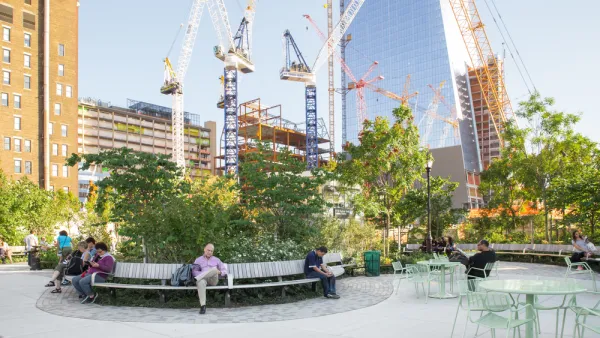
NYC Planning Head Defends Growth-Oriented Policies
Acknowledging anti-development sentiments currently simmering at an "all-time high," New York's planning director Marisa Lago defended de Blasio administration policies like mandatory inclusionary housing.

Planetizen Federal Action Tracker
A weekly monitor of how Trump’s orders and actions are impacting planners and planning in America.

The state-sanctioned urbicide of Austin
People don’t kill cities. Freeways do.

US to reduce Colorado River water deliveries to Mexico
A new Colorado Treaty amendment reduces Mexico’s Colorado River water allocation by 250,000 acre feet.

Mamdani overhauls NYC's Vision Zero plan with 100 new policy goals
The overhaul aims to reduce traffic deaths and make streets safer for pedestrians, cyclists and drivers through lower speed limits, new safety infrastructure and more.

Amtrak not solely to blame for New Jersey commuter rail's unreliability, report finds
A new study from the Garden State Initiative found that NJ Transit’s budget grew 20% across a 4 year period, but reliability declined significantly over the same period.

EPA erases limits on planet-warming pollution from power plants
Under Monday’s plan, power plants would still have some limits on how much mercury, arsenic and other contaminants they can emit.

FREE Course: Walkable City 1: Why Walkability?
After describing his path towards focusing on walkability as the essence of good planning, Jeff Speck marches through his five principal reasons for making more walkable places.
Reinventing Malls: Planning Alchemy—Turning Gray Fields Into Gold
The course focuses on the opportunities and imperatives that shape reinvention of mall sites.

Eagle County Government
Harvard University Graduate School of Design
Nashville Planning Department
The Architects Foundation
University of Cincinnati Online
The Pocatello Development Authority
The Urban Renewal Agency of the City of Pocatello
Journal of the American Planning Association