A recent report details how residents of rural areas in Minnesota use transit.


"While public transit in the Twin Cities largely serves people commuting to work – and is framed in the public mind by shiny coaches and sleek light-rail cars – it has a much different look and feel in rural Minnesota," according to an article by Gregg Aamot.
The article provides an in-depth exploration of the experience and the context of rural transit. In the latter realm, Aamot cites evidence from the Center for Rural Policy and Development that "public transit systems provided 12 million rides in Minnesota regions outside of the Twin Cities metropolitan area (and nearly 98 million rides in the Twin Cities)" in 2014. In 2010, about "70 percent of transit riders using the most rural systems reported not having either a car or a driver’s license."
The article also provides background on the political support for rural transit in the state, as well as descriptions of the day-to-day experience of Jim Hansen, a bus driver in the rural area around Blooming Prairie.
The Minnesota-based Center for Rural Policy and Development released the "Rural Reality: City transit, rural transit" report in January.
Read the full story: Little bus on the prairie: Rural transit, faced with demographic change, adapts and evolves

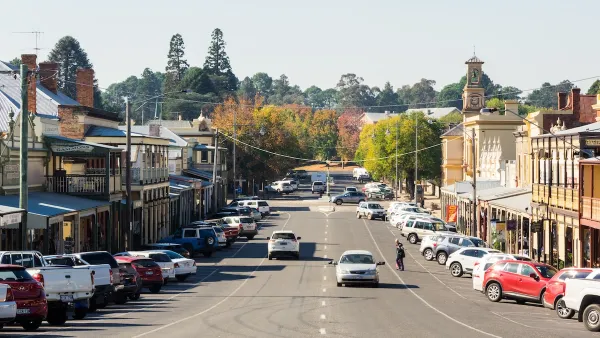
The Importance of Rural Transit
On Transit Equity Day, reminding policymakers that rural communities need access to transit too.
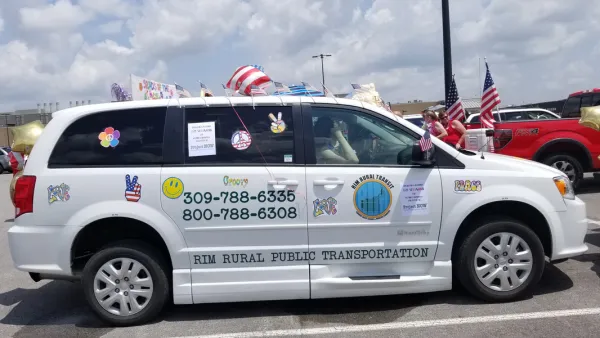
Rural Illinois Transit Brings $4 in Economic Benefits for Every Dollar Spent
Chronically underfunded rural public transit systems are key lifelines are economic engines for rural communities.

Rural Missouri Transit Service Could Lose State Funding
OATS Transit offers low-cost rides to primarily elderly rural residents with little or no access to other transportation options.

Planetizen Federal Action Tracker
A weekly monitor of how Trump’s orders and actions are impacting planners and planning in America.

California plans to bury El Niño’s downpour
If the state plays its cards right, it may be able to store a billion acre-feet of El Niño’s water in aquifers.

Chicago breaks ground on $3 billion megadevelopment
The new neighborhood, titled Foundry Park, will one day host 3,700 residences.

Satanic place names
From streams and lakes to valleys and canyons, I mapped more than 1,000 places named after the Devil.

California High-Speed Rail Authority CEO resigns after $600,000 scandal
Under Ian Choudri, the authority used taxpayer dollars to fund first class flights and trips to nightclubs.

Want to study the Missouri River? Soon, you may need unanimous approval from 10 states
Legislation would require 10 governors’ permission to study or build projects moving water outside the basin.

FREE Course: Walkable City 1: Why Walkability?
After describing his path towards focusing on walkability as the essence of good planning, Jeff Speck marches through his five principal reasons for making more walkable places.
Reinventing Malls: Planning Alchemy—Turning Gray Fields Into Gold
The course focuses on the opportunities and imperatives that shape reinvention of mall sites.

City of Rosemead
Rutgers University, Edward J. Bloustein School of Planning and Public Policy
One Hundred Miles
Hunter College, City University of New York (CUNY)
The Architects Foundation
University of Cincinnati Online
City of Cambridge
Montrose County
The Pocatello Development Authority