Nathan Masters reviews the new book by historian Henry Petroski, "The Road Taken," a historical look at America's roads and the civil engineers who built them.


In his new book The Road Taken, Duke University historian Henry Petroski attempts to tell the story of civil engineers in the construction of America's modern road network. Writing in the Los Angeles Times, Nathan Masters commends the book for going into the minutiae of road design by revealing interesting backstories while also advocating for greater investment in our aging infrastructure.
Petroski also delves into future technologies that may reshape the way our current infrastructure operates and is repaired. But the overall theme of the book, as indicated by the title, is the future investment in our aging roads and bridges. Will funding levels meet demand or will our roads continue to crumble below us?
Read the full story: Review The freeway that looked like the future in 1940? Now, not so much. Nathan Masters on 'The Road Taken'

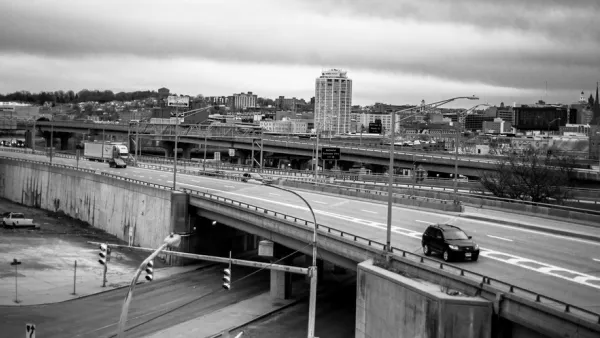
America's Infrastructural Reckoning
Through the lens of Henry Petroski's new book, Tom Vanderbilt discusses why infrastructure, as we have come to define it, is such a fraught topic in American life.
Reigniting the city-building revolution
Review: In “The Unfinished Metropolis," Benjamin Schneider argues for us to look abroad for help in returning to a long-lost American art: city-building.

A masterful, human-centered defense of rent control
Book Review: "Fortunate People in a Fortunate Land" offers a human look at how rent control is more than just numbers and data in a spreadsheet.

Planetizen Federal Action Tracker
A weekly monitor of how Trump’s orders and actions are impacting planners and planning in America.

Amtrak, CN end decades-long dispute with eight-year agreement
The new operating agreement establishes an updated framework for the companies to work together, including processes to resolve disputes.

Northwest rail fans eager for Sept. 30 debut of Amtrak’s Airo fleet
Get ready for that new train smell and more seats. But they won’t go faster or run more frequently on the Cascades route in Washington and Oregon.

St. Louis Metro to test if single-car trains can reduce operating costs, maintain rider satisfaction
The pilot program will run from October to spring 2027, and begin with one single-car train operating on Metrolink’s Red and Blue lines.

Pennsylvania is building data centers in abandoned mines
Housing data centers in mines provides an alternative to destroying local forests and may spare residents from data centers’ noise and air pollution.

If Corpus Christi can’t revive desalination plant project, it may owe Texas $235 million
Earlier this month, city officials declined to pursue developing the plant for the second time in a year.

FREE Course: Walkable City 1: Why Walkability?
After describing his path towards focusing on walkability as the essence of good planning, Jeff Speck marches through his five principal reasons for making more walkable places.
Reinventing Malls: Planning Alchemy—Turning Gray Fields Into Gold
The course focuses on the opportunities and imperatives that shape reinvention of mall sites.

City of Thousand Oaks
City of Wisconsin Rapids
Harvard University Graduate School of Design
The Architects Foundation
University of Cincinnati Online
The Pocatello Development Authority
The Urban Renewal Agency of the City of Pocatello