The federal government will implement safety protocols for the popular new personal mobility device known as hoverboards. Hoverboards are deemed officially unsafe until the industry complies with the new regulations.


"No hoverboard currently on the market can be deemed safe," reports Adario Strange. "That's the startling conclusion the U.S. Consumer Product Safety Commission (CPSC) reached after its months-long investigation into the safety hazards posed by hoverboards."
The CPSC shared the news in a notice to hoverboard retailers, manufacturers, and importers last week, informing them of new safety standards. Failing compliance with the standards, according to Strange, "could result in enforcement actions, including seizure of the devices as well as civil and criminal penalties."
The notice is expected to prompt industry recalls, as retailers and manufacturers looking to be certified as safe by the CPSC.
Read the full story: U.S. government declares hoverboards unsafe

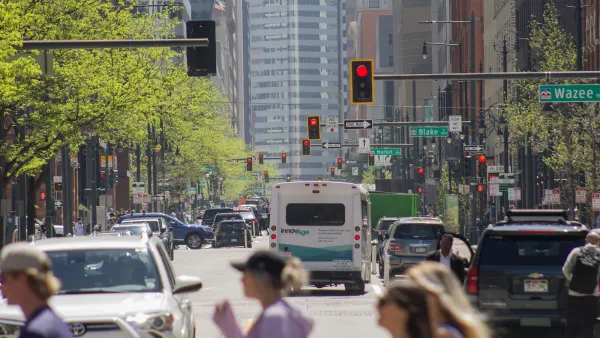
Congestion Costing Reality Check, Part 1: Congestion evaluation best practices
Widely cited studies claim that traffic congestion is a huge and growing problem. They exaggerate. Let’s examine how to correctly calculate congestion costs and roadway expansion benefits.

Rural Texas transit program is a 'lifeline' for seniors
A Central Texas program offers free transit to residents over 60.

Planning for Love, Part 2: What happens to dating in a car-centric world?
A survey of over 150 adults about their dating lives reveals stark differences based on their neighborhood's walkability.

Planetizen Federal Action Tracker
A weekly monitor of how Trump’s orders and actions are impacting planners and planning in America.

Data reveals that NYC’s bet on congestion pricing has paid off
After almost two years of the program, reports show positive impacts on traffic and air quality and no disruptions to parking.

HUD modernizes 50-year-old manufactured housing framework
The Next Generation Manufactured Housing Action Plan establishes new energy-efficiency standards for manufactured homes, and new guidelines for anchoring them.

Small single-family homes are illegal in most of MA. Voters can change that
Most land zoned for single-family housing in Massachusetts requires at least 40,000 square feet of land per house.

Public steps inside U.S.’s first battery-powered train
Metra’s groundbreaking train feature modern seats and a futuristic battery car.

Companies show off AI technology, new innovation hubs at APTA Expo
Nearly 700 companies attended the American Public Transportation Association’s Expo last week, which happens once every three years.

FREE Course: Walkable City 1: Why Walkability?
After describing his path towards focusing on walkability as the essence of good planning, Jeff Speck marches through his five principal reasons for making more walkable places.
Reinventing Malls: Planning Alchemy—Turning Gray Fields Into Gold
The course focuses on the opportunities and imperatives that shape reinvention of mall sites.

One Hundred Miles
County of Mendocino
planning NEXT
The Architects Foundation
University of Cincinnati Online
Montrose County
Northern Illinois Transit Authority (NITA)
The Pocatello Development Authority