A recent unofficial tally on Yelp found that 20 of the 70 Boston dive bars listed on the site had recently closed. The Boston Globe examines the trend.



"One by one, Boston is losing its dive bars," according to an article by Beth Teitell.
After listing off several examples of dive bars that have recently passed into the annals of history, Teitell makes the pronouncement:
Look around the city at the glossy new buildings and companies and it’s easy to see what’s knocking over the worn bar stools: rising rents, land values, and changing tastes and demographics.
It’s also easy to see what’s being lost: a place where neighborhood folks can feel comfortable just being themselves, where they can meet casually — without worrying about drinking and driving and parking — and without having to spend an hour’s take-home pay for a glass of beer.
The article is the most recent in a series examining how Boston's building boom is changing life in the city.
Read the full story: Boston’s endangered dive bars becoming casualties of city development


Redevelopment Without Displacement: A Boston Experiment
The city of Boston is trying to establish a model for gentrification mitigation in the Upham's Corner section of Dorchester.
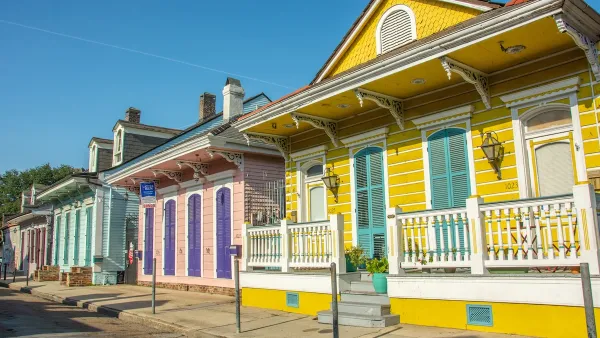
20 Years After Katrina, New Orleans is More Unaffordable Than Ever
The city’s post-hurricane redevelopment has failed to include its most vulnerable residents.

A Bronx Community Fights to Have its Voice Heard
After organizing and giving input for decades, the community around the Kingsbridge Armory might actually see it redeveloped — and they want to continue to have a say in how it goes.

Planetizen Federal Action Tracker
A weekly monitor of how Trump’s orders and actions are impacting planners and planning in America.

‘Going backwards:’ Baltimore mayor, students rally against state's transit funding plan
Maryland's proposed six-year plan provides no funding for Baltimore’s BMORE bus program and reduces its road maintenance funding.

Detroit to transform waterfront with $2.2 billion investment
Developers will convert about 18 acres of unused parking lot space into civic spaces.

HUD, USDA agree on framework to simplify housing environmental review standards
Their agreement is a requirement of the 21st Century ROAD to Housing Act.

Cost of water rising at a faster pace than inflation, median household income
California and Maryland residents have seen their water bills grow especially high.

NYC building owners overwhelmingly comply with new emissions limits
The New York City Department of Buildings is fining owners who did not file emissions reports.

FREE Course: Walkable City 1: Why Walkability?
After describing his path towards focusing on walkability as the essence of good planning, Jeff Speck marches through his five principal reasons for making more walkable places.
Reinventing Malls: Planning Alchemy—Turning Gray Fields Into Gold
The course focuses on the opportunities and imperatives that shape reinvention of mall sites.

planning NEXT
City of Thousand Oaks
City of Wisconsin Rapids
The Architects Foundation
University of Cincinnati Online
Northern Illinois Transit Authority (NITA)
The Pocatello Development Authority
The Urban Renewal Agency of the City of Pocatello