Included among a budget proposal that likely won't go anywhere, the Obama Administration is recommending the end of a project that would create nuclear power by dismantling nuclear weapons.


"Time may finally be running out on the Mixed Oxide Fuel Fabrication Facility, a multibillion-dollar, over-budget federal project that has been hard to kill," reports James Risen. The headline of the story offers a translation of the jargon: A half-built nuclear plant might be too expensive to finish.
"The Energy Department has already spent about $4.5 billion on the half-built plant near Aiken, S.C., designed to make commercial reactor fuel out of plutonium from nuclear bombs," adds Risen. "New estimates place the ultimate cost of the facility at between $9.4 billion and $21 billion, and the outlay for the overall program, including related costs, could go as high as $30 billion."
Those costs, and an estimate that the project could be in operation by 2040, means that the Energy Department recommended abandoning the project in the federal budget released by the Obama Administration this week.
Meanwhile, state officials and members of the South Carolina congressional delegation, some of whom are also "the Republican Party's most determined opponents of government spending," have vowed to complete the project. The article includes a lot more back and forth between opponents and proponents of the project. The implications of the story reach out to Carlsbad, New Mexico, where an alternative approach to disposing of nuclear weapons would store the waste deep underground in salt formations.
FULL STORY: Half-Built Nuclear Fuel Plant in South Carolina Faces Test on Its Future

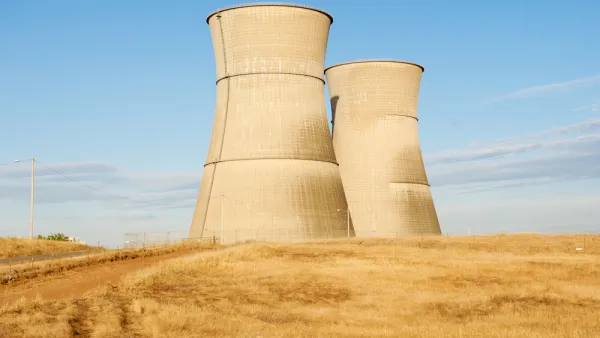
Bill Gates' Nuclear Power Company Takes Giant Step in Cowboy State
A Wyoming coal power plant will be transformed by a company backed by Microsoft co-founder Bill Gates to run on nuclear power. With the signing of the bipartisan infrastructure act, $1.5 billion will help produce zero-emission power by 2028

Small-Scale Nuclear Power Dealt Major Setback
The company that made history in January when its 'small modular nuclear reactor' became the first in the nation to receive certification from the Nuclear Regulatory Commission has canceled it due to financial reasons.
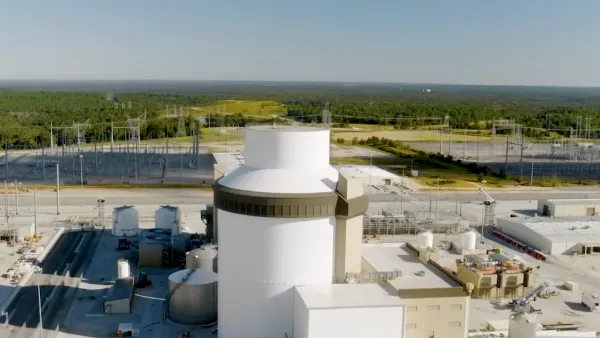
Georgia Makes Clean Energy History in U.S.
The first newly constructed nuclear power plant to generate electricity in the U.S. in over 30 years began operation in Waynesboro, Georgia on July 31.

The state-sanctioned urbicide of Austin
People don’t kill cities. Freeways do.

US to reduce Colorado River water deliveries to Mexico
A new Colorado Treaty amendment reduces Mexico’s Colorado River water allocation by 250,000 acre feet.

New Jersey’s second-largest city bans standalone data centers
Jersey City will continue to allow co-location facilities, such as those meant for research institutions that store their own data.

Amtrak not solely to blame for New Jersey commuter rail's unreliability, report finds
A new study from the Garden State Initiative found that NJ Transit’s budget grew 20% across a 4 year period, but reliability declined significantly over the same period.

EPA erases limits on planet-warming pollution from power plants
Under Monday’s plan, power plants would still have some limits on how much mercury, arsenic and other contaminants they can emit.

Phoenix announces new on-demand transit service, more frequent RAPID buses
Both new services will launch in October, and are part of Phoenix's Project Effective Access Solutions for Easing Congestion.

FREE Course: Walkable City 1: Why Walkability?
After describing his path towards focusing on walkability as the essence of good planning, Jeff Speck marches through his five principal reasons for making more walkable places.
Reinventing Malls: Planning Alchemy—Turning Gray Fields Into Gold
The course focuses on the opportunities and imperatives that shape reinvention of mall sites.

Eagle County Government
Harvard University Graduate School of Design
Nashville Planning Department
The Architects Foundation
University of Cincinnati Online
The Pocatello Development Authority
The Urban Renewal Agency of the City of Pocatello
Journal of the American Planning Association