Washington, D.C. joins Denver and Seattle as locations credited with slowing the rising cost of housing by building an abundant new supply of residential units.


"In 2015, DC permitted more new housing units—4,956, to be exact—than in any year since the Census started keeping track in 1980," according to an article by John Ricco, "and there's reason to believe it's helping to slow rent increases."
According to Ricco, "The record-setting year is most likely due to both long-term factors (a shift towards city-living among young professionals) and short-term, cyclical ones (federal government job growth having recovered from the sequester)."
Ricco offers a lot more detail about the D.C. market and how it compares to other cities. Importantly as well, Ricco concludes by citing three separate sources that have found evidence that rent increases are slowing in Washington, D.C.:
- Chloe Johnson, writing for Bloomberg Business
- Maeve Gallagher, writing for The Washington Post
- Cha'Mia Holloman, writing for Multifamily Executive
Read the full story: DC added record housing in 2015. That’s slowing down price increases.


Double-Digit Housing Price Increases Tied to Supply Imbalance in Denver
Expensive homes dominated the metro Denver real estate market in 2020.
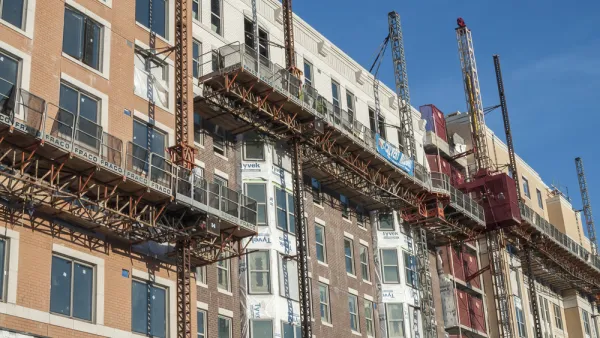
Increase Housing Supply Softened Rent Increases in D.C., Study Says
A study recently published by the District of Columbia offers supporting evidence to a supply-side approach to housing affordability in high-demand markets.

How the ‘Housing Trap’ Keeps Housing Unaffordable
The financialization of housing uncouples housing prices from local supply and demand. Fixing this requires a new approach.

Planetizen Federal Action Tracker
A weekly monitor of how Trump’s orders and actions are impacting planners and planning in America.

California plans to bury El Niño’s downpour
If the state plays its cards right, it may be able to store a billion acre-feet of El Niño’s water in aquifers.

Chicago breaks ground on $3 billion megadevelopment
The new neighborhood, titled Foundry Park, will one day host 3,700 residences.

California High-Speed Rail Authority CEO resigns after $600,000 scandal
Under Ian Choudri, the authority used taxpayer dollars to fund first class flights and trips to nightclubs.

Want to study the Missouri River? Soon, you may need unanimous approval from 10 states
Legislation would require 10 governors’ permission to study or build projects moving water outside the basin.

Desperate measures: Advocates weigh draining Lake Powell to fill Colorado River
Draining the reservoir could reduce evaporation losses by a couple hundred thousand acre-feet.

FREE Course: Walkable City 1: Why Walkability?
After describing his path towards focusing on walkability as the essence of good planning, Jeff Speck marches through his five principal reasons for making more walkable places.
Reinventing Malls: Planning Alchemy—Turning Gray Fields Into Gold
The course focuses on the opportunities and imperatives that shape reinvention of mall sites.

City of Rosemead
Rutgers University, Edward J. Bloustein School of Planning and Public Policy
One Hundred Miles
Hunter College, City University of New York (CUNY)
The Architects Foundation
University of Cincinnati Online
City of Cambridge
Montrose County
The Pocatello Development Authority