The Chinese government wants an influx of nearly 100 million new urban residents by 2020. In order to accommodate a migration of this nature, China's urban planners are tasked with creating cities to be more livable.


It has taken Chinese officials nearly 40 years to reconvene and discuss best practices for developing the country's urban centers. Now, with nearly half of the population living in cities, and an additional 100 million desired, "central government officials pledged to tackle air pollution, traffic gridlock, and lack of civic resources." reports Sarah O'Meara.
The passion that China's urban planners bring to large scale city design is easy to find in theory, implementing these design projects however have come with their fair share of challenges. "The laws in the field make it very hard to innovate. Every city is made by the planning authority, under the existing planning management system, according to existing standards. They all share one law. That’s why they are all the same." says Jinkui Li, a senior researcher as Shenzhen-based think tank China Development Institute.
Experts indicate that planning policy in China needs to change to better assist the professionals in meeting the needs of creating livable communities. Beijing-based urban planner Jasmine Tillu says “At the moment, you have leaders saying ‘Make urban planning more sustainable,’ but the actual on-the-ground policies don’t allow for it."
As for the rise in prominence of new urban centers, experts point to the established "urban villages" on the fringe of China's megacities, Beijing, Shanghai, Guangzhou and Shenzhen. These villages are known to be the most hospitable transitions for many migrants leaving the countryside for a new urban life. Changes are happening and it is exciting urban planners globally. If China's officials are able to step away from a "top-down, large scale" planning model and provide the residents civic engagement opportunities the future is bright.
Read the full story: Making China's Urban Fringes More Livable

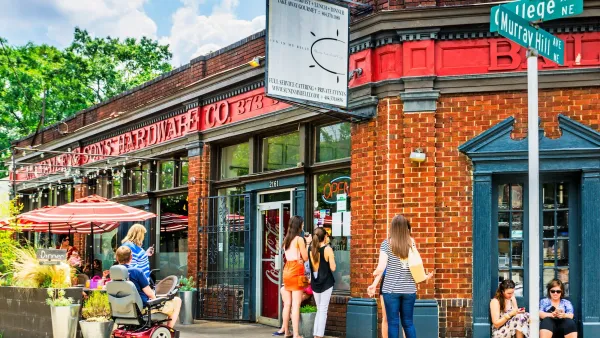
The Superstar Metro Argument... And Why It Fails
One argument against solving the housing shortage in large, expensive cities is that growth in those cities will drain people and wealth from declining areas. Data does not agree.
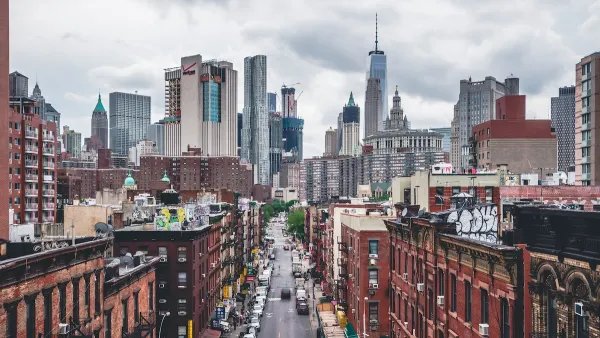
Is the Urban Form Sustainable?
One author offers a framework for resilience that rethinks common assumptions about the inevitability of cities as we know them.
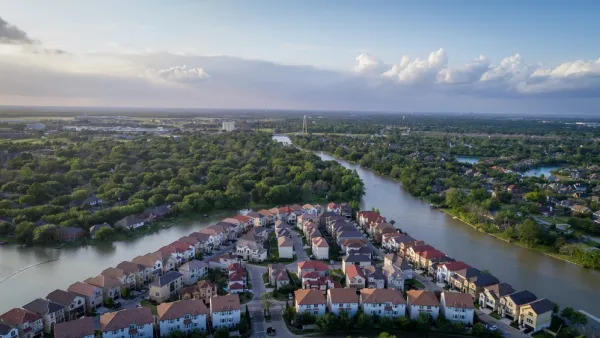
A Rapidly Urbanizing Texas County Gets in Touch With its Agricultural Roots
Developers in Fort Bend County are drawing inspiration from ‘agrihoods’ to build car-light communities in one of the nation’s fastest-growing areas.

Planetizen Federal Action Tracker
A weekly monitor of how Trump’s orders and actions are impacting planners and planning in America.

Colorado’s Largest Data Center Could Rise Next to Homes — Without a Public Hearing
The proposed campus would consume 11 times the power of Denver International Airport; as it has across the country, opposition mounts.

US to reduce Colorado River water deliveries to Mexico
A new Colorado Treaty amendment reduces Mexico’s Colorado River water allocation by 250,000 acre feet.

'This is going to be painful:’ Virginia stares down $1.7 billion funding gap for highway maintenance
The state may address the deficit by shifting $290 million from its construction budget to maintenance projects.

Judges permit Denver to divert 77,000 acre feet from the Colorado River for reservoir expansion
Overuse and climate change have caused the Colorado River’s water levels to plummet.

Amtrak, CN end decades-long dispute with eight-year agreement
The new operating agreement establishes an updated framework for the companies to work together, including processes to resolve disputes.

FREE Course: Walkable City 1: Why Walkability?
After describing his path towards focusing on walkability as the essence of good planning, Jeff Speck marches through his five principal reasons for making more walkable places.
Reinventing Malls: Planning Alchemy—Turning Gray Fields Into Gold
The course focuses on the opportunities and imperatives that shape reinvention of mall sites.

KFH Group Inc.
Greater Baltimore Committee
Eagle County Government
The Architects Foundation
University of Cincinnati Online
The Pocatello Development Authority
The Urban Renewal Agency of the City of Pocatello