There might not be a drawing board to go back to after an agreement that would have removed four dams along the Klamath River died in Congress.


Bettina Boxhall reports on the fall out following the demise of an agreement that would have settled a decades-long debate on the Klamath River in California. "The complicated pact, backed by the states of California and Oregon, called for the removal of four hydroelectric dams, settled water rights disputes and spelled out water allocations for irrigators and wildlife refuges in the Klamath Basin," according to Boxhall. But the agreement expired "when Congress failed to approve it by Dec. 31."
The deal managed a rare and difficult to duplicate local negotiation, but failed to gain support from Republicans in Congress. According to Boxhall, the conflict "embodies classic struggles over western water":
Tribes, farmers, hydropower interests and commercial fishermen all have fought over the 255-mile river, which winds from southern Oregon through Northern California to the Pacific Ocean. Dams, farm and ranch diversions and agricultural runoff have exacted a heavy toll on a waterway that once supported Chinook salmon runs half a million strong.
The article includes a lot of detail of the complicated politics of the agreement, as well as any future prospects for a revived agreement.
Read the full story: Demise of Klamath River deal could rekindle old water-use battles

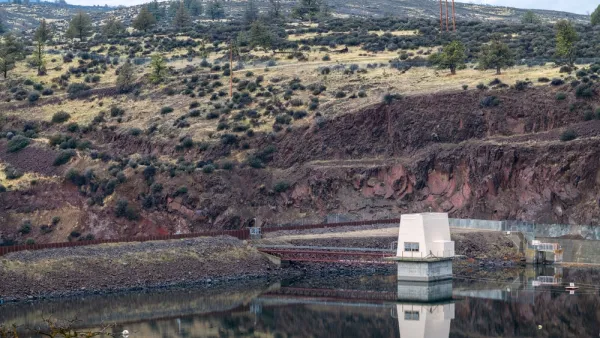
Largest Dam Removal in U.S. History Clears Final Regulatory Hurdle
Four dams are coming down along the Klamath River. The final decision to remove the dams is a milestone political and legal victory for indigenous tribes living in Southern Oregon and Northern California.
Klamath River Dam Removal Moves Ahead Without Congressional Approval
A lack of Congressional approval almost killed a controversial dam removal project on the Klamath River in Oregon and California. The states and the Interior Department have found a way to proceed.
Tribe Appeals For Removal Of Dams
Dams have been decimating the population of salmon in Northern California's Klamath River for years, and now Native Americans who depend on the salmon are traveling to visit the owner of the dams to appeal for their removal.

Planetizen Federal Action Tracker
A weekly monitor of how Trump’s orders and actions are impacting planners and planning in America.

‘Going backwards:’ Baltimore mayor, students rally against state's transit funding plan
Maryland's proposed six-year plan provides no funding for Baltimore’s BMORE bus program and reduces its road maintenance funding.

Detroit to transform waterfront with $2.2 billion investment
Developers will convert about 18 acres of unused parking lot space into civic spaces.

HUD, USDA agree on framework to simplify housing environmental review standards
Their agreement is a requirement of the 21st Century ROAD to Housing Act.

Cost of water rising at a faster pace than inflation, median household income
California and Maryland residents have seen their water bills grow especially high.

NYC building owners overwhelmingly comply with new emissions limits
The New York City Department of Buildings is fining owners who did not file emissions reports.

FREE Course: Walkable City 1: Why Walkability?
After describing his path towards focusing on walkability as the essence of good planning, Jeff Speck marches through his five principal reasons for making more walkable places.
Reinventing Malls: Planning Alchemy—Turning Gray Fields Into Gold
The course focuses on the opportunities and imperatives that shape reinvention of mall sites.

planning NEXT
City of Thousand Oaks
City of Wisconsin Rapids
The Architects Foundation
University of Cincinnati Online
Northern Illinois Transit Authority (NITA)
The Pocatello Development Authority
The Urban Renewal Agency of the City of Pocatello