New Census data provides a contemporary view of domestic migration, which has returned to pre-recession patterns.


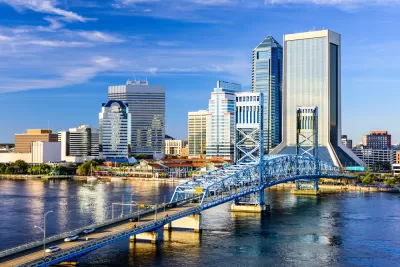
Emily Badger and Darla Cameron provide analysis of new population data from the U.S. Census data to show which states people are moving to and from, identifying a return to pre-recession trends around the Midwest and the Sun Belt:
"New census data shows the trend accelerating back to its pre-recession pace. Florida, which actually lost more domestic movers than it gained right after the housing bubble burst, picked up about 200,000 net new movers between 2014 and 2015 (this number includes people who move between states, not immigration into the United States from abroad). Illinois, meanwhile, had a net loss of about 105,000 residents, its largest one-year population leak in the 21st century."
A little more evidence to make the case:
"The other big gains over the past year were Texas (170,000 new migrants), Colorado (54,00o), and Arizona and South Carolina (both with more than 45,000 each). Not a single state in the Northeast or Midwest gained domestic movers over the last year."
The article also provides insight into the implications and causes of the shifts, as well as some important distinctions about domestic migration.
Read the full story: The states people really want to move to — and those they don’t
California Migration Boosts Nevada Population Above 3 Million
Californians fleeing the nation's highest housing prices were key to Nevada's growth according to newly released Census data. The Las Vegas Review-Journal's reporter, editorial board, and readers all had something to say about the newcomers.

Urban Millennials Stuck in the Three Largest U.S. Metros
For a variety of economic reasons in addition to urban preferences, young people are not leaving the country's three major metropolitan areas: New York, Los Angeles, and Chicago, and that's not good for the nation's economy nor the individuals.
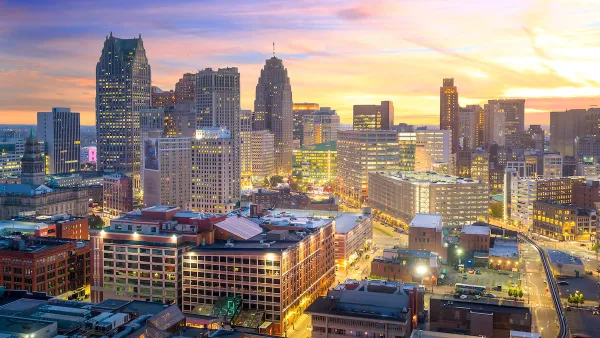
Detroit and Michigan on the Upswing
It's been 66 years since the Motor City last grew its population. Census data released last month revealed an increase of nearly 2,000 people last year, nearly half the state's population growth.

Planetizen Federal Action Tracker
A weekly monitor of how Trump’s orders and actions are impacting planners and planning in America.

Eastern Nebraska is running out of electricity
Data centers and electrification are straining eastern Nebraska’s grid, throttling economic development.

Study reveals best places in the U.S. for cycling, walking
New research from Streetlight Data examines bicycle and pedestrian miles per capita in the 100 largest U.S. cities by population.

DSA members accuse Mamdani of 'abandoning values' over housing redevelopment
New York City's mayor plans to replace about 2,000 units of public housing with private, mixed-income housing.

All sides of BRT debate unhappy with CDOT’s most recent move
The Colorado Department of Transportation is no longer considering center-running bus lanes for Colorado Boulevard.

Massachusetts bogs generate both power, and cranberries
Putting solar panels above farmland is one way Massachusetts is advancing toward its goal of net-zero carbon emissions by 2050.

FREE Course: Walkable City 1: Why Walkability?
After describing his path towards focusing on walkability as the essence of good planning, Jeff Speck marches through his five principal reasons for making more walkable places.
Reinventing Malls: Planning Alchemy—Turning Gray Fields Into Gold
The course focuses on the opportunities and imperatives that shape reinvention of mall sites.

City of Rosemead
Rutgers University, Edward J. Bloustein School of Planning and Public Policy
One Hundred Miles
University of Michigan School for Environment and Sustainability (SEAS)
Hunter College, City University of New York (CUNY)
The Architects Foundation
City of Cambridge
The Pocatello Development Authority
The Urban Renewal Agency of the City of Pocatello