An important source of housing affordable to wide ranges of incomes has a new, well-funded ally in Philadelphia—the Healthy Rowhouse Project is hoping to make a big impact in 2016.


"A local group called the Healthy Rowhouse Project announced on Wednesday that it has collected nearly $1 million in grants that it plans to dedicate to protecting Philadelphia’s most important assets: its hundreds of thousands of rowhomes," reports Jared Brey.
The organization is planning on using that funding for some major initiatives in the new year, including one to improve the efficiency of repairing and preserving rowhouses.
"The Healthy Rowhouse Project won’t be competing for housing-repair funding with groups that actually do the work," adds Brey. "It’ll be focused on finding ways to help groups like Habitat for Humanity, Rebuilding Together, and others to scale up operations. One of its goals in the first year is to identify financing to perform 5,000 rowhouse repairs in a year."
Read the full story: Healthy Rowhouse Project wants to help repair 5,000 homes per year

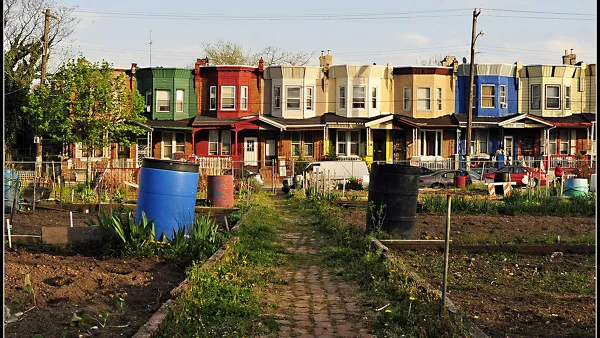
Philly's Healthy Rowhouse Project Adds a New Low-Interest Loan Program
Philadelphia seeks $60 million bond issue to preserve existing affordable homes and improve residents' health. City seeks to offer city loan guarantee to embolden lenders to extend credit to homeowners with lower credit scores.
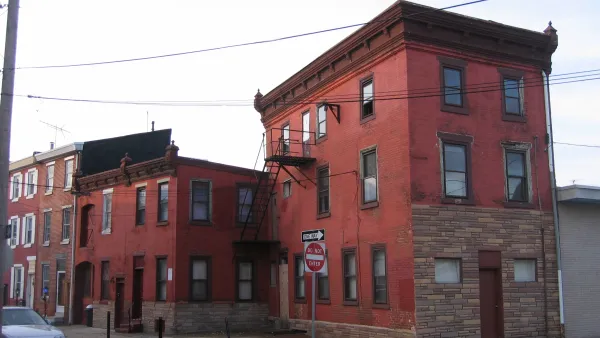
Philadelphia's Rowhouse Remedy for Gentrification
Blessed with an innate resilience, Philadelphia's brick rowhouses risk disrepair and redevelopment. Local nonprofits are looking for ways to keep this resource equitable.
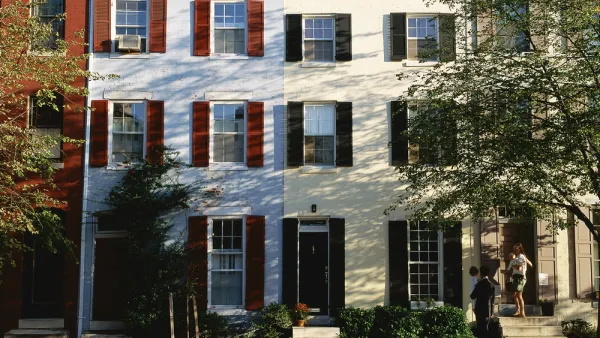
Is it a Rowhouse, or a Rowhome?
Philadelphia has long been acknowledged as the capital of rowhouses in the United States. It’s becoming more common for those rowhouses to be referred to as rowhomes.

Planetizen Federal Action Tracker
A weekly monitor of how Trump’s orders and actions are impacting planners and planning in America.

Amtrak, CN end decades-long dispute with eight-year agreement
The new operating agreement establishes an updated framework for the companies to work together, including processes to resolve disputes.

Northwest rail fans eager for Sept. 30 debut of Amtrak’s Airo fleet
Get ready for that new train smell and more seats. But they won’t go faster or run more frequently on the Cascades route in Washington and Oregon.

Brightline Florida files for bankruptcy
The transit company is over $5 billion in debt.

St. Louis Metro to test if single-car trains can reduce operating costs, maintain rider satisfaction
The pilot program will run from October to spring 2027, and begin with one single-car train operating on Metrolink’s Red and Blue lines.

Pennsylvania is building data centers in abandoned mines
Housing data centers in mines provides an alternative to destroying local forests and may spare residents from data centers’ noise and air pollution.

FREE Course: Walkable City 1: Why Walkability?
After describing his path towards focusing on walkability as the essence of good planning, Jeff Speck marches through his five principal reasons for making more walkable places.
Reinventing Malls: Planning Alchemy—Turning Gray Fields Into Gold
The course focuses on the opportunities and imperatives that shape reinvention of mall sites.

City of Thousand Oaks
City of Wisconsin Rapids
Harvard University Graduate School of Design
The Architects Foundation
University of Cincinnati Online
The Pocatello Development Authority
The Urban Renewal Agency of the City of Pocatello