It's too soon to declare the beginning of the end for segregation, but one demographer is hopeful that there are opportunities to better integrate different racial groups.


According to William H. Frey, "an examination of newly released Census data suggests a modest decline in black-white segregation across most large U.S. metropolitan areas."
"It also shows that neighborhoods in which blacks reside are becoming somewhat less black due to recent population shifts of blacks and the growth and dispersion of Hispanics and other minorities," adds Frey.
Though the latest Census data "suggest opportunities to achieve greater residential integration as race migration trends are in flux," argues Frey, even if the country isn't even close to ending segregation.
The article includes in-depth analysis of the data, drawn from the 2014 American Community Survey, including data from specific metropolitan areas.
Read the full story: Census shows modest declines in black-white segregation

Racial Segregation in U.S. Neighborhoods
Despite the intentions of the nation's fair housing laws, neighborhoods in the United States continue to segregate by race.
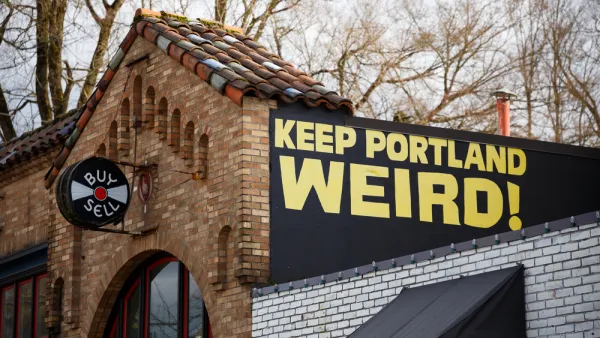
Comparing the Racial Segregation of U.S. Cities
The City Observatory used American Community Survey from the U.S. Census to compare the segregation of the largest U.S. cities. Portland is the most integrated American city; Detroit is the most segregated U.S. city.

The Planning Tools to Overcome Racial Segregation
A new report presents five strategies for overcoming the long-term effects of systemic racism as perpetuated by housing and planning policies of the past and present.

Planetizen Federal Action Tracker
A weekly monitor of how Trump’s orders and actions are impacting planners and planning in America.

California plans to bury El Niño’s downpour
If the state plays its cards right, it may be able to store a billion acre-feet of El Niño’s water in aquifers.

Desperate measures: Advocates weigh draining Lake Powell to fill Colorado River
Draining the reservoir could reduce evaporation losses by a couple hundred thousand acre-feet.

Los Angeles just elected an urban planner as its mayor
Transportation analysts are optimistic that Raman will be more aggressive in addressing transit issues than Bass.

Mamdani’s pied-à-terre tax survives legal challenge
A panel of judges found that the plaintiffs failed to demonstrate injury as a result of New York City's implementation of the tax.

Eastern Nebraska is running out of electricity
Data centers and electrification are straining eastern Nebraska’s grid, throttling economic development.

FREE Course: Walkable City 1: Why Walkability?
After describing his path towards focusing on walkability as the essence of good planning, Jeff Speck marches through his five principal reasons for making more walkable places.
Reinventing Malls: Planning Alchemy—Turning Gray Fields Into Gold
The course focuses on the opportunities and imperatives that shape reinvention of mall sites.

City of Rosemead
Rutgers University, Edward J. Bloustein School of Planning and Public Policy
One Hundred Miles
University of Michigan School for Environment and Sustainability (SEAS)
Hunter College, City University of New York (CUNY)
The Architects Foundation
City of Cambridge
Montrose County
The Pocatello Development Authority