Audi and Somerville will begin testing self-parking cars in 2018. Imagine the possibilities.


Tod Newcombe reports on the latest innovation in parking technology—cars that park themselves. The concept already has a test-bed in Massachusetts.
"The city of Somerville, Mass., and Audi, the German carmaker, have signed an agreement to not only create self-driving cars that park themselves but also build the infrastructure that such a technology would require (and allow). It could save the city as much as $100 million, according to Audi."
Newcombe describes the benefit of self-driving cars to parking three-fold: one, self-driving cars require less room to park, and thus can more cars can be shoe-horned into smaller spaces. "Second, parking garages would no longer have to be located downtown -- drivers and their passengers could exit the vehicles in the city and the cars would self-drive to the garages on the downtown’s periphery." And finally, all of the space and street capacity freed up by self-driving cars could then be used for bikes, pedestrians, transit, and real estate development.
More on how the Audi test will work in Somerville:
"The self-parking project, set to begin testing in 2018, will take place in an area known as Assembly Row, a former industrial district that the city hopes to transform into residences, offices, retail space, leisure amenities and a hotel. Currently, around 40 percent of the area within the Assembly Row project is dedicated to parking spaces. A garage that allows cars to self-park could save 26 percent of parking spaces for other uses, according to Audi, which calculates that each space is worth $25,000, or approximately $100 million in total savings by the time the project is completed in 2030."
Read the full story: Can Cars That Park Themselves Reduce Traffic? Somerville, Mass., Will Find Out.

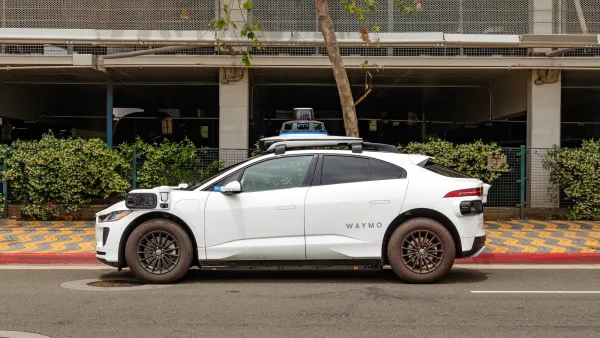
Austin Waymos rack up nearly $10k in parking tickets
The robotaxis have been cited for parking in tow zones and double parking, among other violations.

Study: Autonomous Cars Won’t Solve the Parking Problem
In hyper-dense cities where incentives to reduce car use and eliminate parking are already high, mass adoption of AVs won’t significantly reduce parking demand.
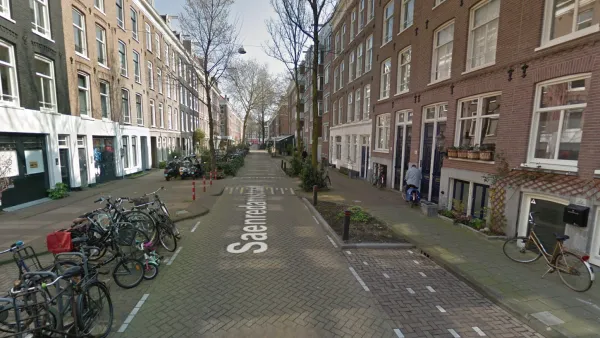
Watch: How to Remove Thousands of Parking Spaces
What the city of Amsterdam will gain by removing cars from on-street parking space.

Planetizen Federal Action Tracker
A weekly monitor of how Trump’s orders and actions are impacting planners and planning in America.

HUD modernizes 50-year-old manufactured housing framework
The Next Generation Manufactured Housing Action Plan establishes new energy-efficiency standards for manufactured homes, and new guidelines for anchoring them.

Data reveals that NYC’s bet on congestion pricing has paid off
After almost two years of the program, reports show positive impacts on traffic and air quality and no disruptions to parking.

How Chicago, New York and Seattle are funding transit projects amid tough times
Notes from the American Public Transportation Association's TransForm conference in Chicago.

Transport for London tackles hate crime spike with free bystander training
Recorded hate crime offences on the London's transport network have increased by 36 per cent.

Denver is solving homelessness. Why aren't the rest of us?
Since 2023, Denver's street homeless population has decreased by 64%, proving that effective tools exist to support those in need of housing.

FREE Course: Walkable City 1: Why Walkability?
After describing his path towards focusing on walkability as the essence of good planning, Jeff Speck marches through his five principal reasons for making more walkable places.
Reinventing Malls: Planning Alchemy—Turning Gray Fields Into Gold
The course focuses on the opportunities and imperatives that shape reinvention of mall sites.

One Hundred Miles
County of Mendocino
planning NEXT
The Architects Foundation
University of Cincinnati Online
Montrose County
Northern Illinois Transit Authority (NITA)
The Pocatello Development Authority