Canada's recent change to a Liberal government means Stephen Harper's legacy in oil gas is at risk. Change is coming.


"We won’t have to wait much longer to see how Prime Minister Justin Trudeau plans to apply his grand claim that 'we’re back' to the climate change file. Catherine McKenna, his Environment and Climate Change Minister, will be on point at the United Nations conference in Paris later this month to explain how Canada’s Conservative-era status as 'an emerging energy superpower' will transform to meet 'our international obligations to protect the planet.'"
"Whether it’s with a carbon tax, cap-and-trade or some hybrid system, the Liberals see the solution in a price on carbon emissions. This market-oriented strategy is suppose to encourage the energy sector to move away from carbon-intensive projects, such as the oil sands, and toward new green technologies. But whatever the plan, it’s unlikely that it will result in drastic cuts to fossil-fuel production. Instead, Big Oil will embrace big carbon."
Read the full story: Canada’s climate solution may offer more comfort than change

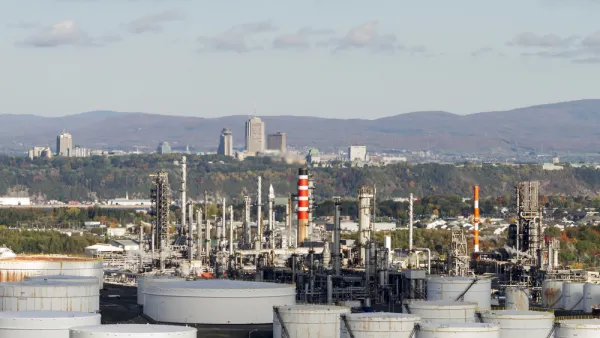
Prime Minister Trudeau Extends Carbon Pricing Throughout Canada
A carbon tax-and-dividend plan goes into effect on January 1 in the four Canadian provinces that don't price carbon emissions. Revenues will be rebated to residents, small businesses, and public institutions as Climate Action Incentive payments.
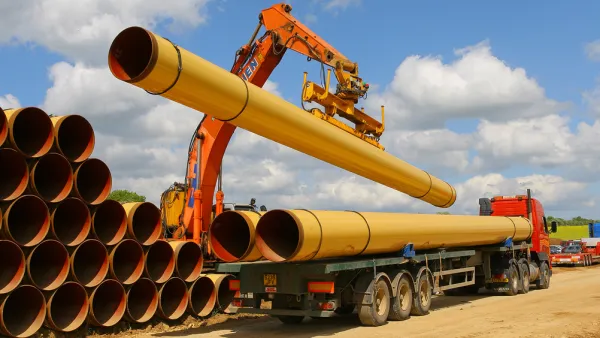
President Trump Approves Construction of Keystone XL Pipeline from Alberta to Nebraska
Following through on a January executive action, President Trump announced Friday that he was approving the oil pipeline that his predecessor had rejected over a year ago. Oil is already flowing from Steele City, Nebraska to Gulf Coast refineries.
Canadian Prime Minister Wins Award for Being Pro-Oil Sands and Pro-Environment
Prime Minister Justin Trudeau is treading a fine line between supporting the economy of oil-sands dependent western Canada and fighting climate change, as impossible as that might sound. His efforts were rewarded by the energy industry.

Planetizen Federal Action Tracker
A weekly monitor of how Trump’s orders and actions are impacting planners and planning in America.

Amtrak, CN end decades-long dispute with eight-year agreement
The new operating agreement establishes an updated framework for the companies to work together, including processes to resolve disputes.

Northwest rail fans eager for Sept. 30 debut of Amtrak’s Airo fleet
Get ready for that new train smell and more seats. But they won’t go faster or run more frequently on the Cascades route in Washington and Oregon.

Brightline Florida files for bankruptcy
The transit company is over $5 billion in debt.

St. Louis Metro to test if single-car trains can reduce operating costs, maintain rider satisfaction
The pilot program will run from October to spring 2027, and begin with one single-car train operating on Metrolink’s Red and Blue lines.

Pennsylvania is building data centers in abandoned mines
Housing data centers in mines provides an alternative to destroying local forests and may spare residents from data centers’ noise and air pollution.

FREE Course: Walkable City 1: Why Walkability?
After describing his path towards focusing on walkability as the essence of good planning, Jeff Speck marches through his five principal reasons for making more walkable places.
Reinventing Malls: Planning Alchemy—Turning Gray Fields Into Gold
The course focuses on the opportunities and imperatives that shape reinvention of mall sites.

City of Thousand Oaks
City of Wisconsin Rapids
Harvard University Graduate School of Design
The Architects Foundation
University of Cincinnati Online
The Pocatello Development Authority
The Urban Renewal Agency of the City of Pocatello